
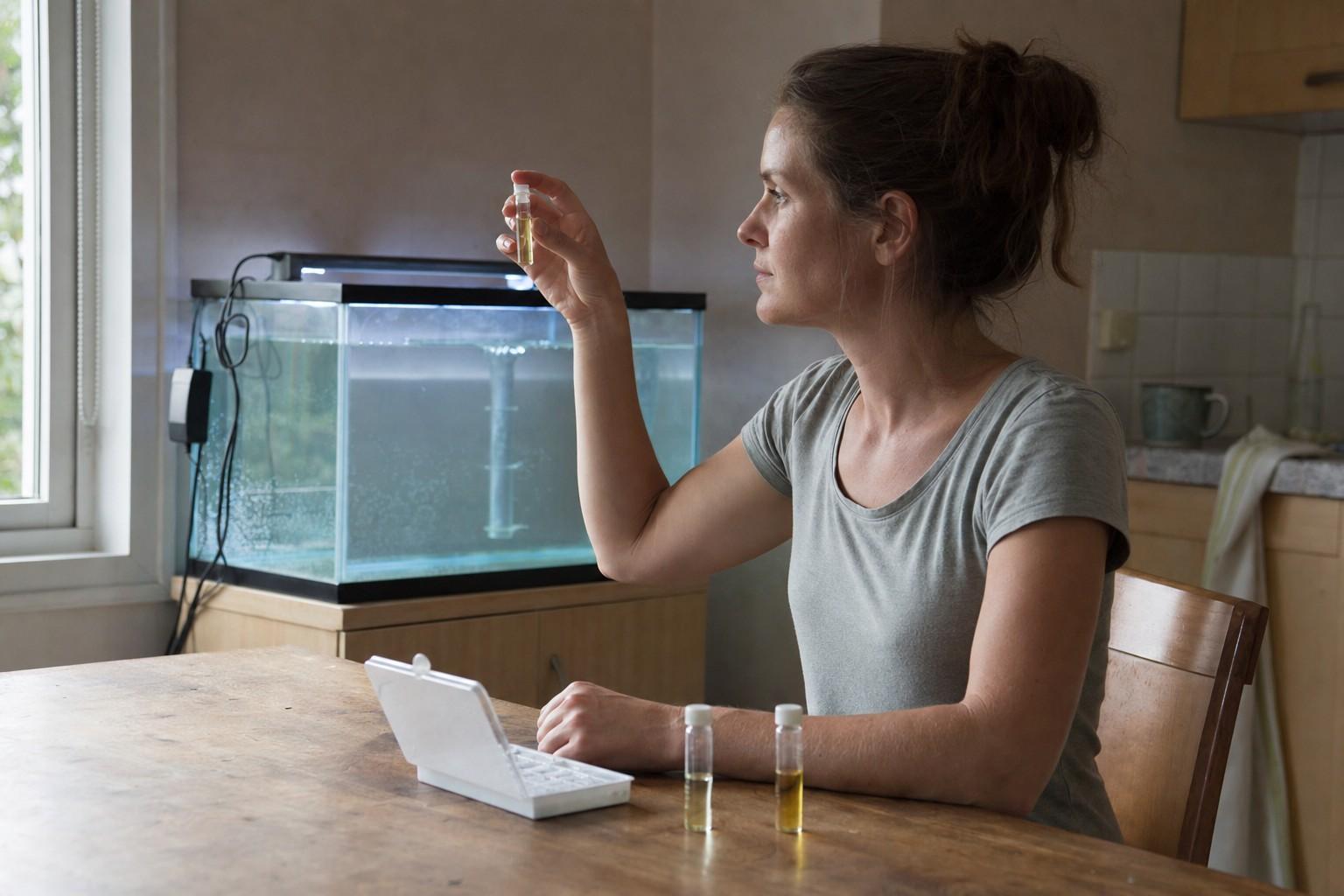
The best first weeks of fishkeeping contain no fish at all.
That sounds backward, but it is the whole idea behind fishless cycling. You set up a tank, get it running, and then leave it empty for a while on purpose. The point of those quiet weeks is to grow something invisible: a colony of bacteria that will make the water safe to live in.
Do this part right and the rest of the hobby gets a lot easier. Skip it and you are very likely starting with sick or dying fish, no matter how good the equipment is.
So here is the method, start to finish, with the reason behind each step.
What Cycling Actually Is
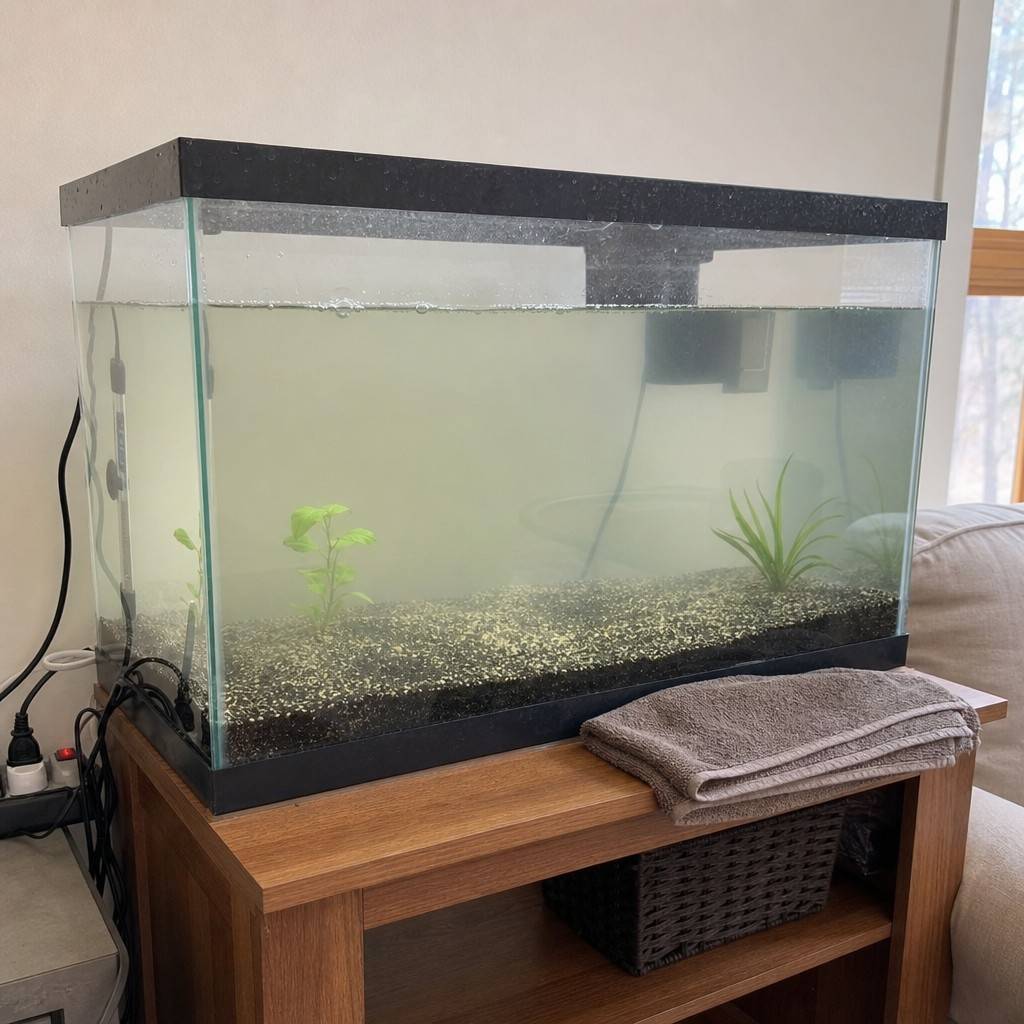
Forget the chemistry homework for a minute. Cycling is about consequences.
Fish produce waste, and that waste releases ammonia into the water. Ammonia burns gills, and even small amounts are toxic to fish. In a brand-new tank with nothing to remove it, ammonia climbs fast and the fish pay for it.
Nature has a fix, and your job is to install it before the fish move in. Two families of bacteria do the work. The first kind eats ammonia and turns it into nitrite. Nitrite is also poison, so a second kind eats that and turns it into nitrate, which is far less harmful and gets removed with normal water changes.
That chain has a name worth knowing, the nitrogen cycle, but you do not need the equations. You need the order: ammonia, then nitrite, then nitrate.
The catch is time. Those bacteria are slow to establish, and growing enough of them takes weeks, not days. They settle mostly in the filter, multiply on their own schedule, and cannot be hurried by good intentions.
That is why a tank that looks finished on day one is nowhere near ready. The glass is clear and the heater is warm, but the engine that keeps fish alive has not been built yet.
Why Fishless, And Why It Matters For Returners
The old way of building that engine used live fish to do it.
The standard advice for decades was to drop a few hardy “starter” fish into a fresh tank and let them weather the ammonia and nitrite spikes while the bacteria caught up. The fish were the ammonia source. Many of them suffered, and plenty did not make it.
If you kept tanks years ago and watched early fish die, that method is a big part of why. The hobby has changed a great deal since then, and a quick read on what is different about fishkeeping today shows just how much the old “tough it out” approach has fallen away.
Fishless cycling grows the exact same bacteria without an animal in the tank. You supply the ammonia yourself, the colony builds, and not a single fish has to endure the toxic phase. By the time fish arrive, the water already handles their waste.
Most fish problems are water problems, and fishless cycling solves the biggest water problem before it can ever reach a living thing.
The Steps, Start To Finish
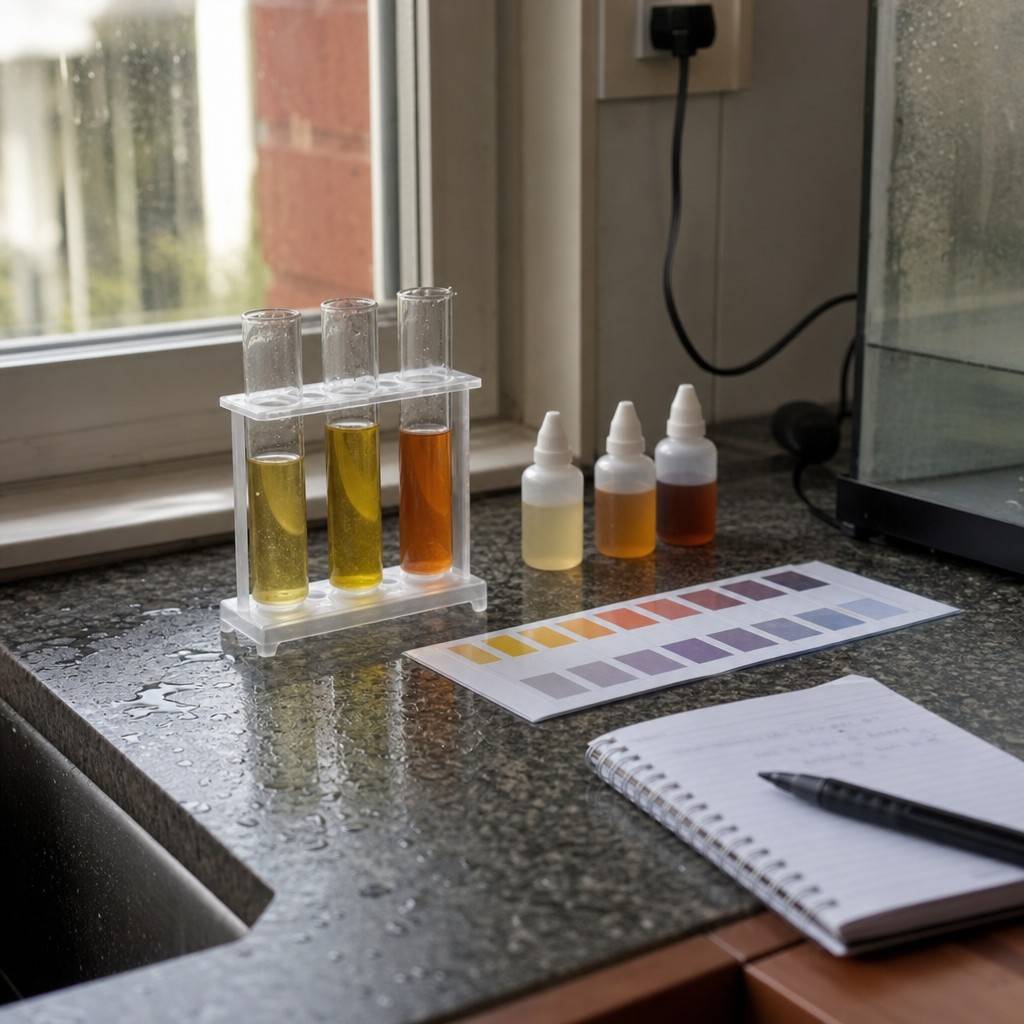
Here is the actual process for an empty tank on a counter.
Set the tank up and get it running first. Fill it with dechlorinated water, since the chlorine in most tap water kills the bacteria you are trying to grow. Run the filter and the heater, and let everything stabilize for a day. Warm water in the low-to-mid 80s Fahrenheit speeds the bacteria along.
Then add a source of ammonia, because without food the bacteria have nothing to grow on. The clean option is plain, unscented household ammonia, added a little at a time. Bottled “ammonium chloride” dosing products made for this purpose work the same way and take the guesswork out of measuring. There is also the old pinch-of-fish-food method, where decaying food releases ammonia on its own, but it is messier, slower, and harder to control. Most people are better served by dosing directly.
Buy the test kit before you buy the fish, and use it. A liquid test kit is the only way to see the invisible part happening. Test every couple of days and write the numbers down.
Now watch the sequence unfold.
Ammonia rises first. Over days, the first bacteria establish and start eating it, and you will see ammonia fall while nitrite begins to climb. That handoff is the first real sign the cycle is working.
The nitrite phase is the longest, and it is where most people quit. Nitrite can stay high for a week or two while the second bacteria slowly catch up, and from the outside it looks like nothing is happening. It is. This is the stretch to be patient through, not the sign of failure it feels like.
Eventually nitrite falls too, and nitrate appears. Nitrate showing up means the engine is built, both bacteria families are working, and the tank can now process waste on its own.
Do one large water change to bring the nitrate down, and the tank is ready for fish. Add them slowly, in small groups over weeks, so the bacteria can scale up to the new waste load instead of being swamped all at once.
Nitrite can stay high for a week or two while the second bacteria slowly catch up, and from the outside it looks like nothing is happening. It is. This is the stretch to be patient through, not the sign of failure it feels like.
How Long It Really Takes
The honest answer is that it varies, and you cannot set a date.
University extension programs and established hobby guidance commonly put a full cycle at roughly four to eight weeks. That is the range to plan around. Some tanks finish near the short end, some drag past it, and warmer water and a steady ammonia supply tend to help.
Bottled bacteria starters promise to shorten the wait by seeding the colony directly. They can genuinely speed things up, but results vary widely, so treat any “instant cycle” claim with caution. Some batches work well, some do very little, and the only way to know your tank is actually ready is the test kit, not the bottle’s label.
The weeks themselves cost very little. Running a cycling tank is mostly the power for a light, a filter, and a heater, which is a small slice of what an aquarium costs to maintain over a year. The main thing you spend during cycling is patience.
What Not To Do While It Cycles
A few common mistakes can reset the whole process, so they are worth naming.
Do not add fish “just to test the water.” That is the old method by another name, and it puts an animal back into the toxic phase you set out to avoid.
Do not scrub the filter media clean partway through. The bacteria you are growing live in that media, and washing it under the tap pours your progress down the drain. During a cycle, leave the filter alone.
Do not chase a daily schedule of additives and products. Cycling is not something you push along with more bottles. It runs on its own clock, and the test kit, not a shopping list, tells you where it stands.
Cycle the tank before you buy the fish. That single rule prevents most beginner heartbreak, and it is the reason the empty weeks are not wasted time.
Use them. Learn to read the test kit while the numbers are still moving. Plan what you actually want to keep, since the size and number of fish a tank can hold is a real limit worth thinking through early. By the time the cycle finishes, you will know your equipment, trust your readings, and be ready to stock a tank that was built to keep its fish alive.