
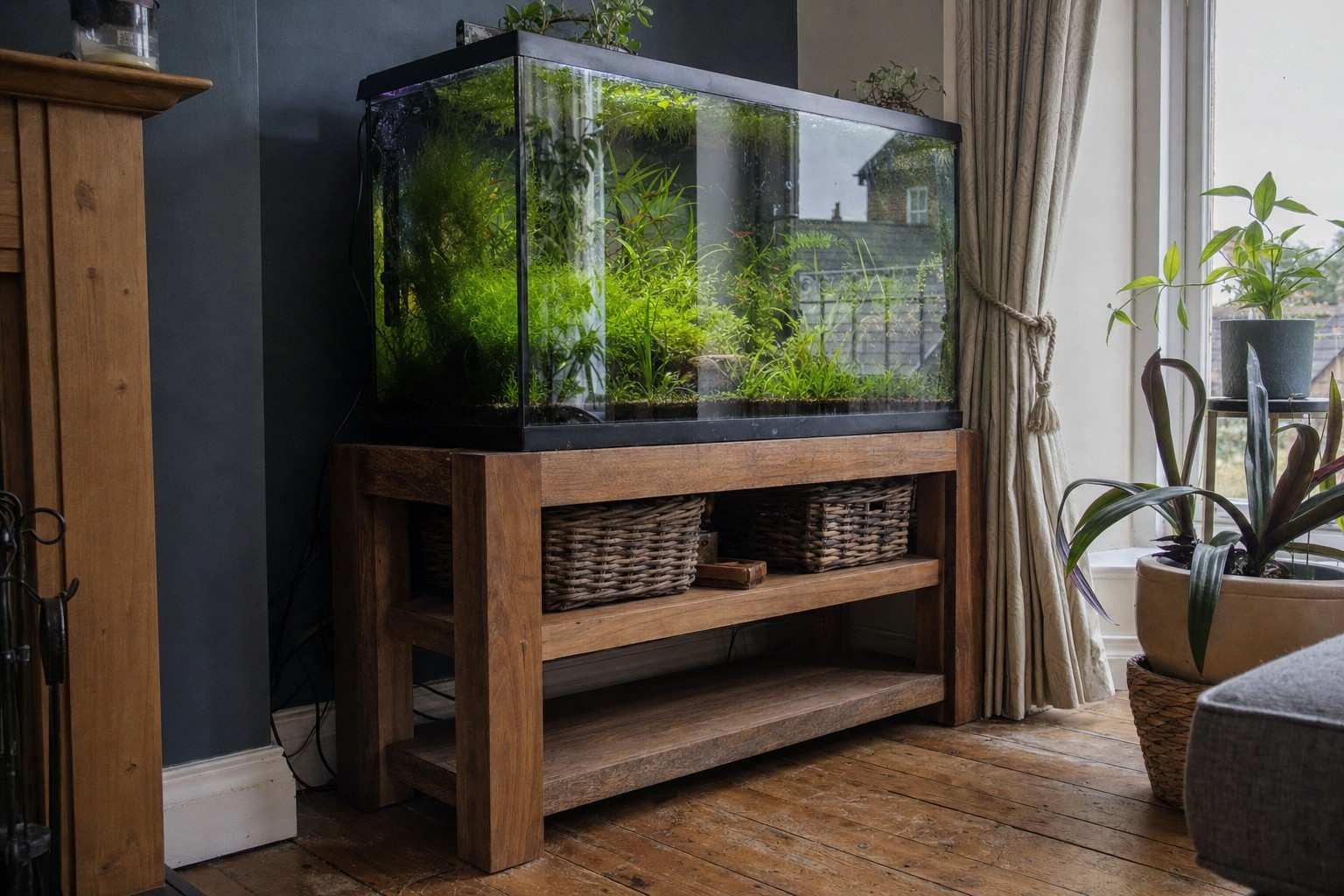
A bigger tank is easier to keep than a small one. That surprises most people. It shouldn’t.
The expectation is the opposite. A small tank looks manageable. A large one looks like a commitment. But the thing that makes fishkeeping hard is unstable water, and small volumes go unstable faster than large ones. That is not a matter of experience or technique. It is simple physics.
So if you are choosing your first tank, start with what the water actually does, not what looks approachable on a store shelf.
Tank Volume Calculator
Measure the inside of the glass. This works for standard rectangular tanks.
Enter all three measurements to see your volume.
- In litres
- Heater guideline How to size and choose a heater
- Weekly water change The simple weekly routine
These are starting guidelines, not hard rules. Your real water volume is a little less once substrate and rocks go in, and the water sits below the rim.
Why Volume Is Your Best Defense
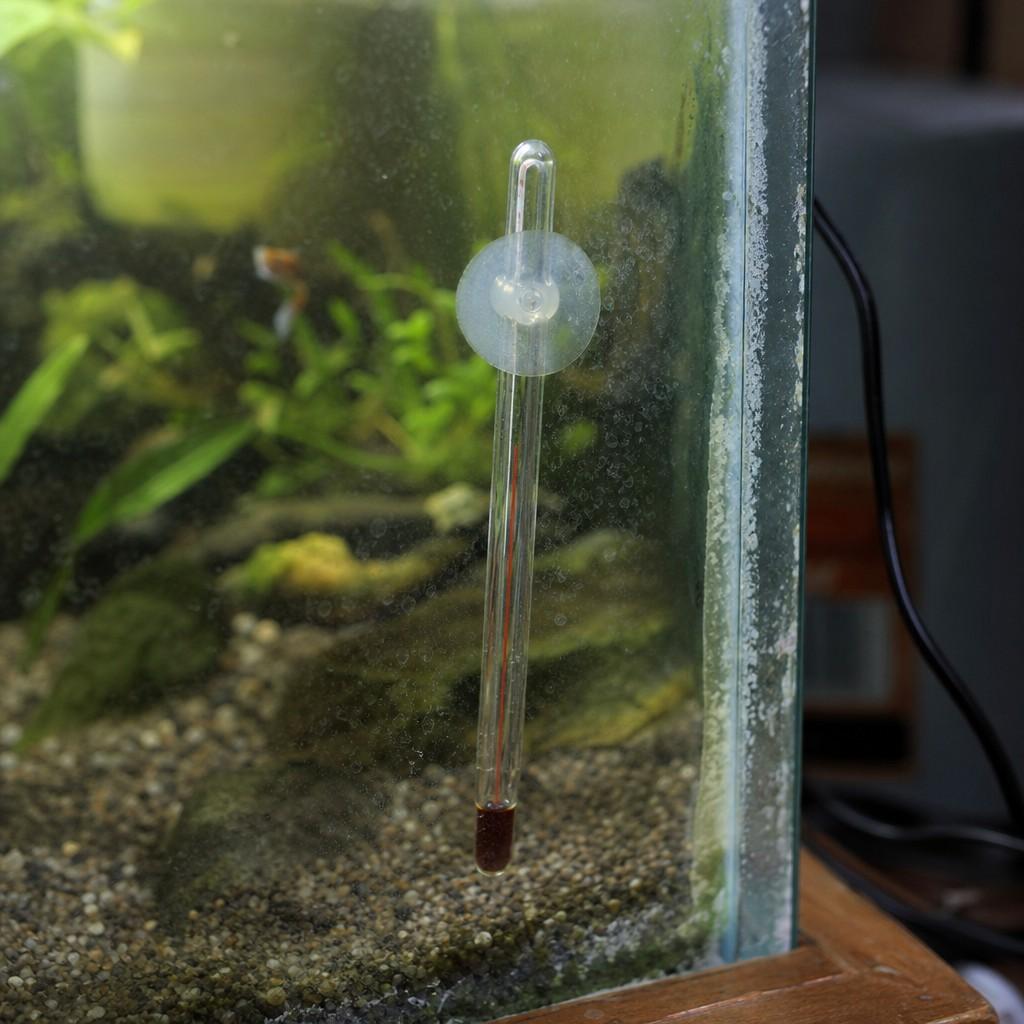
Water is the whole environment your fish live in. Everything they eat, breathe, and excrete stays in that water.
In a large tank, those inputs spread across more volume and change conditions slowly. In a small one, the same inputs hit the same water and hit it hard. In a small tank, one missed water change or one overfeed can push the water past a safe line within hours. The same slip in a large tank barely registers.
Ammonia is the clearest example. Fish produce waste continuously, and that waste breaks down into ammonia. Even small amounts of ammonia damage gill tissue. In a healthy, established tank, bacteria process that ammonia before it builds to dangerous levels. But if you overfeed by a little, or miss a water change, or the filter is still getting established, ammonia climbs. In a 10-gallon tank, it can reach toxic levels in a day. In a 40-gallon tank, the same mistake gives you far more time to notice and correct it.
Temperature works the same way. A cold draft, a warm afternoon, a heater that cycles slightly slower than usual: these move the needle in a small tank in hours. In a larger volume, temperature changes are gradual enough that the fish barely notice.
This is why experienced hobbyists treat a 5-gallon as a technical tank, not a starter tank. The forgiveness that beginners need is built into the volume itself.
The Impulse-Buy Problem
Walk into any big-box pet store and the front display is almost always the same: rows of small desktop kits. Five gallons, three gallons, sometimes less. The packaging reads "easy setup" and "complete kit." They are usually the cheapest thing in the section.
These tanks are genuinely popular. They are also among the hardest setups to maintain successfully.
A nano tank in the hands of a beginner is not a gentle introduction. It is a tight-margin system that demands close attention. Parameters change quickly. The filter has little biological surface area to buffer spikes. Stocking options are limited, and even one additional fish can shift the balance. Nano setups have a real place in the hobby, and a planted 5-gallon can look beautiful. But they work best with hobbyists who already understand what they are managing. If that description fits you, it is worth reading what a nano aquarium actually requires before the smallest kit on the shelf talks you into it.
A beginner who buys a 5-gallon and loses fish is not necessarily doing anything wrong. The tank is simply not designed to absorb the learning curve.
The Practical Sweet Spot
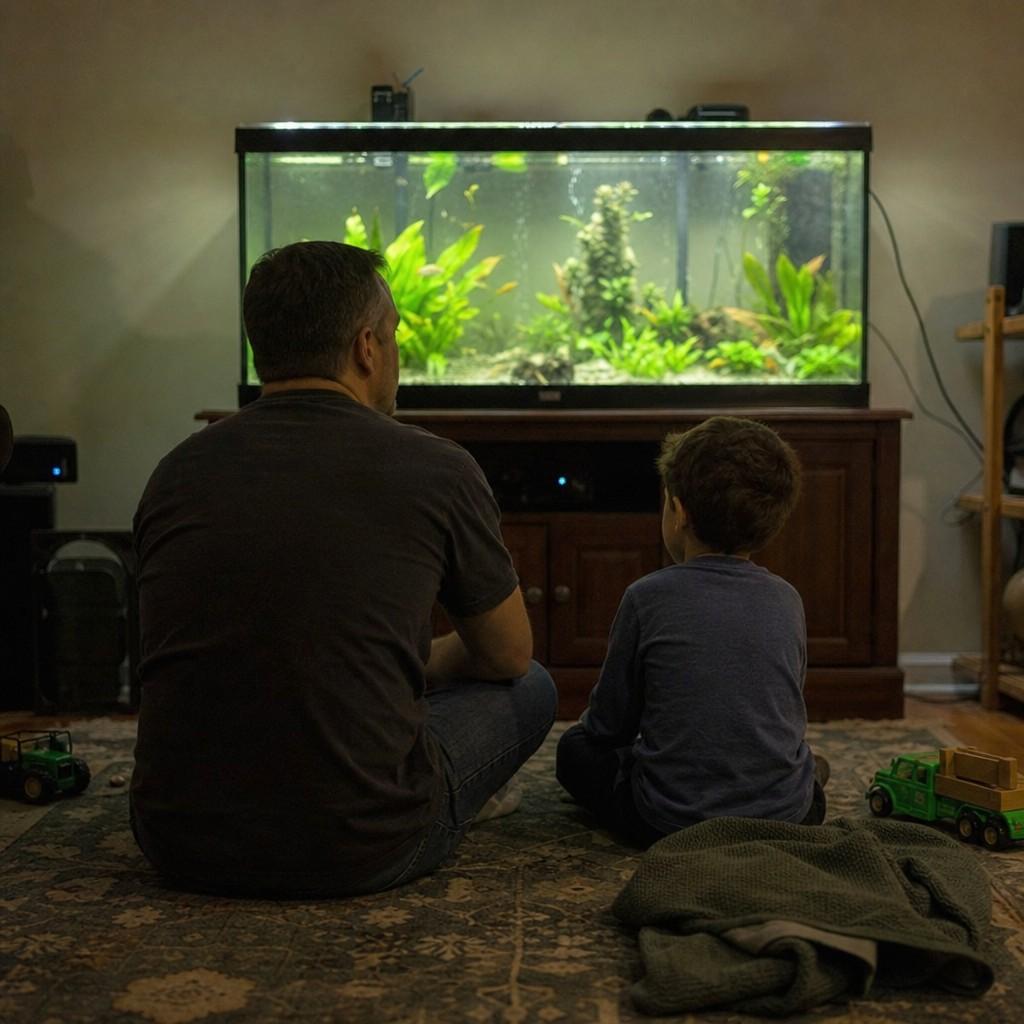
For a first freshwater setup, 20 gallons is the range most experienced hobbyists would point a beginner toward.
At 20 gallons, you have enough water volume to buffer the small mistakes that are unavoidable while you are still learning. The nitrogen cycle establishes more reliably. Temperature holds steadier. A slight overfeed or an extra day between water changes does not immediately become a crisis.
A 20-gallon tank also fits ordinary furniture, stores in a standard room without dominating it, and leaves room to grow your fish selection. It is not the only right answer, but it is the answer with the most room for error.
Tanks in the 29-to-40-gallon range offer even more stability and more stocking flexibility. If your space and budget allow it, the extra volume is not wasted. The jump in running costs is smaller than most people expect. Electricity, filter media, and water conditioner scale more slowly than tank size does. If you are curious what those numbers look like before you commit, what aquariums actually cost to maintain gives a plain account.
Weight Is The Number Nobody Thinks About Until It's Too Late
A gallon of water weighs roughly 8.3 pounds. That is before you add the glass, the gravel, the equipment, and the stand.
A filled 20-gallon setup runs well over 200 pounds once you add glass, gravel, and stand. A 40-gallon can approach 400. That is not a number a standard bookshelf or side table is built to hold over years. An aquarium stand designed for the purpose is worth the cost, not a shortcut.
Floor placement matters too. Most floors in ordinary homes handle this kind of weight without any problem, especially near a load-bearing wall. But a tank sitting in the middle of an older wooden floor or in a room above a crawl space deserves a second thought. And wherever the tank ends up, placement affects stability in other ways that compound over time. The wrong spot can add ongoing problems that have nothing to do with fish. If you want to think through placement before you buy, where not to put a fish tank walks through the main ones.
Stocking Is Where Small Tanks Punish You Twice
The other cost of buying small shows up six months in, when the fish have grown.
Fish in a pet store are juveniles. A 1-inch fish in a cup of water may be a 6-inch adult fish at two years old. The tank you sized for the fish you saw on the shelf may not fit the fish you have in a year. Rehoming is possible, but it is inconvenient at best and stressful for the fish at worst.
A larger tank gives you more stocking room later, and it means you can choose fish based on what they actually grow into, not what the juveniles happen to look like today.
This is one of the places where a little reading upfront saves a lot of trouble. Most aquarium species have well-documented adult sizes. The homework is not complicated. But it only helps if the tank is large enough to use the information.
The tank you sized for the fish you saw on the shelf may not fit the fish you have in a year. Rehoming is possible, but it is inconvenient at best and stressful for the fish at worst.
The same logic applies to community planning. Some fish are peaceful as singletons and aggressive at a certain group size. Some need to be kept in schools of six or more to behave normally. A 10-gallon tank forecloses many of those options from the start. A 20-gallon opens them up. A 30-gallon opens them up further.
A Stable Tank Beats An Impressive One
The counterintuitive truth is that the tank most people picture when they think "beginner" is the tank most likely to fail. The small, contained, controllable-looking setup is more fragile than it appears.
Volume is the buffer. More water means slower swings. Slower swings mean more time to notice problems before they become losses. A stable tank beats an impressive one, and stability comes from choosing the right size before you buy the first piece of equipment.
Getting the size right is the decision you make once. After that, the other parts fall into place. Setting up the nitrogen cycle correctly is the next one that matters, and it is easier in a tank with the volume to support it.
Start larger than you think you need. The fish will thank you for the room.