The Simple Weekly Aquarium Routine That Keeps a Tank Healthy

A person kneels beside a home aquarium during a water change, steadying a siphon hose that runs into a bucket on the floor

Twenty minutes on a weekend. Two minutes on a weekday morning, most of which you’d spend staring at the fish anyway.

That is the full routine for a healthy freshwater tank. Not the aspirational version. The real one, week after week, for years. The weekend block is a partial water change, a quick swipe of the glass, and a top-off for evaporation. The weekday check is feeding and a glance at the temperature. Neither requires a schedule on the wall or a spreadsheet.

An aquarium should be a calm corner of your home, not a second job. The routine below is sized for that idea.

The Weekly Job: Water Change, Glass, Top-Off

Water change tools on the floor beside an aquarium stand: bucket, gravel vacuum, algae pad and towel

The bucket comes out once a week.

A partial water change of roughly 15 to 25 percent is the single most useful thing you do for your tank. Standard hobby guidance has settled on that range because it removes accumulated waste products without shocking the fish with a massive chemistry shift. Small and regular beats large and occasional.

The tool for this is a gravel vacuum, sometimes called a siphon. One end goes into the substrate, the other into a bucket on the floor. As you drag it slowly across the gravel, it pulls debris out of the gaps while draining water into the bucket. Ten minutes of that and you have cleaned the bottom and removed your water volume at the same time.

Fill back up with dechlorinated tap water close to the tank’s temperature. Cold water stresses fish. A capful of water conditioner in the bucket takes thirty seconds and neutralizes chlorine before it touches the filter.

While you have the bucket nearby, run an algae pad along the inside glass. The kind sold at any pet store for a dollar or two. Algae starts as a faint green film and scrubs off easily when it’s young; leave it a couple of weeks and it takes real effort. One pass takes two minutes. That is the whole job.

The last piece is evaporation. Tanks lose water between changes, faster in warm rooms. Top off with plain dechlorinated water when the level drops noticeably. Evaporation leaves the minerals behind, so it is fresh water only for the top-off, not a salt or conditioner mix.

Daily, In Passing

The fish don’t need much from you on a Tuesday.

Feed small. The general rule is food the fish finish within two minutes. Flakes that are still floating ten minutes later are tomorrow’s ammonia problem. Overfeeding is one of the most common ways a clean tank goes sour, and it happens gradually and quietly enough that it takes a while to spot.

While they’re eating, look at them. Actually look. Behavior is the earliest signal anything is off: a fish hanging near the surface, clamped fins, unusual hiding, skipping food it normally chases. None of those observations require a test kit. They just require a moment of attention during something you would have done anyway.

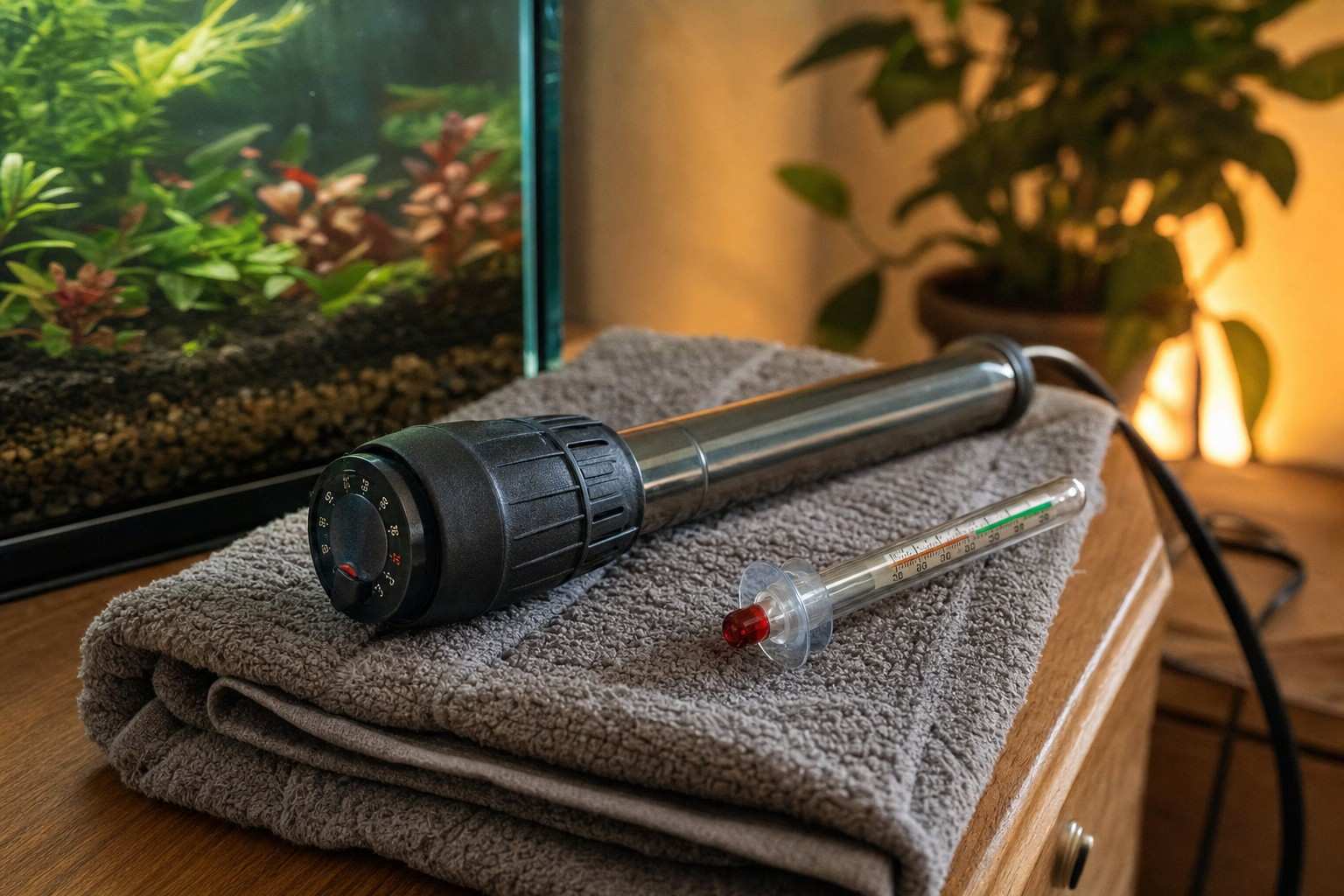
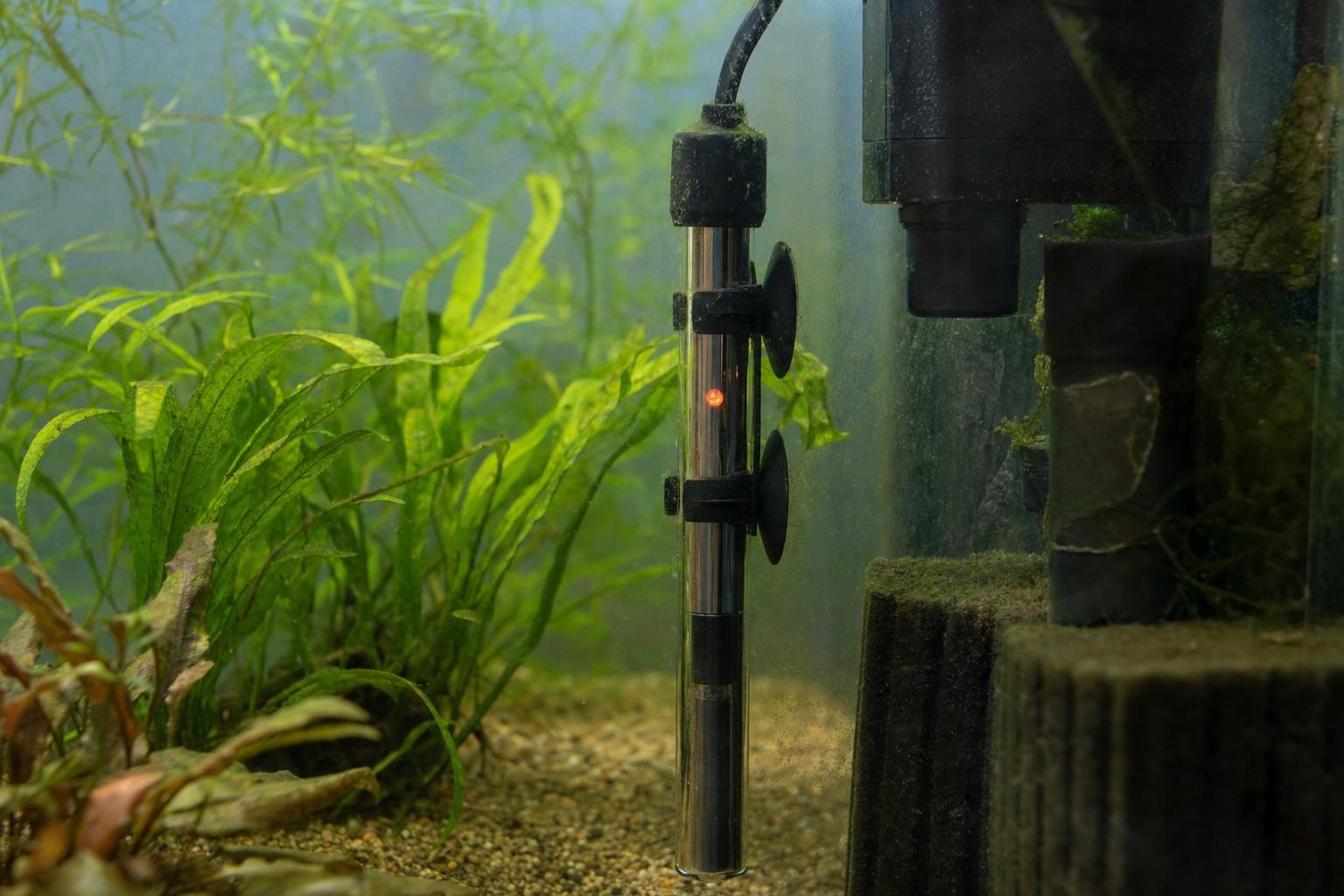
Check the thermometer while you’re there. Heaters fail occasionally, and a temperature that drifted overnight is the kind of thing you’d want to know before it becomes a livestock problem. Takes three seconds.

That is the full weekday interaction. Feed, glance, check the temperature. You are done before the coffee is cold.

The Monthly Job: Rinsing The Filter

A hand holds a used filter sponge above a bucket of removed tank water, drips falling

The filter runs constantly. Once a month or so, it needs a gentle rinse.

Do not clean filter media under the tap. The bacteria that make your filter work live in that media, in dense colonies on every surface of the sponge or ceramic. Chlorinated tap water kills them. Rinse the sponge in a bucket of the tank water you already removed during the weekly change, and the bacteria survive intact.

This is the same bacterial colony the whole hobby is built around. If you’re not yet sure what that colony does or how it gets established, fishless cycling is the right starting point. The filter doesn’t become useful until that bacteria population is there; rinsing correctly is how you keep it.

The goal is to remove the physical gunk that clogs the media, not to sterilize it. A gentle squeeze in old tank water does the job. You are not trying to make it look new.

The goal is to remove the physical gunk that clogs the media, not to sterilize it. A gentle squeeze in old tank water does the job.

How often depends on the tank. A heavily stocked tank builds up faster than a lightly stocked one. Monthly is a sensible baseline; inspect it when you do the water change and you’ll develop a feel for the timing.

Testing After The Tank Matures

Once the tank is established, the test kit lives in a drawer.

A healthy, stable tank does not need weekly testing. The routine above, done consistently, keeps the numbers where they should be. You are not managing chemistry in real time. You are removing waste and trusting the biology.

The test kit comes back out when something looks off. A fish behaving strangely, cloudy water that doesn’t clear, algae exploding faster than usual. Most fish problems are water problems, and a test at that moment is the fastest way to find out whether the water is the culprit. Ammonia and nitrite in a mature tank should both read zero. A non-zero result points at what to fix.

That’s the sensible cadence: occasional in normal times, immediate when something looks wrong. Not obsessive, not neglectful.

What Skipped Weeks Look Like

A tank is honest about neglect.

Skip one week and the glass gets a faint film. Skip two and the film is visible from across the room. Nitrates climb with each week without a water change, algae follows the nutrients up, and the water takes on a slightly greenish cast that tells you the balance shifted. None of this is catastrophic on week two. It does compound.

The routine is small precisely because it is easier to keep than to catch up on. A partial change and a glass wipe do not take much willpower when they’re already part of the weekend rhythm. They take significantly more when four weeks of buildup are waiting.

This is honest, not alarming. The tank is not fragile. But it does give you feedback, and a regular small habit is what keeps that feedback quiet.

Trips and Vacations

A healthy, well-fed tank handles a long weekend unfed without incident. Fish in the wild don’t eat every day. Three days with no feeding is not a crisis; the bigger risk is an anxious neighbor overfeeding while you’re gone.

For longer trips, a little preparation goes a long way. There are specific things worth doing before you leave and options worth knowing about for multi-week absences. The full picture is covered in what to do if you need to leave your aquarium for two weeks.

The short version: a healthy tank is more resilient than most new keepers expect.

The Tools Worth Having

A gravel vacuum, a dedicated bucket, and an algae pad. That is the kit for everything above.

The bucket matters more than it sounds. Using the same bucket for the tank every week avoids any chance of soap or cleaning product residue reaching the water. Label it. Keep it somewhere you’ll actually use it.

The gravel vacuum is the unglamorous workhorse of the whole routine. Basic versions cost under fifteen dollars. Fancier motorized versions exist. The basic one works fine and lasts for years.

The algae pad is a dollar. Get several. They are the sort of thing it is convenient to not run out of.

Nothing on that list is expensive. The whole setup, if you’re starting fresh, is a modest one-time spend. For a fuller picture of what a tank actually costs beyond the initial gear, the running-cost breakdown at are aquariums expensive to maintain covers it without sugarcoating.

The routine is small. The list of tools is short. A tank that gets both on a regular schedule tends to stay clear, stay healthy, and stay exactly what it should be: a calm thing to look at after a long week.

Choosing Your First Aquarium Fish: A Calm Guide to Stocking

A person seen from behind stands in a dim fish store aisle looking at a wall of glowing aquarium tanks

The old advice to pick “hardy starter fish” was never really about what you wanted to keep. It was a workaround for a flawed process.

The idea was that beginners needed fish tough enough to survive a new, uncycled tank. The fish suffered so the bacteria could grow. That is the era that advice came from, and it has passed. With fishless cycling now the standard approach, you establish the bacteria before any fish arrive. The tank is ready when the fish get there.

That changes the question entirely. It is no longer which fish can survive your tank. It is which fish fit your water and your patience.

Start With The Tank, Not The Store

A drinking glass of tap water next to a test tube rack on a kitchen counter in window light

There is a practical order to this, and the sequence matters.

The fish go in last. The bacteria colony has to finish its work first, and the only way to know it has finished is a liquid test kit reading zero ammonia, zero nitrite, and a modest nitrate. If you’re still in the middle of that process, the full guide to fishless cycling covers every step and what to expect.

Cycle the tank before you buy the fish. Stock only when the cycle is complete, not when the tank looks ready. A clear, clean-looking tank and a cycled tank are not the same thing. One is cosmetic. The other is the condition the fish actually live in.

Once the cycle is done, the instinct is to go straight to the store. The better move is to spend one more hour at home with a water test and a species list. Both will save you money and grief.

Test Your Tap Water Before You Buy Anything

This is the step most beginners skip, and it’s the one that simplifies everything else.

Your tap water already has a hardness level and a pH. Those numbers are not something to fix. They’re the environment your fish will live in, and the smart approach is to find species that already like what comes out of your tap.

Keep fish that match your tap water, not fish that need you to fight it. Fighting your water with additives to suit the wrong fish is an ongoing maintenance task. The chemistry drifts back, you adjust again, and the fish are never truly settled. Choose fish that thrive in your tap’s natural range and that whole problem disappears.

Hardness matters more than most beginner guides let on. Water in the eastern US tends to run harder than water in the Pacific Northwest, and there is genuine variation even within the same city. A one-time test from your local supplier or a basic kit tells you what you’re working with. That number drives a better stocking decision than any generic species list.

Fish That Tend To Work Well For First Tanks

A planted home aquarium with a small school of tiny fish as soft shapes among green plants

The hobby has a well-established shortlist of peaceful community fish that suit most first tanks, and they are worth researching in roughly this order.

Guppies and platies are among the most widely kept freshwater fish in the hobby, and there is good reason for it. Both tolerate a broad range of conditions, come in many color forms, and are active without being aggressive. They prefer company of their own kind, so a small group reads better than a singleton.

Zebra danios and white cloud minnows are fast, lively schooling fish that handle cooler water better than most tropical species. They are active throughout the tank and add movement without adding aggression. Schooling species like these are often listed in groups of six or more in hobby guidance, and that number reflects real behavior rather than a rule. A lone schooling fish paces the glass. A group of six behaves like a group.

Neon tetras and ember tetras are the small, jewel-colored fish that appear in nearly every beginner guide. They are peaceful, they school, and they look good in a planted tank. Ember tetras are slightly hardier and a little more forgiving of water that isn’t dialed in precisely. Both prefer softer, slightly acidic water, so they’re worth checking against your tap reading before committing.

Corydoras catfish earn a spot on almost every community tank list. They stay near the bottom, sift through substrate, and are almost completely peaceful. A small group of the same species is more active and visibly more comfortable than a lone fish.

None of these species belong in a tank without a finished nitrogen cycle. And none of them should be researched and purchased in the same trip to the store.

The Store-Size Trap

The fish in the store tank are not finished growing, and the gap is bigger than it looks.

Adult size is the only size that matters for your stocking plan. A fish that fits in a net today might need a 75-gallon tank to live well as an adult. The two species that catch beginners most often here are the common plecostomus and the iridescent shark. Both are frequently sold as small, inexpensive fish. Both routinely grow to a foot or longer, and both will eventually outgrow almost any home aquarium.

The fix is simple but requires discipline. Research the adult size before you’re standing in the store. Doing it at home, without a pretty fish in front of you, is the only version that reliably works.

Research the adult size before you’re standing in the store. Doing it at home, without a pretty fish in front of you, is the only version that reliably works.

This is why the impulse-buy problem is its own category. A fish store is a well-lit, well-maintained environment where everything looks achievable. Your tank at home is a different system, with a bacteria colony sized for what it currently holds, not for whatever caught your eye on the way out.

Stock Slowly, And Stay Understocked

The bacteria colony in your filter is sized for the fish you currently have. When you add more fish, the waste load increases, and the colony catches up over the following weeks.

Add too many fish at once and the ammonia rises faster than the bacteria can handle. The result looks like a water quality crisis, because it is one.

Add a few fish, wait a few weeks, then add a few more. That pace gives the bacteria time to grow with the load. It also gives you time to watch the fish you have, spot any problems early, and make a better decision about what comes next.

A tank that runs understocked is not a failure of ambition. It is a tank with stable water, low stress on the fish, and room for the biofilter to keep up. Overstocking is a much easier trap than most beginners expect, because the tank looks fine right up until it doesn’t.

Fish Are A Multi-Year Commitment

This part doesn’t always make it into beginner advice, but it belongs here.

A well-kept common goldfish can live well over ten years. A well-kept corydoras can live five to ten. Even small tetras often live three to five years with good water quality. The species you’re considering for your first tank are not short-term guests. They are residents.

Lifespan means the fish you choose now are the fish you’ll be caring for years from now. That’s not a reason to avoid the hobby. It’s a reason to choose thoughtfully. A complete picture of how long common aquarium fish live is worth looking at before your first purchase, because it changes the weight of the decision.

The stocking choice is the one that follows you longest. The equipment you can swap out. The fish stay.

One Practical Frame Before You Walk In

There is a version of this process that works and a version that doesn’t.

The version that doesn’t: go to a pet store with no plan, fall in love with something colorful, bring it home, and research it afterward.

The version that works: test your tap water, read about two or three species that match it, pick one to start with, and go to the store knowing what you’re looking for and how many you need.

Write down the species name and the minimum group size before you leave home. That piece of paper is worth more than an hour of browsing.

The right first fish is usually less dramatic than the fish that catches your eye in a store. It is calm, compatible with your water, and correctly sized for a tank that is still finding its balance. That combination almost always builds a tank worth keeping.

What Size Aquarium Should You Get? Why Bigger Is Easier

A large planted freshwater aquarium on a sturdy wooden stand photographed from a low angle, emphasizing its size and solidity

A bigger tank is easier to keep than a small one. That surprises most people. It shouldn’t.

The expectation is the opposite. A small tank looks manageable. A large one looks like a commitment. But the thing that makes fishkeeping hard is unstable water, and small volumes go unstable faster than large ones. That is not a matter of experience or technique. It is simple physics.

So if you are choosing your first tank, start with what the water actually does, not what looks approachable on a store shelf.

Why Volume Is Your Best Defense

Close-up of a glass thermometer attached inside an aquarium with green plants softly out of focus behind it

Water is the whole environment your fish live in. Everything they eat, breathe, and excrete stays in that water.

In a large tank, those inputs spread across more volume and change conditions slowly. In a small one, the same inputs hit the same water and hit it hard. In a small tank, one missed water change or one overfeed can push the water past a safe line within hours. The same slip in a large tank barely registers.

Ammonia is the clearest example. Fish produce waste continuously, and that waste breaks down into ammonia. Even small amounts of ammonia damage gill tissue. In a healthy, established tank, bacteria process that ammonia before it builds to dangerous levels. But if you overfeed by a little, or miss a water change, or the filter is still getting established, ammonia climbs. In a 10-gallon tank, it can reach toxic levels in a day. In a 40-gallon tank, the same mistake gives you far more time to notice and correct it.

Temperature works the same way. A cold draft, a warm afternoon, a heater that cycles slightly slower than usual: these move the needle in a small tank in hours. In a larger volume, temperature changes are gradual enough that the fish barely notice.

This is why experienced hobbyists treat a 5-gallon as a technical tank, not a starter tank. The forgiveness that beginners need is built into the volume itself.

The Impulse-Buy Problem

Walk into any big-box pet store and the front display is almost always the same: rows of small desktop kits. Five gallons, three gallons, sometimes less. The packaging reads “easy setup” and “complete kit.” They are usually the cheapest thing in the section.

These tanks are genuinely popular. They are also among the hardest setups to maintain successfully.

A nano tank in the hands of a beginner is not a gentle introduction. It is a tight-margin system that demands close attention. Parameters change quickly. The filter has little biological surface area to buffer spikes. Stocking options are limited, and even one additional fish can shift the balance. Nano setups have a real place in the hobby, and a planted 5-gallon can look beautiful. But they work best with hobbyists who already understand what they are managing. If that description fits you, it is worth reading what a nano aquarium actually requires before the smallest kit on the shelf talks you into it.

A beginner who buys a 5-gallon and loses fish is not necessarily doing anything wrong. The tank is simply not designed to absorb the learning curve.

The Practical Sweet Spot

A parent and child sit on the living room floor in the evening watching a glowing 20-gallon community aquarium

For a first freshwater setup, 20 gallons is the range most experienced hobbyists would point a beginner toward.

At 20 gallons, you have enough water volume to buffer the small mistakes that are unavoidable while you are still learning. The nitrogen cycle establishes more reliably. Temperature holds steadier. A slight overfeed or an extra day between water changes does not immediately become a crisis.

A 20-gallon tank also fits ordinary furniture, stores in a standard room without dominating it, and leaves room to grow your fish selection. It is not the only right answer, but it is the answer with the most room for error.

Tanks in the 29-to-40-gallon range offer even more stability and more stocking flexibility. If your space and budget allow it, the extra volume is not wasted. The jump in running costs is smaller than most people expect. Electricity, filter media, and water conditioner scale more slowly than tank size does. If you are curious what those numbers look like before you commit, what aquariums actually cost to maintain gives a plain account.

Weight Is The Number Nobody Thinks About Until It’s Too Late

A gallon of water weighs roughly 8.3 pounds. That is before you add the glass, the gravel, the equipment, and the stand.

A filled 20-gallon setup runs well over 200 pounds once you add glass, gravel, and stand. A 40-gallon can approach 400. That is not a number a standard bookshelf or side table is built to hold over years. An aquarium stand designed for the purpose is worth the cost, not a shortcut.

Floor placement matters too. Most floors in ordinary homes handle this kind of weight without any problem, especially near a load-bearing wall. But a tank sitting in the middle of an older wooden floor or in a room above a crawl space deserves a second thought. And wherever the tank ends up, placement affects stability in other ways that compound over time. The wrong spot can add ongoing problems that have nothing to do with fish. If you want to think through placement before you buy, where not to put a fish tank walks through the main ones.

Stocking Is Where Small Tanks Punish You Twice

The other cost of buying small shows up six months in, when the fish have grown.

Fish in a pet store are juveniles. A 1-inch fish in a cup of water may be a 6-inch adult fish at two years old. The tank you sized for the fish you saw on the shelf may not fit the fish you have in a year. Rehoming is possible, but it is inconvenient at best and stressful for the fish at worst.

A larger tank gives you more stocking room later, and it means you can choose fish based on what they actually grow into, not what the juveniles happen to look like today.

This is one of the places where a little reading upfront saves a lot of trouble. Most aquarium species have well-documented adult sizes. The homework is not complicated. But it only helps if the tank is large enough to use the information.

The tank you sized for the fish you saw on the shelf may not fit the fish you have in a year. Rehoming is possible, but it is inconvenient at best and stressful for the fish at worst.

The same logic applies to community planning. Some fish are peaceful as singletons and aggressive at a certain group size. Some need to be kept in schools of six or more to behave normally. A 10-gallon tank forecloses many of those options from the start. A 20-gallon opens them up. A 30-gallon opens them up further.

A Stable Tank Beats An Impressive One

The counterintuitive truth is that the tank most people picture when they think “beginner” is the tank most likely to fail. The small, contained, controllable-looking setup is more fragile than it appears.

Volume is the buffer. More water means slower swings. Slower swings mean more time to notice problems before they become losses. A stable tank beats an impressive one, and stability comes from choosing the right size before you buy the first piece of equipment.

Getting the size right is the decision you make once. After that, the other parts fall into place. Setting up the nitrogen cycle correctly is the next one that matters, and it is easier in a tank with the volume to support it.

Start larger than you think you need. The fish will thank you for the room.

Fishless Cycling: How to Start an Aquarium Without Risking a Single Fish

A person at a kitchen table holds a water test tube up to the window light, with an empty cycling aquarium glowing in the background

The best first weeks of fishkeeping contain no fish at all.

That sounds backward, but it is the whole idea behind fishless cycling. You set up a tank, get it running, and then leave it empty for a while on purpose. The point of those quiet weeks is to grow something invisible: a colony of bacteria that will make the water safe to live in.

Do this part right and the rest of the hobby gets a lot easier. Skip it and you are very likely starting with sick or dying fish, no matter how good the equipment is.

So here is the method, start to finish, with the reason behind each step.

What Cycling Actually Is

A newly set up aquarium with slightly hazy water and no fish, filter running, in a daytime living room

Forget the chemistry homework for a minute. Cycling is about consequences.

Fish produce waste, and that waste releases ammonia into the water. Ammonia burns gills, and even small amounts are toxic to fish. In a brand-new tank with nothing to remove it, ammonia climbs fast and the fish pay for it.

Nature has a fix, and your job is to install it before the fish move in. Two families of bacteria do the work. The first kind eats ammonia and turns it into nitrite. Nitrite is also poison, so a second kind eats that and turns it into nitrate, which is far less harmful and gets removed with normal water changes.

That chain has a name worth knowing, the nitrogen cycle, but you do not need the equations. You need the order: ammonia, then nitrite, then nitrate.

The catch is time. Those bacteria are slow to establish, and growing enough of them takes weeks, not days. They settle mostly in the filter, multiply on their own schedule, and cannot be hurried by good intentions.

That is why a tank that looks finished on day one is nowhere near ready. The glass is clear and the heater is warm, but the engine that keeps fish alive has not been built yet.

Why Fishless, And Why It Matters For Returners

The old way of building that engine used live fish to do it.

The standard advice for decades was to drop a few hardy “starter” fish into a fresh tank and let them weather the ammonia and nitrite spikes while the bacteria caught up. The fish were the ammonia source. Many of them suffered, and plenty did not make it.

If you kept tanks years ago and watched early fish die, that method is a big part of why. The hobby has changed a great deal since then, and a quick read on what is different about fishkeeping today shows just how much the old “tough it out” approach has fallen away.

Fishless cycling grows the exact same bacteria without an animal in the tank. You supply the ammonia yourself, the colony builds, and not a single fish has to endure the toxic phase. By the time fish arrive, the water already handles their waste.

Most fish problems are water problems, and fishless cycling solves the biggest water problem before it can ever reach a living thing.

The Steps, Start To Finish

Liquid test kit bottles and filled test tubes in a rack on a kitchen counter next to a colour comparison card

Here is the actual process for an empty tank on a counter.

Set the tank up and get it running first. Fill it with dechlorinated water, since the chlorine in most tap water kills the bacteria you are trying to grow. Run the filter and the heater, and let everything stabilize for a day. Warm water in the low-to-mid 80s Fahrenheit speeds the bacteria along.

Then add a source of ammonia, because without food the bacteria have nothing to grow on. The clean option is plain, unscented household ammonia, added a little at a time. Bottled “ammonium chloride” dosing products made for this purpose work the same way and take the guesswork out of measuring. There is also the old pinch-of-fish-food method, where decaying food releases ammonia on its own, but it is messier, slower, and harder to control. Most people are better served by dosing directly.

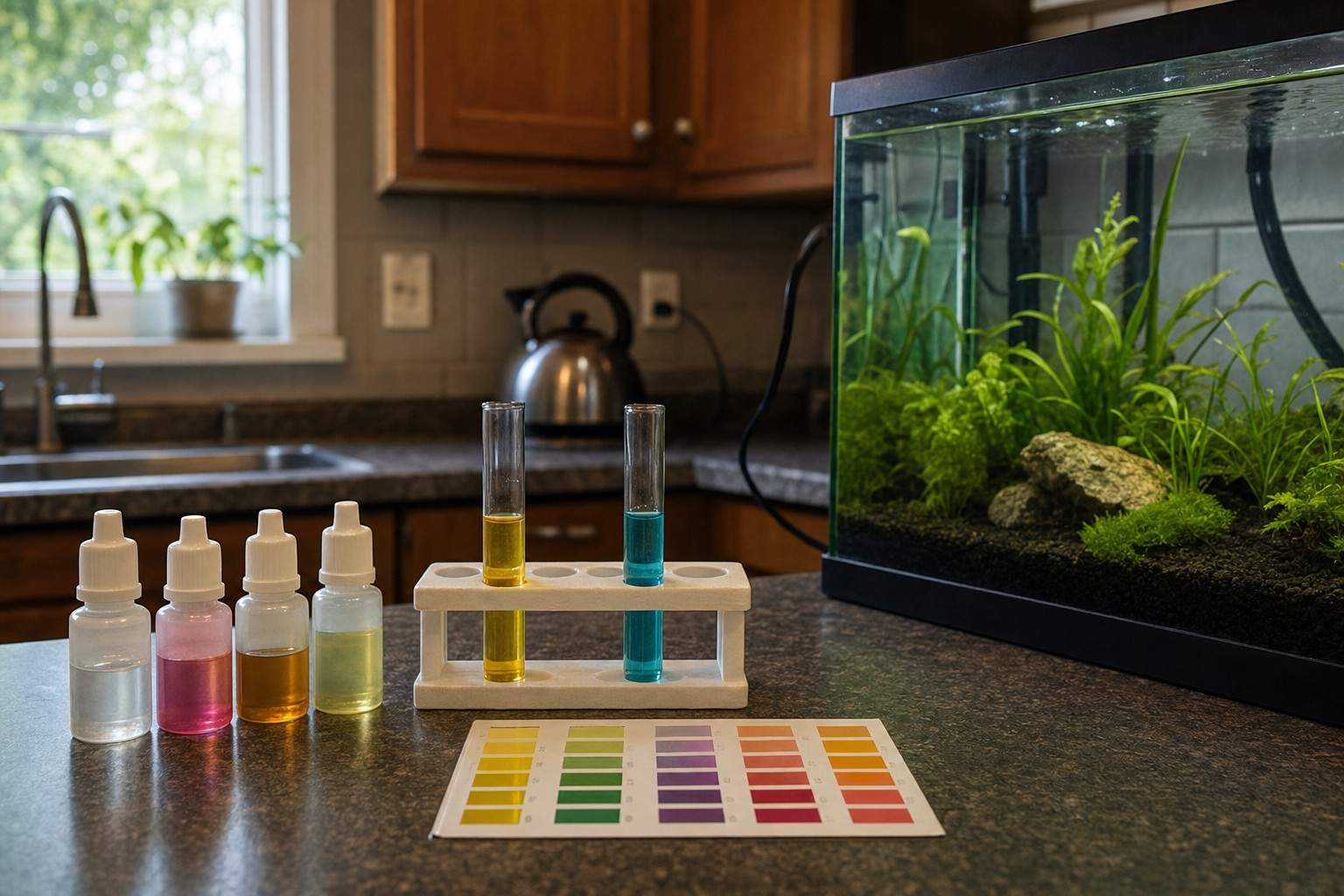
Buy the test kit before you buy the fish, and use it. A liquid test kit is the only way to see the invisible part happening. Test every couple of days and write the numbers down.

Now watch the sequence unfold.

Ammonia rises first. Over days, the first bacteria establish and start eating it, and you will see ammonia fall while nitrite begins to climb. That handoff is the first real sign the cycle is working.

The nitrite phase is the longest, and it is where most people quit. Nitrite can stay high for a week or two while the second bacteria slowly catch up, and from the outside it looks like nothing is happening. It is. This is the stretch to be patient through, not the sign of failure it feels like.

Eventually nitrite falls too, and nitrate appears. Nitrate showing up means the engine is built, both bacteria families are working, and the tank can now process waste on its own.

Do one large water change to bring the nitrate down, and the tank is ready for fish. Add them slowly, in small groups over weeks, so the bacteria can scale up to the new waste load instead of being swamped all at once.

Nitrite can stay high for a week or two while the second bacteria slowly catch up, and from the outside it looks like nothing is happening. It is. This is the stretch to be patient through, not the sign of failure it feels like.

How Long It Really Takes

The honest answer is that it varies, and you cannot set a date.

University extension programs and established hobby guidance commonly put a full cycle at roughly four to eight weeks. That is the range to plan around. Some tanks finish near the short end, some drag past it, and warmer water and a steady ammonia supply tend to help.

Bottled bacteria starters promise to shorten the wait by seeding the colony directly. They can genuinely speed things up, but results vary widely, so treat any “instant cycle” claim with caution. Some batches work well, some do very little, and the only way to know your tank is actually ready is the test kit, not the bottle’s label.

The weeks themselves cost very little. Running a cycling tank is mostly the power for a light, a filter, and a heater, which is a small slice of what an aquarium costs to maintain over a year. The main thing you spend during cycling is patience.

What Not To Do While It Cycles

A few common mistakes can reset the whole process, so they are worth naming.

Do not add fish “just to test the water.” That is the old method by another name, and it puts an animal back into the toxic phase you set out to avoid.

Do not scrub the filter media clean partway through. The bacteria you are growing live in that media, and washing it under the tap pours your progress down the drain. During a cycle, leave the filter alone.

Do not chase a daily schedule of additives and products. Cycling is not something you push along with more bottles. It runs on its own clock, and the test kit, not a shopping list, tells you where it stands.

Cycle the tank before you buy the fish. That single rule prevents most beginner heartbreak, and it is the reason the empty weeks are not wasted time.

Use them. Learn to read the test kit while the numbers are still moving. Plan what you actually want to keep, since the size and number of fish a tank can hold is a real limit worth thinking through early. By the time the cycle finishes, you will know your equipment, trust your readings, and be ready to stock a tank that was built to keep its fish alive.

Getting Back Into Aquariums: What Has Changed Since Your Last Tank

An adult sits in a living room armchair in the evening, coffee mug in hand, watching a newly set up freshwater aquarium glowing on a wooden stand

The fish are still the same. Almost everything around them is different.

If you kept a tank as a kid, or in a dorm, or in a first apartment sometime between the 1990s and the early 2010s, the hobby you remember has quietly modernized. The gear got cheaper and quieter. The standard advice got better. The fundamentals, though, did not move an inch.

Freshwater fish remain one of the most commonly kept pets in the country. The American Pet Products Association’s National Pet Owners Survey has tracked them in millions of US households for years. You are not coming back to a dead hobby. You are coming back to a calmer, better-equipped version of the one you left.

So here is the honest tour: what changed, what didn’t, and what the version of you from twenty years ago already got right.

The Gear On The Shelf Looks Nothing Like It Did

New aquarium gear laid out on a wooden table next to an old fluorescent tube light: LED light bar, filter, liquid test kit bottles

Walk down the aquarium aisle today and the first thing you notice is light.

Those long fluorescent tubes that hummed and ran warm are mostly gone. LED lighting has replaced them across the board, and it is the single biggest hardware change since you left. LEDs cost less to run, stay cool to the touch, and last for years instead of fading after a season. A basic clip-on or hood light now grows live plants in an ordinary setup, no special fixture required.

That last point matters more than it sounds. Live plants used to feel like expert territory. They are normal now.

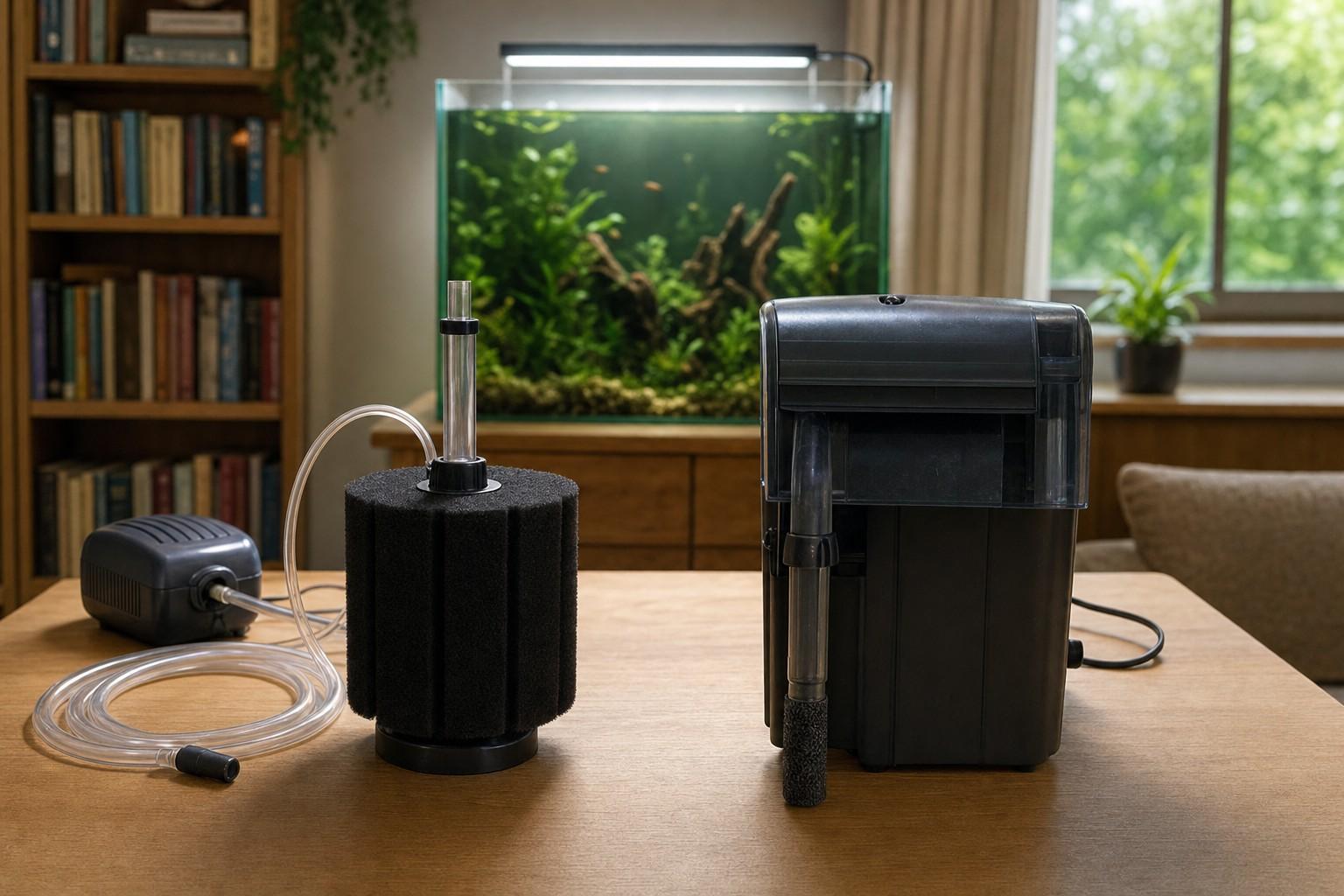
The filtration changed too. Modern hang-on-back and internal filters run quieter and move water more gently than the rattling units you remember. The old air pump that buzzed all night on a nightstand is no longer the only option.

Running costs are modest but real, and worth knowing before you buy. A tank draws power for the light, the filter, and a heater, plus the slow drip of replacement parts and water conditioner. None of it is dramatic, but it adds up over a year, and it is worth a look at what a tank actually costs to run before you commit to a size.

The basic economics, for what it’s worth, are unchanged. A tank is a modest hobby that rewards patience over spending.

Fishless Cycling Is The New Standard, And It Changes Everything

Here is the change that should genuinely reassure you.

Back when you started, the common advice was to add a few hardy “starter” fish to a brand-new tank and let them tough out the first few weeks. Many of those fish died. If you lost fish in your first month years ago, that was very likely the era’s standard advice failing you, not you failing the fish.

The hobby now teaches fishless cycling instead. You feed the tank a source of ammonia with no animals in it, grow the bacteria that process waste, and only add fish once the water tests clean. Nothing has to suffer through the dangerous part.

The understanding behind it went mainstream too. The nitrogen cycle is no longer obscure chemistry buried in a forum thread. It is explained plainly almost everywhere, and liquid test kits to track it are cheap and widely sold.

Cycle the tank before you buy the fish. That principle was always true. The difference is that today the hobby actually hands you a humane way to do it.

It still takes time. University extension sources and hobby guides commonly put a full cycle at roughly four to eight weeks. That part of the math hasn’t changed, and it can’t be rushed.

You feed the tank a source of ammonia with no animals in it, grow the bacteria that process waste, and only add fish once the water tests clean. Nothing has to suffer through the dangerous part.

The fear of killing the fish is the most common reason returners hesitate. It deserves a straight answer: most early losses are water problems, not personal failures, and the modern method removes the riskiest part entirely.

Information Is Everywhere Now, Which Is A Mixed Blessing

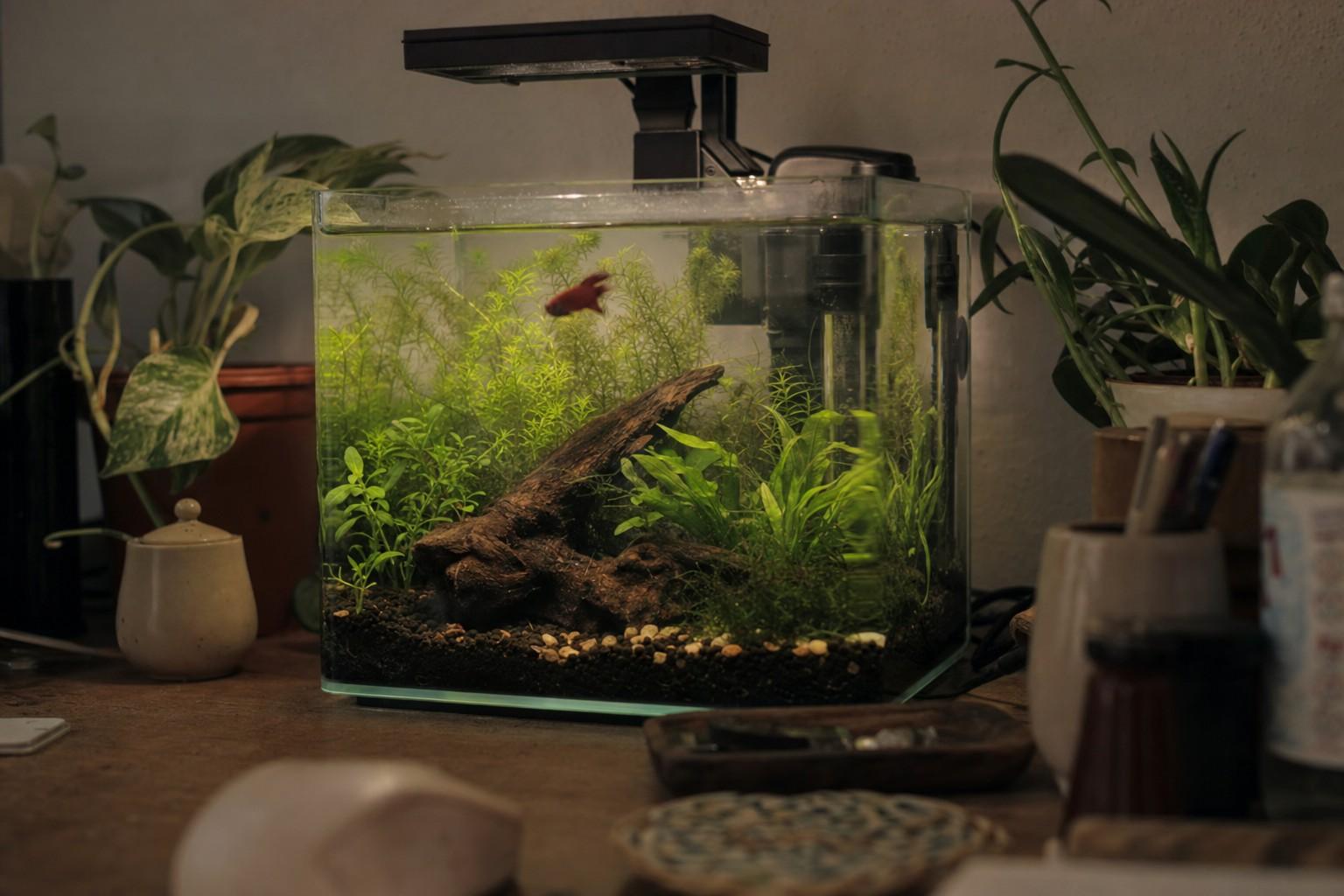
A small planted nano cube aquarium glowing on a cluttered home desk in the evening

The old forum era had one strength. You found a community, asked a question, and got a slow, considered answer from a handful of regulars.

That world is mostly gone. In its place is everything, all at once: videos, articles, marketplace listings, and a dozen confident voices for every question. The bottleneck is no longer finding advice. It is sorting good advice from bad.

This is the part that trips up returners most. You will hear that nano tanks are the easy modern way in, that a five-gallon cube on a desk is perfect for a beginner. Nano setups are a real and popular trend, and a small planted tank can look wonderful.

But the old rule holds. A bigger tank is easier to keep than a small one. Small water volumes swing fast: temperature, ammonia, and pH all move quicker in less water, so a small mistake hits harder. If you want the gentlest restart, a 20-gallon forgives what a 5-gallon punishes.

That doesn’t mean small is off the table. It means going in with eyes open, and it’s worth understanding what a nano aquarium really asks of you before a cute desktop cube talks you into it.

One thing the internet did genuinely improve: planning around real life. The low-tech planted tank movement made stable, low-maintenance setups normal, and there is now plenty of honest guidance on questions like whether a tank can be left alone over a vacation. The answer is mostly yes, with a little prep.

What Hasn’t Changed At All

Strip away the new gear and the same handful of truths run the whole hobby.

Patience still wins. A tank still needs to mature before it is stable. A stable tank beats an impressive one, and stability is still bought with regular partial water changes, not gadgets.

The nitrogen cycle itself is unchanged. It was always the engine, and it always will be. Fish still produce waste, bacteria still process it, and you still manage the result with water changes and a little testing.

The basic rhythm of ownership is the same too. A small weekly habit keeps a tank healthy. Neglect still shows up in the glass within a couple of weeks.

And the core principle behind all of it hasn’t aged a day: an aquarium should be a calm corner of your home, not a second job.

What Your Old Knowledge Is Actually Worth

More than you think.

The fundamentals you learned years ago still transfer directly. You already understand that water quality is the whole game, that fish need stable conditions, that you can’t rush a new tank. What changed is mostly the gear and the recommended methods, not the underlying biology. That biology is exactly the part you already know.

What you mainly have to update is the toolkit. Swap fluorescent thinking for LED. Swap “starter fish” for fishless cycling. Add a liquid test kit, which the hobby now treats as basic equipment rather than an extra.

Your instincts about livestock still apply, including the simple truth that fish are a multi-year commitment when they are kept well. If you’re weighing what to stock, it helps to know how long common aquarium fish actually live so the tank fits the commitment you want.

So treat the return as an upgrade, not a restart from zero. The hard-won lessons carried over. The frustrating parts got easier.

The fish are still the same. This time, almost everything else is on your side.

What is Nano Aquarium? The Beauty Of Small-Scale Aquatic Worlds

A nano aquarium is a small-scale aquarium designed for keeping a limited number of fish and plants. Usually, the capacity of a nano aquarium is around 5 to 10 gallons (18 to 37 liters) or less.

These miniature aquariums are becoming increasingly popular among hobbyists due to their compact size and versatility. Nano aquariums often cater to small fish species, shrimp, or other aquatic creatures that don’t require a large space to thrive.

They are ideal for those with limited space, such as apartment dwellers or those looking to set up a visually appealing aquarium on a desk or countertop.

Note that being small doesn’t mean that you can leave your aquarium without maintenance

Actually, due to their smaller volume, nano aquariums usually demand more frequent water changes. You must also pay attention to keeping water clean as the water quality can fluctuate more quickly. 

However, advancements in equipment and technology have made it easier to maintain stable environments in these compact setups.

So let’s explore how you can create your own miniature aquatic paradise!

Key Takeaways

  • Nano aquariums offer various types like freshwater, saltwater, and brackish tanks, allowing for different species and environments.
  • Setting up a nano aquarium involves installing necessary equipment, filling the tank with dechlorinated water, adding plants and decorations, and cycling the tank to establish a beneficial bacteria ecosystem.
  • When choosing fish for a nano aquarium, it is essential to consider their breeding habits, compatibility with tank mates, and specific needs while being mindful of tank capacity to avoid overcrowding.
  • To keep the water clean in a nano aquarium, you need to monitor pH levels, regularly test the water, clean the tank, use a filter to remove solid waste, and perform regular water changes.

Types of Nano Aquariums

The most popular type of nano aquarium is the freshwater aquarium. These tanks can range in size from 1 to 20 gallons and offer various options for substrate selection. 

Another type of nano aquarium is the saltwater tank. These tanks require more maintenance than freshwater tanks but offer a unique and vibrant experience. 

Saltwater tanks feature exotic species and vibrant colors not typically found in standard pet stores.

Lastly, there’s the brackish tank, a combination of fresh and saltwater environments. Brackish tanks present their own unique set of challenges regarding setup and maintenance.

Setting Up a Nano Aquarium

Setting up a nano tank is surprisingly simple with all the ready-made kits you can get nowadays. 

It typically involves:

  1. Installing the necessary equipment, such as filtration, lighting, and heating systems.
  2. Filling the tank with dechlorinated water.
  3. Adding plants and decorations.
  4. Cycling the tank allows beneficial bacteria to establish its ecosystem.

Choosing the Right Fish

When selecting fish, consider their breeding habits and compatibility with potential tank mates.

Variety is key for a successful nano aquarium; however, some species are better suited to small tanks than others. Choose relatively small species that don’t require too much space or oxygen.

It’s essential to research each type of fish you want in your aquarium so you can understand their needs and create a suitable habitat for them.

You’ll also need to know how many fish your tank can handle without overcrowding it or upsetting the delicate balance of nature within your microcosm.

Keeping the Water Clean

To keep your nano aquarium healthy, you must monitor pH levels and regularly test the water. This helps determine if any quality changes could harm fish and other inhabitants.

You should also clean the tank weekly to remove debris, algae, or other contaminants. A filter is essential for removing solid waste from the tank and can help keep the water clear.

Finally, regular water changes are necessary to replace lost minerals from fish waste or chemical treatments.

Adding Aquatic Plants

When selecting the right plants for your nano aquarium, consider their size, light requirements, and compatibility with fish.

Here are 4 tips for creating a successful tank setup:

  1. Choose low-light species like Anubias or Java Ferns that don’t require much maintenance.
  2. Make sure there is enough space between the plants and other decorations in the tank so they have room to grow.
  3. Select a mix of foreground, midground, and background plants to create an eye-catching layout.
  4. Add fast-growing stem plants like Rotala Rotundifolia or Hornwort to help balance nutrients in the water column while providing cover for smaller fish species.

Decorating Your Tank

Decorating your tank with rocks, driftwood, and other decorations can help create an exciting environment for your fish to explore. 

Selecting colors that will complement your aquarium’s design is essential when choosing decorations. Consider adding a few brightly-colored items like coral or plants to add contrast and depth.

When selecting pieces, make sure they’re manageable for your size of aquarium. Otherwise, you may end up crowding out your fish.

Lastly, be sure to give them plenty of places to hide. Small caves or crevasses are great spots for hiding away.

Frequently Asked Questions

How much does it cost to set up a nano aquarium?

Setting up a nano aquarium can cost anywhere from $50-$200, depending on tank size and installation costs. It’s an affordable way to bring beauty into your home.

How often should I change the water in my nano aquarium?

I change the water in my tank every two weeks. Regular water changes keep the water quality high and maintain a healthy tank. It’s important to remember that even small tanks need regular attention.

Are there any special considerations when caring for a nano aquarium?

There isn’t much water, so when things go wrong, it can escalate quickly. You have to stay on top of your water changes. If you slack off, you will potentially get harmful ammonia spikes, etc.

You should monitor the water level, clean it regularly, and make sure the heater works correctly. 

Conclusion

Nano fish tanks are an intriguing choice for those seeking a budget-friendly means to keep fish. With their compact size, these tanks are convenient to store and come with diverse advantages that make them a worthwhile investment.

But as they are not totally carefree, ensure you know what you are doing before getting a nano tank. 

​​How Long Do Home Aquarium Fish Live? Lifespans From Guppies to Koi

Have you ever wondered how long your home aquarium fish can live? The truth is, it depends. Many factors affect the lifespan, from the type of fish to the environment in which they’re kept.

On average, most home aquarium fish live anywhere from 5 to 10 years if properly cared for and maintained. But with proper attention and love, some species can live up to 20 years or more!

Key Takeaways

  • The lifespan of home aquarium fish is influenced by factors such as water quality, breeding habits, tank size, and where you put the tank (beware common mistakes).
  • Freshwater fish generally have a shorter lifespan of 5-10 years, while saltwater fish can live 20 years or longer.
  • Providing appropriate care and maintenance, including proper diet and regular water changes, can extend the lifespan of aquarium fish.
  • Creating a stable environment with the correct water parameters and tank size is crucial for the health and well-being of fish.

General Guidelines on the Lifespans of Common Aquarium Fish

Here are some general guidelines on the lifespans of common aquarium fish:

  • Guppies: 2 to 3 years
  • Betta Fish (Siamese Fighting Fish): 3 to 5 years
  • Tetras: 3 to 5 years
  • Swordtails: 3 to 5 years
  • Platies: 3 to 5 years
  • Mollies: 3 to 5 years
  • Angelfish: 10 to 15 years
  • Gouramis: 4 to 6 years
  • Barbs: 5 to 7 years
  • Discus: 10 to 15 years (with proper care, they can live even longer)
  • Goldfish: 10 to 15 years (with proper care, some goldfish varieties can live up to 20 years or more)
  • Koi: 20 to 30 years (with proper care, they can live even longer)

Factors Influencing Lifespan

Factors influencing the lifespan of an aquarium fish include the environment and the care it receives. Breeding habits, tank size, and water quality all play significant roles in determining how long a fish will live. If the aquarium is too small or overcrowded, it can cause stress and shorten its lifespan.

Conversely, providing proper care, such as a healthy diet and clean water, can increase their life expectancy. Setting up an appropriate environment is crucial for ensuring a good quality of life and allowing the fish to thrive for years.

Common Types of Home Aquarium Fish

Swimmin’ in your tank, you’ll find colorful creatures that liven up any space. Common home aquarium fish come in all shapes and sizes, from hardy goldfish to flashy guppies.
Some of the most popular species include tetras, mollies, cichlids, and angelfish. Each type has its own unique characteristics and temperament, as well as its own breeding habits and food sources.

All of these factors can influence the lifespan of your fish – from a few years for some species to an entire decade for others! With proper care and diet, many home aquarium fish can live long lives and bring joy to their owners year after year.

Freshwater vs. Saltwater Fish

Deciding between freshwater and saltwater fish can be tricky, as both varieties have advantages and drawbacks.

Freshwater fish are generally easier to care for than saltwater fish because they don’t require as much maintenance and are usually more challenging and less expensive.
However, when it comes to breeding habits, freshwater fish tend to be more difficult since their water quality needs to be closely monitored.

Saltwater fish can also live longer if provided with the right tank size and water quality. Generally speaking, most freshwater aquarium fish live between 5-10 years, while saltwater aquarium fish can live up to 20 years or longer in optimal conditions.

Ultimately, it’s essential to do your research before deciding what type of home aquarium fish you want to ensure they’ll get the proper care they need for a long life!

Providing Appropriate Care and Maintenance

No matter what type of aquatic pet you choose, providing the proper care and maintenance is vital to ensuring your fishy friend has a healthy and happy life.

That’s why I always pay attention to dietary requirements, tank size, water temperature, and other factors that create an ideal environment for my fish.

Feeding on a regular schedule helps them stay healthy. And regularly changing their water keeps their tanks clean and safe.

As for tank size, it’s important to remember that larger tanks are better for fish because they provide more space for swimming around.

Also, be mindful of the temperature – not too hot or cold – so they can thrive in their home aquariums.

Taking these steps will help keep your fish alive longer!

Creating a Stable Environment

Creating a stable environment for your aquatic pet is essential for their health and well-being. It’s important to carefully consider water parameters like pH, ammonia, nitrite, and temperature.

When it comes to aquariums, size matters. Providing an appropriate tank size to fit the type of fish you have is key to creating a safe living space.
Additionally, establishing a regular feeding schedule will help maintain water quality and keep your fish healthy.

By considering these factors when caring for your home aquarium fish, you can ensure they live a long and happy life!

Recognizing Signs of Illness

Now that you’ve created a stable environment, it’s important to recognize signs of illness in your aquarium fish. Disease prevention is essential for their health; early detection can prevent further damage.

Inspect your fish regularly for physical changes like discoloration or abnormal behavior. If you spot any signs of disease or other issues, immediately act. Seek advice from an expert or change the water parameters in your tank.

With consistent monitoring and illness prevention practices, you can ensure that your aquarium fish will live long and healthy lives!

Frequently Asked Questions

What is the average lifespan of home aquarium fish?

The average lifespan of home aquarium fish varies depending on their feeding habits and water temperature. Generally, they can live for several years if properly cared for. With the proper attention, your fish can be part of your life for a long time.

What is the best type of fish to keep in an aquarium?

I recommend choosing fish that fit the size of your tank and have compatible feeding habits. Look for peaceful species, easy to care for, and do well in small groups. Researching their needs before getting them is vital to keeping a healthy aquarium.

Are there any special requirements for keeping saltwater fish?

Keeping saltwater fish requires special attention to water temperature and tank size. You must monitor these carefully to ensure a happy, healthy home for your fish.

How do I know if my fish is sick?

You can identify if your fish is sick by looking for physical symptoms like white spots, clamped fins, and rapid breathing. You should also watch for signs of stress, such as hiding or losing appetite.

Conclusion

On average, home aquarium fish can live between 5 and 10 years when given proper care and a stable environment. However, the actual lifespan of your fish will depend on the factors influencing it, like species, water conditions, nutrition, and stress.
With this in mind, why not give your aquatic friends the best life they deserve? After all, these little creatures bring so much joy to you and your family.

Where Not To Put A Fish Tank – Fish Tank Placement Mistakes to Avoid

Certain places in your home are not optimal for a fish tank. Did you know many fish tank owners experience equipment failure due to improper placement?

From direct sunlight to unstable surfaces and areas, extreme temperatures, drafty locations, near electrical appliances or sources, and high-traffic areas, you’ll want to avoid plenty of places.

Key Takeaways

  • Avoid placing the fish tank in areas with direct sunlight to prevent algae growth, overheating, and damage to fish habitats and health.
  • Choose stable and sturdy surfaces made of wood or metal to support the tank’s weight and prevent potential collapses or bending.
  • Keep the fish tank away from extreme temperatures and rapid temperature changes to ensure the well-being of the aquarium inhabitants.
  • Avoid placing the tank in high-traffic areas, noisy environments, or locations with limited accessibility to maintain a calm and peaceful atmosphere and facilitate regular maintenance and cleaning.

Direct Sunlight

I should never put my fish tank in direct sunlight. The intense rays can cause algae growth and overheat the tank, disrupting the delicate balance of water chemistry essential for my fish’s diet.

Too much sun will damage their habitats, making them susceptible to disease and harming their overall health. If there are windows near the tank, I should ensure they are covered with blinds or curtains to prevent sun exposure.

Even a few hours a day of direct sunlight can harm my aquarium inhabitants. To keep them happy and healthy, it’s best to avoid placing the tank in an area that gets too much direct sunlight throughout the day.

Unstable Surfaces and Areas

An unstable surface or area is not the place to house your pet. So, don’t even think about setting up a tank on a bookshelf!

Weakened structures, such as shelves and tabletops, can easily collapse when burdened by the weight of a fish tank. Unsuitable materials like particleboard and plastic can also bend over time.

That’s why it’s essential to find a spot that remains secure and firm no matter what. Look for flat surfaces made of sturdy material like wood or metal. This will ensure your tank stays in one piece for years to come.

Keep your aquarium away from any shaky objects, and you’ll be able to enjoy its beauty without worry!

Extreme Temperatures

When setting up your aquarium, it is crucial to be mindful of extreme temperatures. A radical temperature change can harm the inhabitants.

For cold water tanks, it is vital to maintain cold temperatures for the health of aquatic life. Therefore, avoiding cold water tanks near windows or other sources of direct sunlight is recommended. Indoor placement is best for cold water tanks as it helps maintain the required stable environment.

On the other hand, keeping a tropical tank away from air conditioning vents or other areas where rapid temperature changes occur is essential.

When setting up a fish tank, it is essential to choose an area that is not subjected to sudden shifts in temperature. This is to ensure the well-being of your aquatic friends.

Drafty Locations

It is essential to avoid placing your aquarium in drafty locations. Sudden temperature changes can be detrimental to the well-being of its inhabitants. 

To ensure the best environment for your tank, keep it indoors, where you have control over the surroundings. 

You can use an air conditioner, humidifier, or dehumidifier to maintain consistent air quality. 

Here are a few things to remember:

  • Drafts can cause fluctuations in water temperature, which can stress your fish and plants.
  • Air conditioning units can help keep temperatures at a desirable level for aquatic life and owners alike.
  • Humidified air helps maintain healthy humidity levels within the tank, keeping its inhabitants happy and healthy.

Near Electrical Appliances or Sources

It’s best to keep your aquarium away from electrical appliances or sources. The heat they give off can be hazardous. 

Even if your fish tank is waterproofed, the proximity of electric appliances can raise the water temperature and cause stress for the fish.

That’s why ensuring that any electrical items in a room are at least three feet away from the aquarium is essential. Not only will this help protect against overheating, but it will also reduce any risk of electric shock should something go wrong with either item.

Keeping your fish tank out of range of electrical appliances and sources is crucial in giving it (and its inhabitants) a long and happy life!

High-Traffic Areas

Moving away from electrical appliances and sources, another place you should avoid putting a fish tank is in high-traffic areas. 

This includes any area of your home with many people walking by or bumping into it. Not only can this cause the water to slosh out of the tank, but it can also be dangerous for anyone passing by.

Here are some reasons why:

  • Fish types: Different types of fish have different requirements in terms of their environment. They may become stressed and even die if they are constantly disturbed due to heavy foot traffic.
  • Water levels: Keeping the correct water level is essential for a healthy aquarium; too much movement can drastically affect the levels.
  • Maintenance: Cleaning and maintaining a fish tank requires patience and attention to detail, both of which can be compromised if it’s placed in an area with lots of activity going on around it.

Note that compared to traditional fish tanks so-called nano fish tanks, that you can get as a ready-made kit, are easier to set up on a table.

Conclusion

First and foremost, keep your fish tank away from direct sunlight. Sunlight can cause excessive algae growth and raise the water’s temperature, which can be harmful to your fish.

Your fish tank must be placed on a sturdy and level surface to prevent accidents or damage. Choose a quiet and peaceful area where your fish can feel safe and secure.

Going on Vacation? Can I Leave My Aquarium For 2 Weeks?

Leaving an aquarium unattended for two weeks can leave you worried about how your aquatic friends will fare in your absence.

With some automated systems in place, leaving your tank for two weeks need not be overly problematic. 

Let’s look at the pre-departure preparations, such as setting up an automated feeder, providing an adequate heat source, and maintaining proper water quality.

I’ll also cover techniques to minimize algae growth, cleaning filters, and other equipment.

Key Takeaways

  • Pre-departure preparations are essential to ensure the well-being of the fish during a two-week absence. This includes securing enough food, stocking supplies, testing water quality, and cleaning the tank.
  • Setting up an automated feeder can provide peace of mind and ensure that the fish are adequately fed while you are away.
  • Providing an adequate heat source is crucial to maintain the proper water temperature for the fish species, and regular monitoring of equipment is necessary to prevent any damage.
  • Maintaining proper water quality is vital for the health and happiness of the fish, including checking pH levels, adjusting salinity, and minimizing algae growth through light control and regular cleaning.

Pre-Departure Preparations for Your Aquarium

Before you leave for your vacation, take all necessary pre-departure preparations to ensure the health and safety of your fish and the tank. 

Here are some critical steps to follow:

  • Secure enough food to last the duration of your absence.
  • Stock up on supplies like water conditioner and fish medicine in case of emergencies.
  • Test the water quality before departure.
  • Clean out any debris or uneaten food that could contaminate or pollute the tank water during your absence.
  • Check that all internal filters work correctly and adjust accordingly before leaving.

And remember to check that the fish tank is at the proper place, avoid direct sunlinght and electronic appliances etc.

Setting Up an Automated Feeder for Your Fish

Setting up an automated feeder can be a great way to ensure your fish get fed while you’re away. 

Monitor food levels and stock up on supplies before leaving so that the feeder will have enough food for the duration of your trip. 

Here are some tips to help get your automated feeder set up:

  • Research different options available and select one that fits your needs.
  • Follow the manufacturer’s instructions carefully for installation and operation.
  • Test it out by feeding a few times before leaving to ensure it works properly.
  • Make sure there’s enough food in the system for the length of time you’ll be away.

An automated feeder provides peace of mind while you enjoy your vacation!

Providing Adequate Heat Source for the Tank

Providing an adequate heat source in their tank is essential to ensure your fish stay healthy. Fish are cold-blooded animals and need a regulated environment to survive.

The best way to do this is by monitoring the temperature of the water with an aquarium thermometer. This way, you can ensure the temperature stays within a safe range for the species in your tank.

You should also consider using a heater or light source that matches their needs. It may take some trial and error to get it right, but it will be worth it once you find what works best for them!

Check your equipment before leaving for any signs of damage that could affect your fish’s health or well-being.

Maintaining Proper Water Quality

Maintaining healthy and balanced water quality is critical for your fish’s survival, so it’s essential to check it regularly.

Monitoring pH levels:

  • Check the pH of your tank water frequently using a reliable test kit.
  • Regularly adjust the pH level as needed with an appropriate product.

Testing salinity:

  • Use a hydrometer or refractometer to measure the tank salinity levels weekly.
  • Be sure to use aquarium salt when changing the salinity of your tank water.

Regular maintenance can be time-consuming, but it also ensures that your fish are safe and happy during their stay in your aquarium (and during your trip)!

Minimizing Algae Growth in Your Aquarium

Minimizing algae growth can be achieved with a few easy steps. 

One effective method is to reduce the amount of light in your aquarium. Limiting the time lights are on or adjusting their intensity can significantly help control algae growth. 

Regularly testing your water is also crucial in staying ahead of any potential problems. Try to identify any issues related to algae growth before they become severe. 

Pay attention to basic maintenance tasks such as cleaning debris or scrubbing down surfaces covered with algae. This will help your tank remain healthy for weeks at a time.

Cleaning the Filter and Other Equipment

Regularly cleaning your filter and other aquarium equipment is vital to keeping your tank healthy. 

Maintaining balance in your tank is essential for the health of all the inhabitants. To ensure this balance, water changes should be done regularly. This also helps keep the filter and other equipment clean.

Cleaning the filter should be done with an algae scraper or a sponge to remove any buildup of debris or waste that has been collected on its surface. 

You may need to replace certain filter parts if they become clogged or damaged over time.

Make sure that all pieces are thoroughly cleaned before being put back together again.

Frequently Asked Questions

What if I don’t have anyone to watch my aquarium while I’m away?

Suppose you don’t have anyone to watch your aquarium while away. In that case, it’s important to choose fish that are hardy and require minimal tank maintenance. This way, the aquarium will stay healthy until you are back home.

What are the risks associated with leaving my aquarium unattended?

Leaving an aquarium unattended carries risks to fish health and water quality. The tank could become toxic without regular maintenance, killing your precious fish. Algae can quickly overgrow, making breathing difficult for your aquatic friends. You must find someone to check on them while you are away for more extended periods to keep them safe.

Conclusion

With an automated feeder, proper heat source, and quality water, I’ve taken the necessary steps to ensure my fish stay happy and healthy while I’m away.

Furthermore, keeping on top of algae growth and cleaning the filter regularly will help keep everything in balance.

By using metaphor to compare taking care of an aquarium to caring for a garden – both require regular maintenance – I’ve been able to successfully prepare for my time away.

Are Aquariums Expensive to Maintain? How to Balance Costs and Joy

Are Aquariums Expensive to Maintain? How to Balance Costs and Joy

Maintaining an aquarium can feel overwhelming with all the equipment, fish, food, and supplements! But with some knowledge and effort, keeping an aquarium doesn’t have to break the bank. In fact, it can be surprisingly affordable and even enjoyable!

Let me tell you just how easy (and less pricey than you may think!) maintaining an aquarium can be. 

Key Takeaways

  • Initial setup costs for aquariums can vary based on tank size and the equipment chosen, but affordable options are available.
  • Investing in quality equipment for filtration and lighting can save money in the long run.
  • Regular water changes and water quality monitoring are essential for maintaining a healthy environment for fish.
  • Being mindful of the budget and providing a varied diet for fish can help save money while keeping them healthy.

How Much Is a 30-gallon Fish Tank?

The 30-gallon fish tank is the go-to choice for freshwater aquarium fans. People love it ’cause it’s not too pricey and don’t take up a ton of space. So, if you want a tank that won’t break the bank and won’t eat up your entire room, this one’s a winner.

A basic 30-gallon tank kit, without all the fancy stuff like gear, decorations, or fish, will set you back around 100 bucks.

But, when you add all the bells and whistles, like filters, heaters, decorations, and of course, the fish, you’re looking at a total cost of around 600 bucks.

Honestly, not bad at all when you think about everything that goes into giving your fish a sweet home to swim around in!

Initial Setup Costs of an Aquarium

Setting up an aquarium can be pricey but worth the investment! 

Tank size and fish selection will determine how much you’ll need to spend. A smaller tank means fewer fish and accessories, reducing costs significantly.

You also don’t need to buy the most expensive equipment right away. Start with the basics like a filter, heater, light, gravel, and a few plastic plants for decoration. Once your tank is set up and running smoothly, you can gradually add more decorations or larger fish.

When selecting your fish, opt for hardy species that require less maintenance than delicate ones. This will help keep your costs down while allowing you to enjoy the aquarium.

Neon tetras are fantastic for beginners. They love hanging out with their buddies, so keeping them in groups is the way to go. Plus, you can usually get an adult for around 2 bucks. Affordable and friendly fish for you to start!

Are Aquariums Expensive to Maintain?

Aquarium Equipment Costs

Investing in the right aquarium equipment can save you time and money in the long run. What you need depends on your tank size, type, and purpose. Some essential kit includes:

  • Filter: Helps keep the water clean.
  • Heater: Regulates temperature.
  • Lighting: Brightens up your aquatic environment.

In addition, consider air pumps, thermometers, fish food, decorations, and an algae scraper. These items can add up to more than what you paid for the tank. 

However, carefully shopping around lets you find excellent quality equipment at reasonable prices. Remember to keep an eye out for special deals or discounts! 

Maintaining an aquarium doesn’t have to be expensive with the proper equipment setup.

Filtration and Lighting Costs

Outfitting your tank with the proper filtration and lighting can be a smart way to save in the long run, so don’t skimp on these essentials!

A sound filter system is essential for keeping your aquarium healthy, and it’s vital to ensure you buy one that fits your tank size.

Maintaining proper stocking levels is crucial. If you overcrowd your tank, you must invest in more powerful filtration (I made the mistake of buying too many fish when I started.)

Lighting is also necessary for providing a natural environment for fish and plants; LED lights are often the most cost-effective option.

Depending on the size of your aquarium, you may need to buy multiple lights.

How Much Is a 30-gallon Fish Tank?

Water Quality Maintenance

Water quality is critical to the health of your fish, so remember: an ounce of prevention is worth a pound of cure! 

To keep them healthy and happy, here’s what you need to know about maintaining water quality in your aquarium:

  1. Monitor the temperature – it should be within the range suitable for the type of fish you have.
  2. Check the water chemistry – make sure pH levels are stable, and ammonia levels stay low.
  3. Change out 10-15% of the water each week – this helps remove toxins and keeps the tank clean.

These maintenance tasks will take a few minutes each week.

Food and Supplement Costs

Stocking up on food and supplements for your fish can become costly, so it’s essential to be mindful of the budget you set. 

When it comes to feeding your fish, you want to ensure their diet is varied and they get enough nutrition.

Many types of food are available for aquariums, such as flakes, pellets, and frozen or freeze-dried foods. 

Also, consider adding vitamin supplements like garlic or spirulina powder to keep the water quality high and optimize the health of your fish.

Depending on the size of your tank and the number of fish in it, a water change frequency should also be considered when strategizing how much food to purchase.

With some planning and research about proper fish dieting, you can save money while keeping your fish healthy.

Fish and Other Aquatic Life Costs

The cost of adding fish and other aquatic life to your tank can quickly add up. 

When buying fish, start with a few hardy specimens that are easy to care for and less expensive than other varieties.

You also gotta ensure that the fish you’re buying is well taken care of by their previous owner.

Here are some things to consider when selecting your finned friends:

  • Health: Make sure the fish has bright eyes, not torn or frayed fins, and a well-rounded body shape.
  • Compatibility: Research which types of fish get along best with each other and avoid mixing aggressive species together.
  • Size: Consider how large the adult size of each kind of fish will be when deciding how many you can fit into your tank.

Frequently Asked Questions

How often should I clean my aquarium?

I clean my aquarium every week. Research shows the best frequency for tank setup and feeding habits is every 1 to 2 weeks. It keeps my fish healthy and vibrant! Plus, it’s a fun bonding activity with family or friends.

What types of fish are best suited for a home aquarium?

You probably want to have aquarium fish that will live long and are easy to maintain if you are a beginner. Look for species suitable to the size and lighting requirements. I suggest peaceful, hardy fish like guppies, tetras, or danios. They’re easy to care for and very rewarding!

What is the best kind of filtration system to use?

A filtration system shouldn’t take away from your tank’s decor too much. A hang-on-back filter is the best choice. It is easy to install, practical, and needs little maintenance.

How much space do I need for my aquarium?

You need at least 10 gallons of water per every inch of fish in your aquarium. Feeding habits, water temperature, and lighting needs all factor into what size space you should provide for your fish. 

How long does it take to set up an aquarium?

Setting up an aquarium can take time. You must buy accessories, budget costs, and ensure it’s done correctly. It can be enjoyable, but you need to be patient.

Conclusion

There are a lot of initial setup costs, and you’ll need all the right equipment. Still, once you’ve sorted that out, it’s surprisingly affordable (if you just don’t break your aquarium when moving to a new place).

With regular water changes, good quality food and supplements, and taking care of any aquatic life you add to your tank, you can easily keep an aquarium without draining your wallet!