
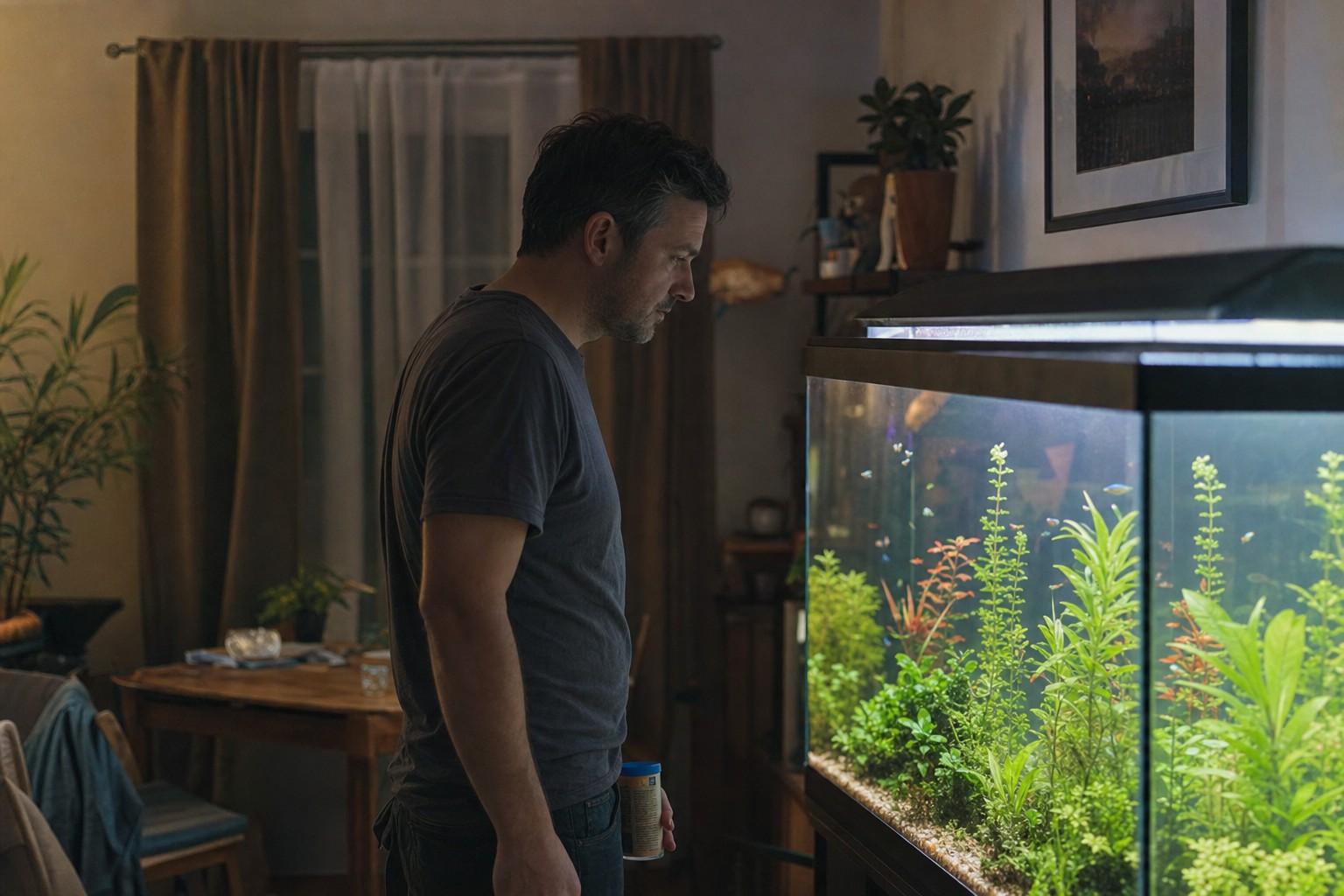
The daily feeding glance is one of the most useful tools in the hobby, and most people don’t realize that until they’ve noticed something wrong.
You tap the glass, scatter a pinch of food, and watch the fish rise toward it. Most days that’s all it is. Then one day a fish hangs back, or drifts in a corner, or sits at the surface with its mouth working. That moment of recognition, that something is off, is exactly the window that matters. Catching a problem early gives you the best chance of doing something useful about it.
This is a guide to what those early signs look like and what to do when you see them.
Behavior Changes Are the First Signal
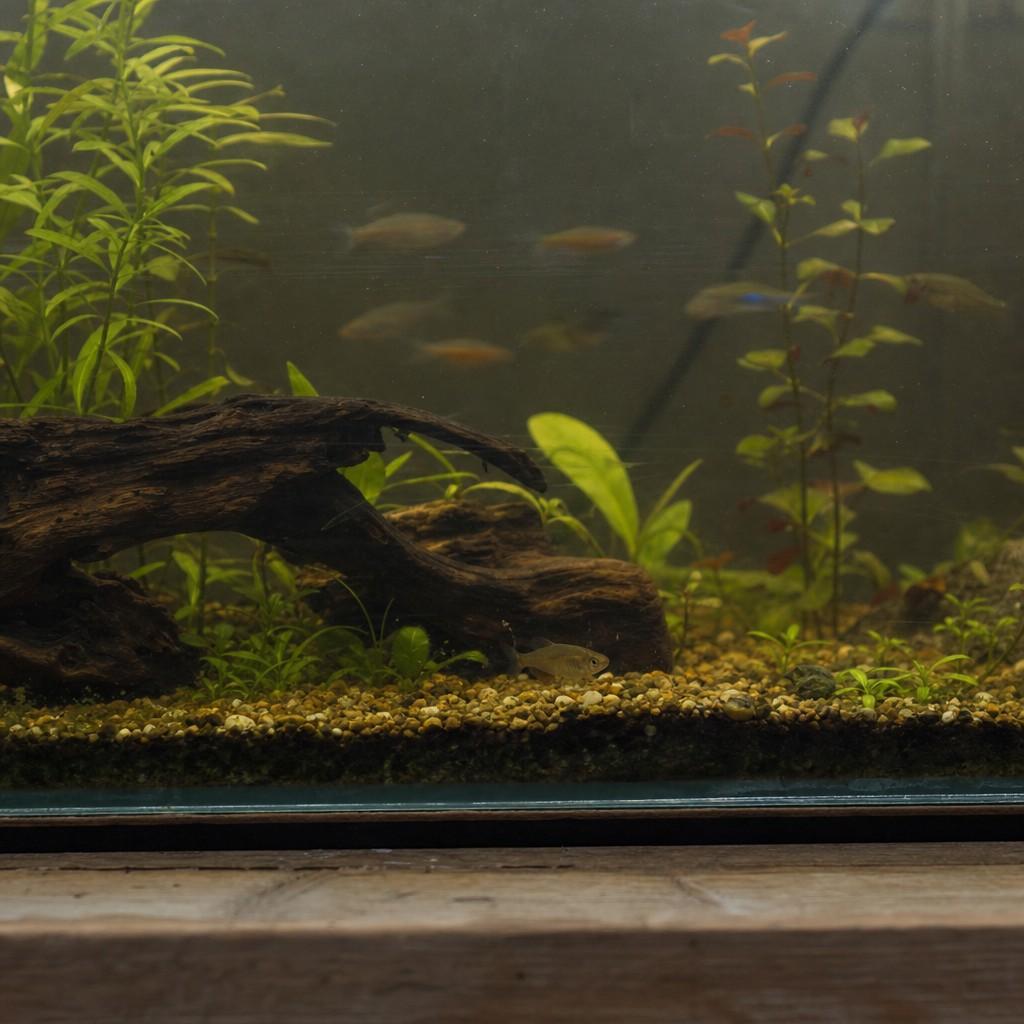
A fish doesn’t raise its fin when it’s struggling. The early signs are behavioral, and they are easy to miss unless you have a baseline.
The most telling early warning is a change from what’s normal for that particular fish. A fish that usually rushes the surface at feeding time and suddenly ignores food is not fine. A fish that typically holds its own in the group and now hides behind the filter is telling you something. Because every fish has a normal, your daily glance is really building a picture of that normal over time.
Specific things worth noticing:
- A fish off its food for more than a day or two
- Hiding when it wouldn’t usually, or pressed into a corner
- Listless drifting, not swimming with purpose
- Fins held clamped against the body instead of fanned out
- Scraping or rubbing against rocks, decorations, or the substrate
- Faster gill movement than usual, especially at rest
- Gasping at the surface
That last one, gasping at the surface, gets its own section below. It is one of the most common and most misread signs in the hobby.
One concrete detail to notice: healthy fish tend to hold their fins naturally open at rest, especially the dorsal fin along the back. A fish that folds its fins flat and sits still is often a fish that is not well.
Check the Water Before You Do Anything Else
Here is the part that beginners often skip, and it is the single most important step.
“Most fish problems are water problems.” This is a foundational truth in the hobby, and it holds up every time. Ammonia, nitrite, a temperature that swung overnight, a pH that drifted, a filter that hasn’t been maintained in a while: these are the most common reasons a fish behaves like a sick fish. Fix the water and a large share of “illness” resolves on its own.
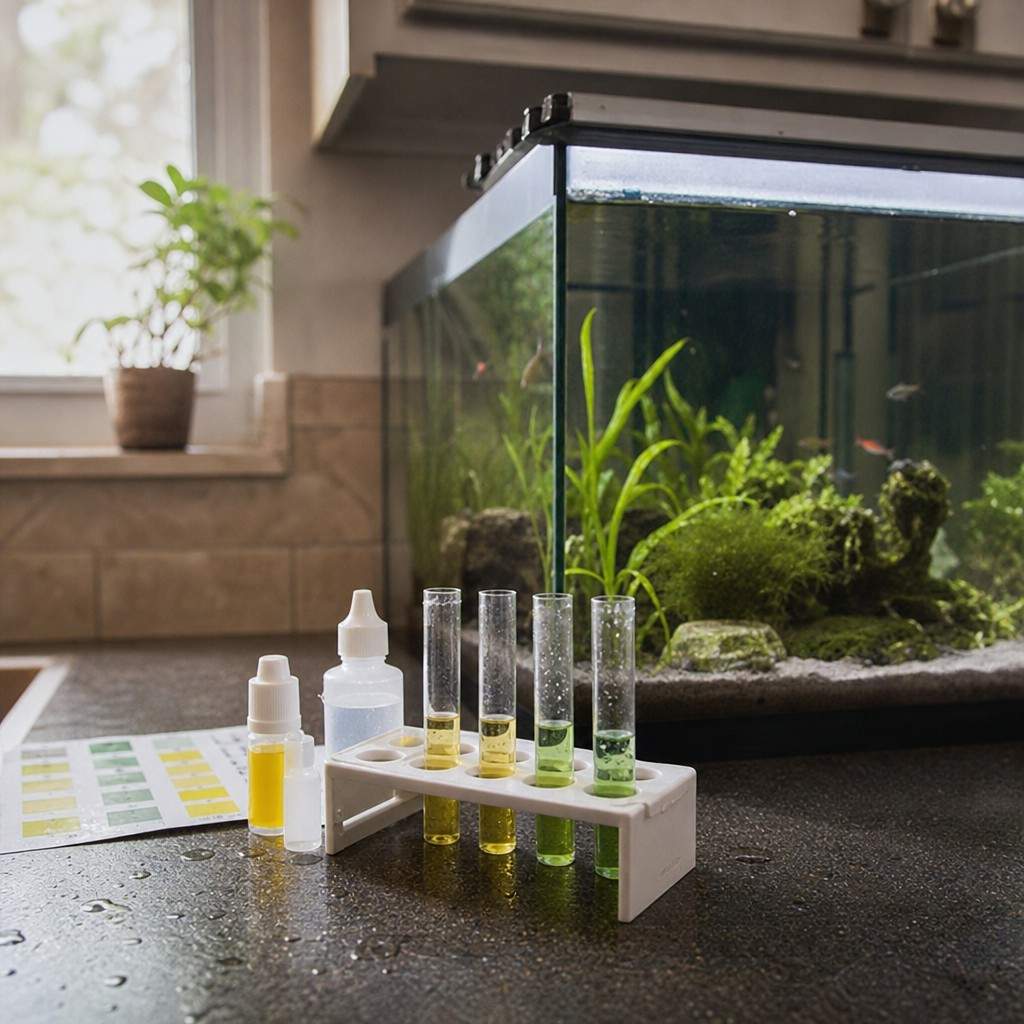
Before you add anything to the tank, test it. A basic liquid test kit checks ammonia and nitrite, the two readings that can be lethally wrong in a tank that isn’t cycling properly or in one where the filter has been disturbed. If you’re not sure how those numbers should look or why they matter in the first place, understanding the nitrogen cycle explains the whole process.
If the test comes back normal, check the thermometer. Temperature swings, even ones that look small on paper, stress fish. A heater that is running too hot or has partly failed can explain a lot of odd behavior without any disease involved.
A steady maintenance routine already handles most of this by keeping ammonia low and the filter healthy. But when a fish is acting strangely, run the test kit first, before any other response. It tells you whether you have a water problem or something else.
Gasping at the Surface
Gasping is one of the most alarming things to see in a tank, and it is almost always a water or oxygen problem.
When a fish works its mouth at the surface, it is usually looking for the oxygen that isn’t available lower in the water column. Several conditions cause this. Ammonia at high levels damages gill tissue and makes breathing harder. Low dissolved oxygen, which can follow a temperature spike since warmer water holds less oxygen, has the same effect. A filter that has stopped or slowed significantly can leave the water without enough surface agitation to exchange gases properly.
A fish gasping at the surface is a reason to check ammonia, check the temperature, and check that the filter is running.
It is also worth checking for any cloudiness in the water, since murky water often signals a water-quality problem worth investigating. Clear water is not automatically safe, but cloudy water is a consistent indicator that something has gone wrong with the balance.
If the water checks out and the fish is still at the surface, it may have a swim bladder issue or something else going on internally. That is the point at which the answer is not a home remedy from a forum thread. It is professional guidance.
Visible Changes Worth Noticing
Beyond behavior, there are physical changes that signal something is wrong. These are worth being aware of, not as a diagnosis guide, but as a list of things to bring to someone who can actually help.
White spots on the body or fins, fraying at the fin edges, bloating or swelling in the belly, cotton-like tufts, unusual color loss or discoloration: none of these are things to diagnose at home and treat with the products on the pet store shelf. The shelf is stocked with broad-spectrum treatments that can do more harm than good when used on the wrong problem, or when the real problem is a water issue wearing the appearance of a disease.
The responsible move when you notice physical changes is to isolate the affected fish if possible, check the water in the main tank, and consult an aquatic veterinarian if the fish is genuinely unwell. That last point is more practical than it sounds. Aquatic vets exist, they see fish patients regularly, and a correct diagnosis is far more useful than a guess and a bottle of something general.
This article is general guidance about what to watch for, not a diagnostic tool. For any specific illness, a professional is the right call.
Prevention Is the Real Lever
The most effective health management in a fish tank happens before a fish looks sick.
Quarantine new fish before adding them to an established tank. Quarantine is standard hobby practice, and it exists because a new fish can carry something the fish it joins have no exposure to. A separate tank, even a small bare-bones one, for two to four weeks is enough time for most problems to surface in an isolated environment where they can be managed without spreading.
Don’t overstock. A tank pushed beyond its comfortable fish load means more waste, more ammonia, more stress on every animal in it. Stress is consistently linked to increased susceptibility to illness in fish, so a crowded tank is a fragile one.
Keep the routine. Regular partial water changes, filter maintenance on a sensible schedule, and consistent feeding: these are the conditions that keep fish healthy over time. An aquarium should be a calm corner of your home, not a second job, and a simple routine does more for your fish than anything you could improvise after something goes wrong.
Temperature stability matters too. A heater with a thermostat you can trust, checked occasionally against a separate thermometer, is basic insurance. Slow swings from a drafty window or a heating vent show up as stress before they show up as anything visible.
When to Act, and What to Do
The escalation is straightforward.
Something seems off. Go through your daily checklist: is the fish eating, moving normally, holding its fins open? If not, test the water. Ammonia and nitrite should be at zero. Temperature should be stable in the range your fish need. If the readings are off, the next step is a partial water change, not medication.
If the water is fine and the fish is still not right after a day or two, isolate it in a separate container if you have one. This protects the other fish in the tank and gives you a better view of what is actually happening.
If you see physical changes, if the fish is not recovering, or if you have no idea what you’re looking at, contact an aquatic veterinarian. Aquatic vets are the appropriate resource for diagnosing and treating sick fish. General guidance from a website, including this one, is not a substitute for that.
The most common beginner mistake is to reach for a treatment before testing the water. Fix the water first. Most of the time, that is the whole answer.