
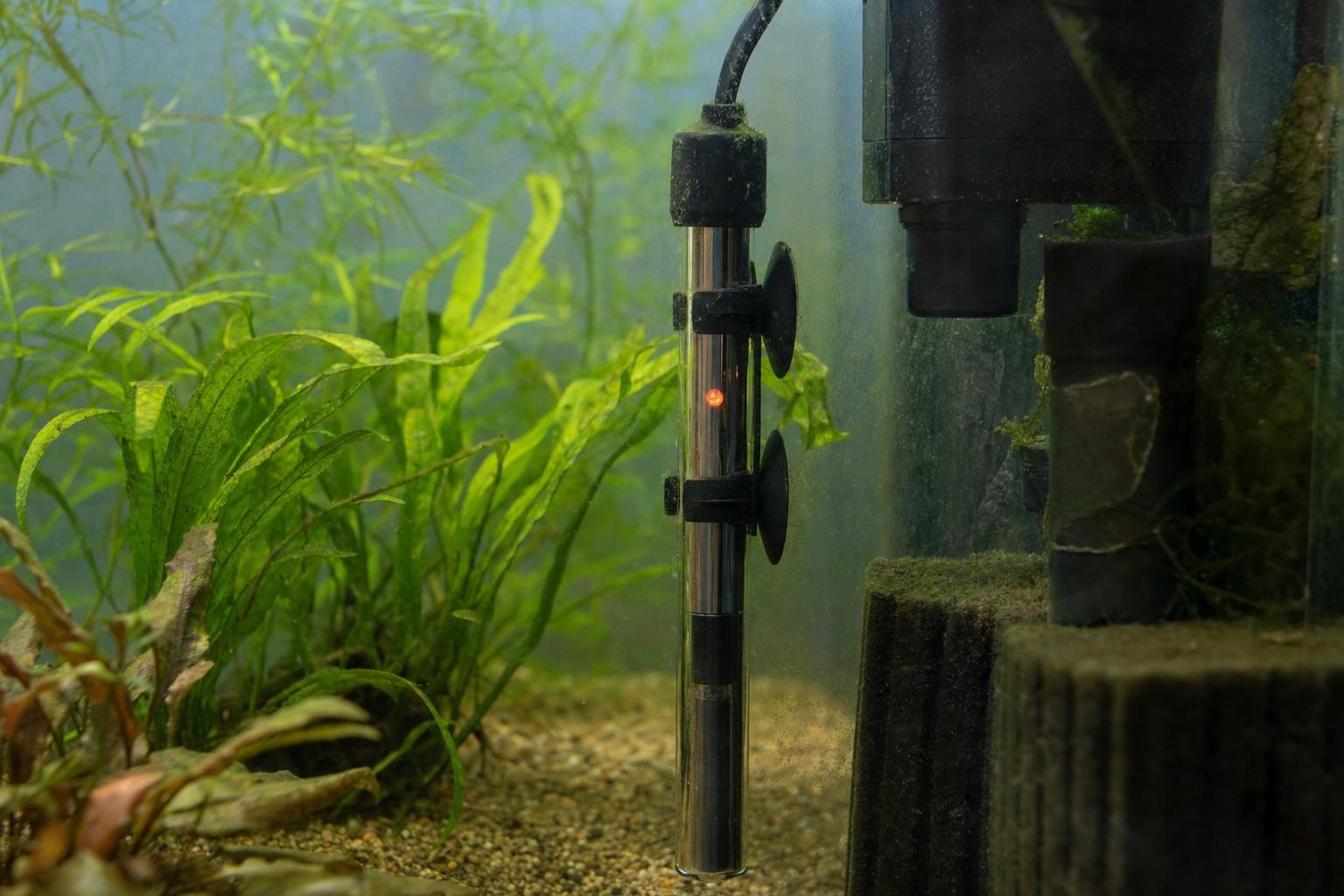
Whether you need a heater depends entirely on the fish, and on your room.
That is the real answer, and it is the one most beginner guides bury. A heater is not automatic equipment the way a filter is. It is the right answer for most beginner tanks, and a waste of money for a few specific ones. Knowing which side you are on takes about a minute, and this guide walks through exactly that.
Most Popular Beginner Fish Are Tropical
The fish most people reach for first are tropical species. Bettas, tetras, guppies, corydoras catfish: these are the fish that fill the tanks at a big-box pet store, and they are also the fish that need warm, stable water.
Tropical fish are adapted to consistently warm conditions, and they do not do well in a cool or variable environment. A cold room overnight, a drafty winter window nearby, a sudden temperature drop during a water change: any of these can stress fish that never evolved to handle them. Stressed fish get sick. Sick fish often die, and it tends to look like a mystery.
A heater removes that variable entirely.
There is a narrower category of true coldwater fish, the kind that do not need a heater in a normal household. Goldfish are the clearest example, and white cloud mountain minnows are another. If you have decided on goldfish, you can genuinely skip the heater in most homes. But if you are drawn to the bright, small fish that make up most of what you see in a typical pet store display, plan on a heater. The fish you are considering will tell you which camp you are in.
Why Stability Matters More Than A Perfect Number
Temperature itself is only half the concern. The other half is consistency.
A stable tank beats an impressive one. Tropical fish tolerate a reasonable range, but they handle a steady temperature far better than one that swings by several degrees between morning and night. A tank near a window gets warmer in the sun and colder after dark. An unheated room drops significantly in winter. What looks like a manageable average can actually be a daily cycle of stress the fish never recover from.
A heater’s real job is not to hit a target number. It is to hold whatever temperature it is set to, hour after hour, without the swings that wear fish down.
This is why “my house feels warm enough” is not quite the right test. The question is whether the temperature stays consistent, especially overnight when the heat goes down and nobody is checking.
A heater solves this by acting as a thermostat for the water. It kicks on when the temperature drops and shuts off when it comes back up. The fish get to live in the same water from one morning to the next.
Choosing And Sizing One
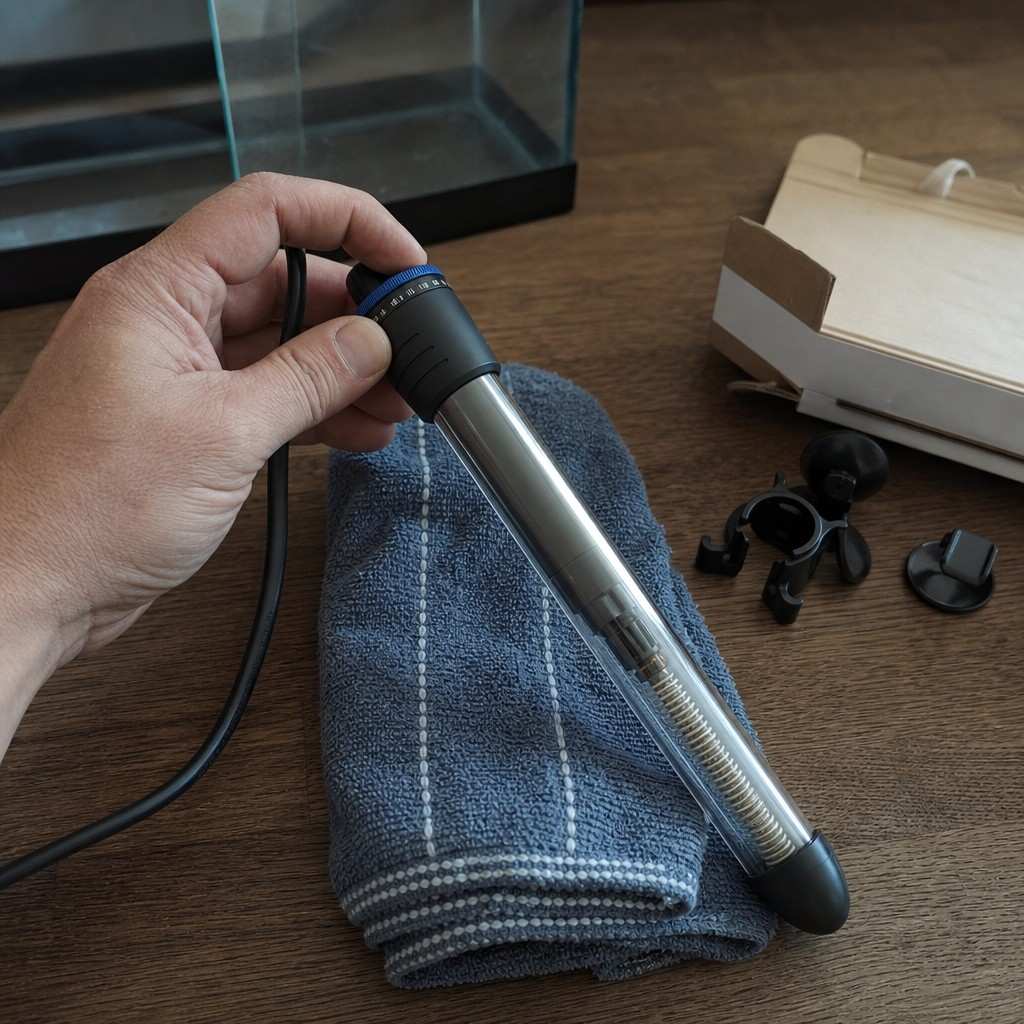
Heaters are not complicated, but there are a few things worth knowing before you buy.
Look for an adjustable heater with a built-in thermostat. Non-adjustable models exist and are cheaper, but they give up control you will want. An adjustable unit lets you dial in the temperature and trust that the thermostat does the rest. A pre-set model runs at whatever temperature it was designed for, whether that matches your fish or not.
On sizing, the rough rule of thumb used in the hobby is around 3 to 5 watts per gallon of tank volume as a starting point. A 20-gallon tank would land somewhere in the 60 to 100-watt range on that math. A single midrange wattage unit handles most standard home setups in a normal room. If your space gets cold in winter, or the tank sits in an unheated basement, err toward the higher end.
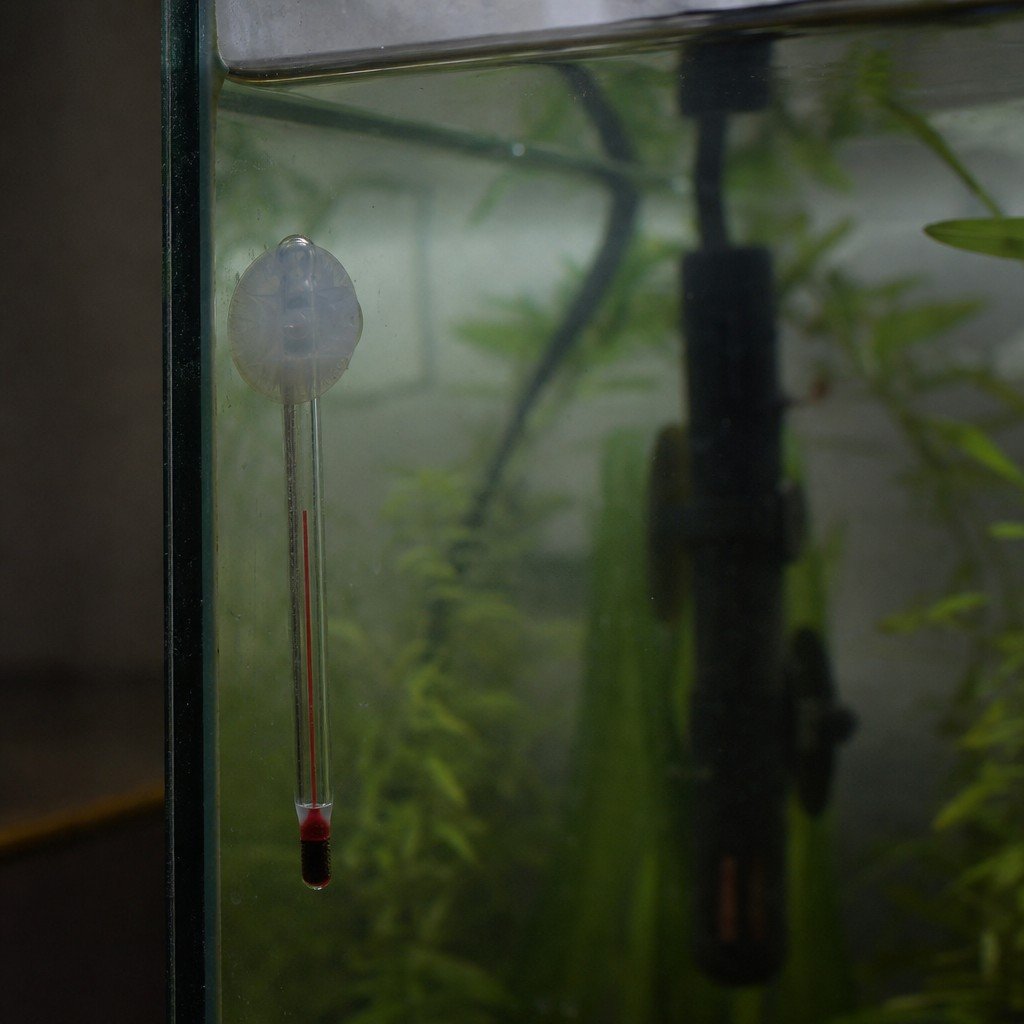
One more thing: always pair your heater with a separate thermometer. The dial on a heater is not a precision instrument. It tells you roughly what you set it to. A simple stick-on or floating thermometer tells you what the water actually is. These cost almost nothing and give you a real reading every time you check. Verify the temperature yourself; do not trust the dial alone.
For more on the other core piece of equipment the water moves through, aquarium filters explained covers why the filter is where the cycle actually lives and how to size it for your tank.
Placement And Basic Use
Where you put the heater matters almost as much as which one you buy.
Place it near the flow from the filter outlet or a circulation pump. Moving water carries the heat across the tank evenly. A heater sitting in a still corner warms a pocket of water near it without that warmth reaching the other end of the tank, and your thermometer will show that clearly if it is placed far from the heater.
The heater should be fully submerged according to the model’s own instructions. Most modern heaters are fully submersible, but some older designs or budget units have a water line marked on the glass. Running one above its water line can crack the glass or burn out the unit, so check before you plug it in.
The other common safety note involves water changes. When you lower the water level to do a partial change, follow the heater’s instructions about unplugging it first. A heater running dry, even briefly, can overheat. It takes a moment to unplug it before you start draining, and it saves a heater and possibly a tank.
Common Mistakes Worth Knowing
A few patterns come up again and again, and they are easy to avoid once you know them.
The most common: keeping tropical fish in a cool room with no heater, assuming the temperature is probably fine. It usually is not. Pet stores keep their tanks warm. A fish that looked active and healthy in the store has been pulled into a cooler, less stable environment. The decline can take weeks to show up, by which point the actual cause is long forgotten.
The second: trusting the heater’s dial instead of a thermometer. “I set it to 78” is not the same as “the water is 78.” Heaters drift. Thermostats wear. A quick check with a separate thermometer takes seconds.
The third: undersizing the heater for a cold room. A heater runs continuously when it is too small to keep up with the ambient temperature. It can overheat, fail early, or simply never reach the target. If the room gets genuinely cold in winter, go bigger rather than gambling that a minimum-wattage unit will hold.
What It Comes Down To
Keep fish that match your tap water, not fish that need you to fight it. The same logic applies to temperature: keep fish that match the conditions you can actually provide, or provide the conditions they need.
For most beginners with most first tanks, that means a heater. It is one of the least expensive pieces of equipment in a full setup, and the stability it provides is what the rest of the tank runs on. A stable temperature from Monday to Sunday, summer and winter, is the kind of unremarkable background condition that keeps fish alive.
A heater is cheap insurance for the thing that matters most: consistent water your fish can live in without daily surprises.