
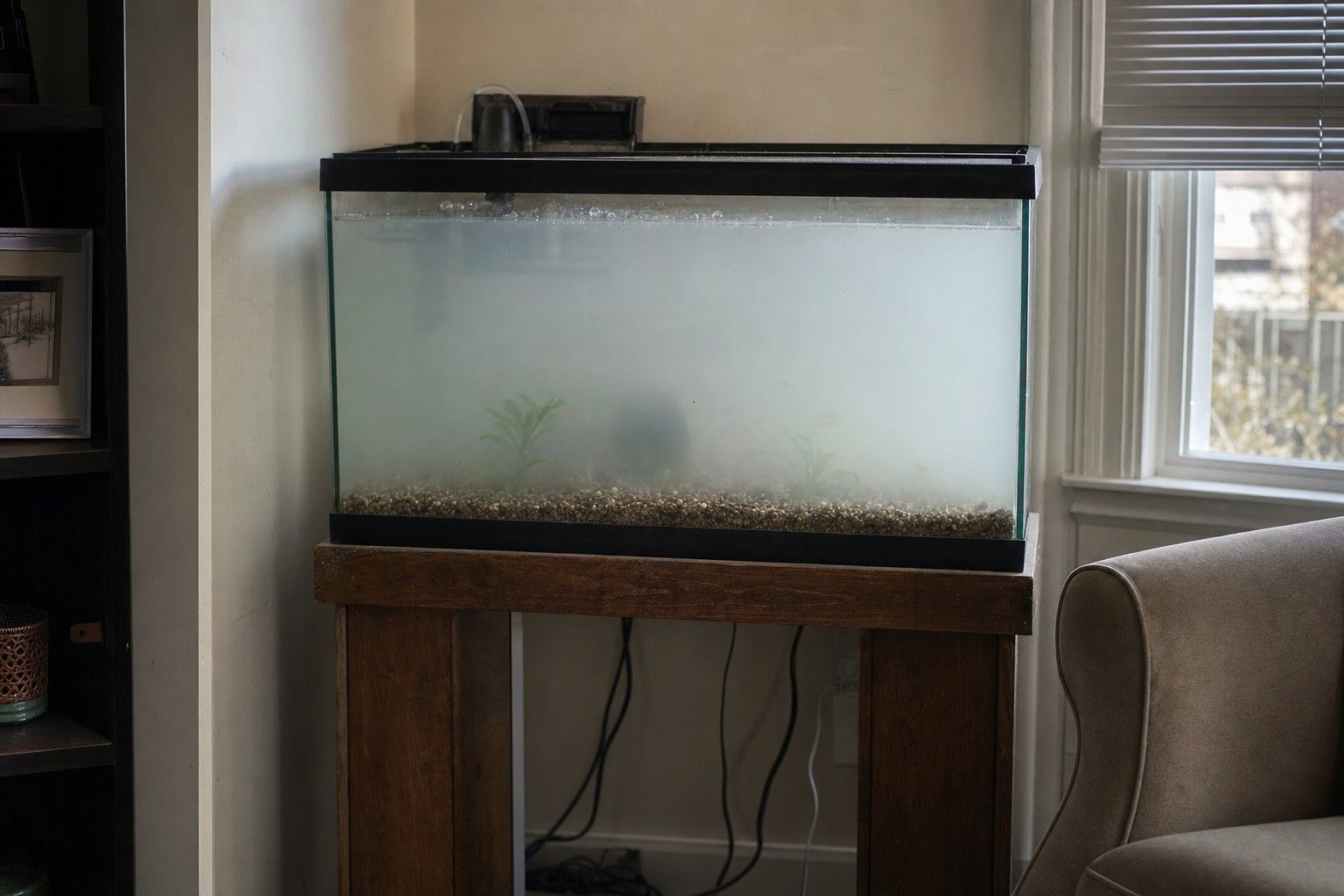
The water was clear when you filled the tank. Now it looks like milk, or fog, or pond water, and you are wondering if something is already dying.
It probably isn’t. Cloudy water is one of the most common things a new tank does, and in most cases it is the tank working, not failing. The causes are well understood. Most of them resolve on their own. The handful that need attention are easy to identify once you know what to look for.
So here is what the cloudiness is actually telling you.
White or Gray Cloudiness: Your Tank Is Finding Its Balance
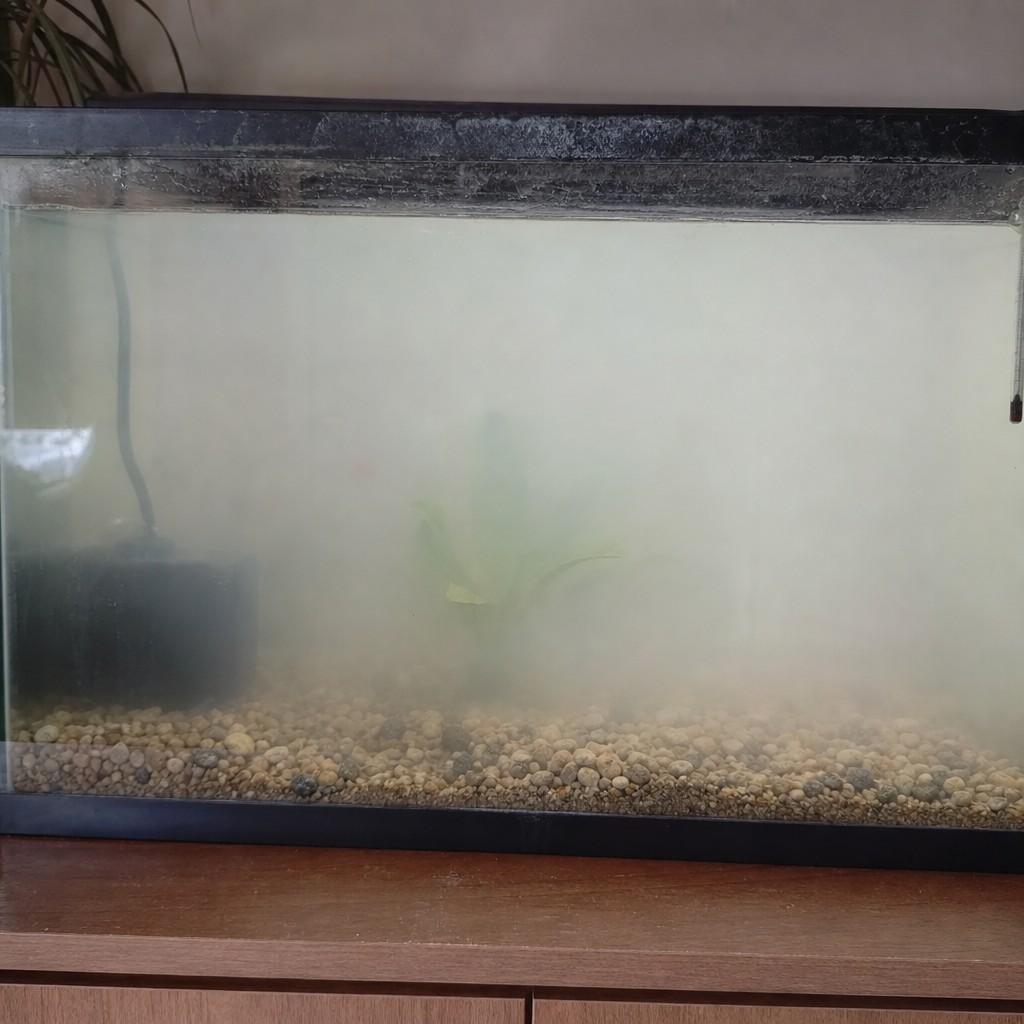
A milky or hazy white haze in a new tank is almost always a bacterial bloom.
Bacterial bloom is the name for a population explosion of free-floating bacteria in the water column. It sounds alarming. What it actually means is that your tank is in the middle of establishing the nitrogen cycle, the invisible process by which beneficial bacteria colonize the filter and break down fish waste. Until those bacteria settle into the filter media, they drift through the water in much greater numbers than they eventually will. The result is that white fog.
This kind of cloudiness tends to peak in the first one to two weeks of a new setup. Established hobby guidance puts the full cycle at roughly four to eight weeks. The bloom is usually a sign that the process is actively underway.
The key piece here is what not to do. Doing large daily water changes to “fix” a bacterial bloom does the opposite of fixing it. You are removing the very bacterial populations trying to establish themselves, and resetting the cycle back toward the beginning each time. The tank needs those bacteria. Patience clears a bloom; big water changes can drag it out for weeks.
This ties directly to how the nitrogen cycle works. If the method is new to you, fishless cycling covers the full process and explains why the empty, invisible weeks matter.
Green Water: Too Much Light, Not Enough Balance
Green water is a different problem with a different cause.
Green water is suspended algae, and it has a different trigger than a new-tank haze: too much light. The usual culprit is direct sun from a nearby window that no timer controls.
Moving the tank out of direct sun is the first fix, and where not to put a fish tank covers placement in full. Trimming the daily light schedule and feeding a little less handle most of the rest.
This is its own subject, not a quick water-clarity fix. For the causes and the full set of control levers, see why your aquarium gets algae.
Other Common Causes
Not all cloudiness comes from bacteria or algae.
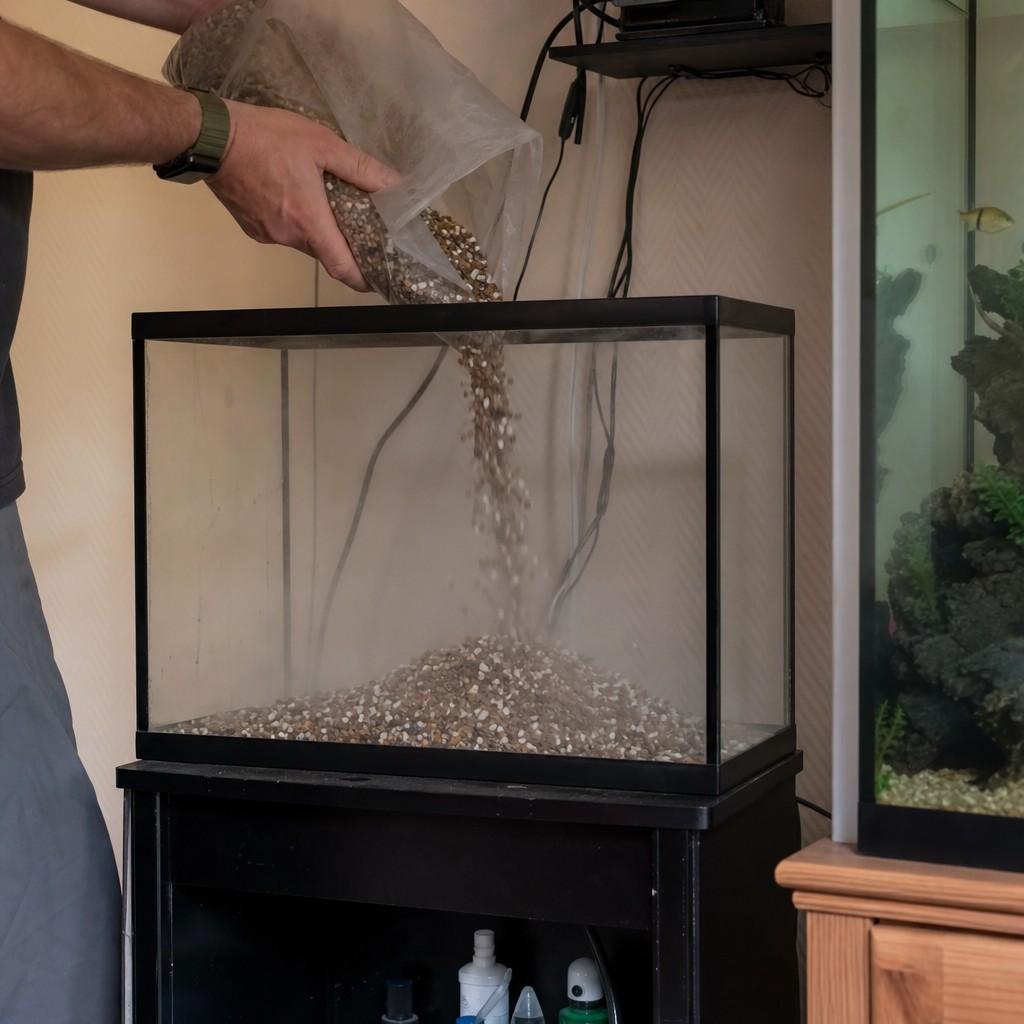
Fine debris from new substrate is one of the most common causes in the first hours after a setup. Gravel and sand carry a fine layer of dust that stays suspended when disturbed. It looks cloudy and dramatic. It clears in a few hours once the filter catches up. Rinsing substrate thoroughly before adding it to the tank prevents most of this.
Disturbed gravel or sand during a water change can do the same thing temporarily. It is not a problem.
Overfeeding also clouds water over time. Uneaten food breaks down, nutrients rise, and the water loses its clarity. The fix is simple: less food, more consistently.
When Cloudiness Actually Matters
Most cloudy water is cosmetic. This case is the exception.
If the water is cloudy and the fish are gasping at the surface, darting around in distress, or pressing against the glass, that is not a cosmetic problem. Those are signs of water quality affecting the animals, and the most likely cause is ammonia.
“Most fish problems are water problems.” This is the situation that phrase describes. The cloudiness itself is not the emergency. The ammonia the cloudiness might be signaling is.
Test the water with a liquid test kit. Ammonia above zero in a tank with fish means a water change is needed now, not tomorrow. This is the one scenario where you act quickly, and the one scenario where waiting is the wrong call.
An aquarium maintenance routine that includes regular testing will catch rising ammonia before it becomes a crisis, not after you notice the fish are struggling.
The Main Thing Cloudiness Is Telling You
A tank that has been running for years and suddenly goes cloudy deserves a closer look. But a new tank that turns milky in the first two weeks? That is almost always normal.
A stable tank beats an impressive one. The clear, perfect-looking water that seems like the goal actually comes after weeks of invisible work. The fog you are seeing is often part of that work in progress.
Let a bacterial bloom run its course. Dial back the light if the water goes green. Feed less, not more. And test before you treat.
The tank knows what it is doing. Give it the time to finish.