
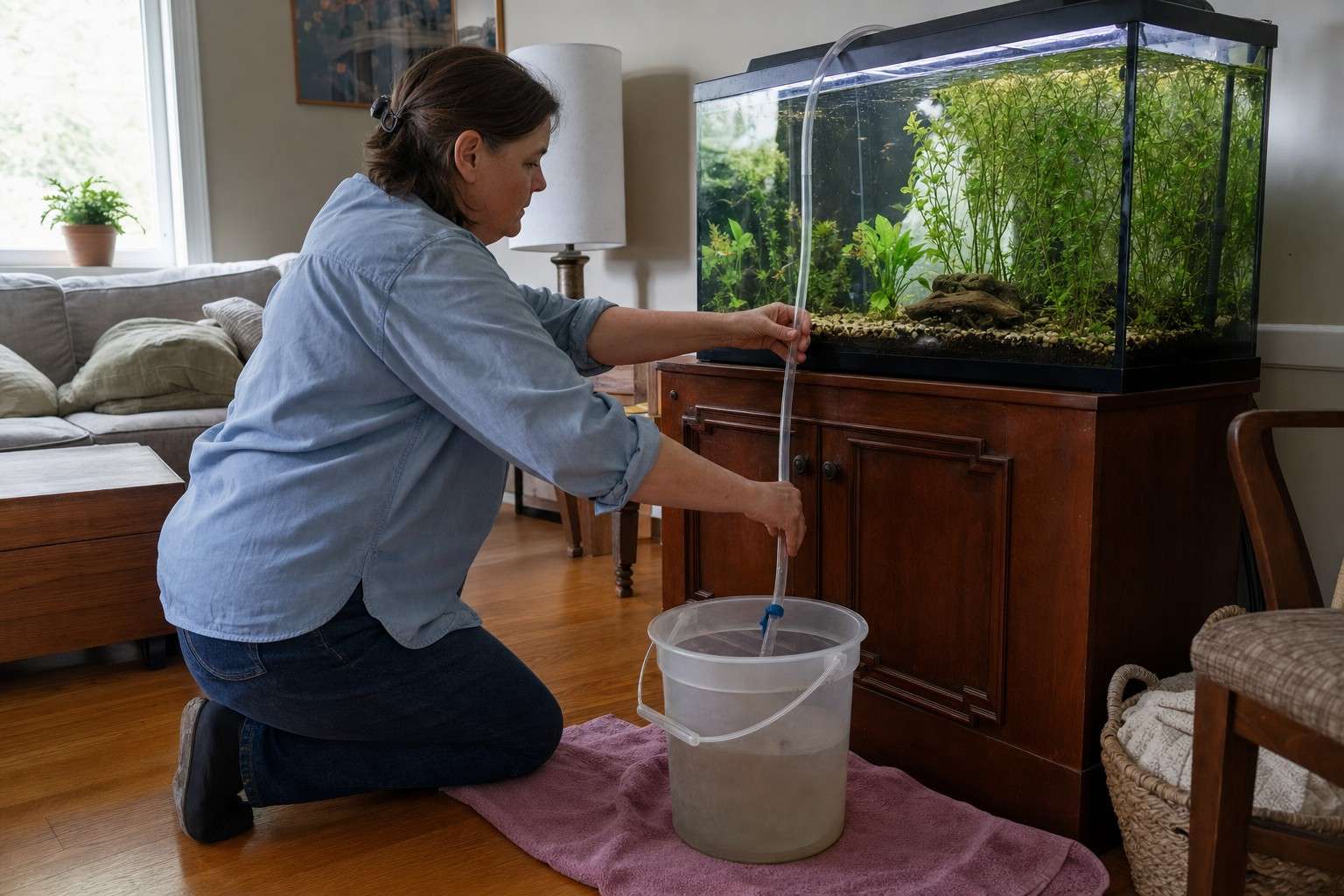
Twenty minutes on a weekend. Two minutes on a weekday morning, most of which you’d spend staring at the fish anyway.
That is the full routine for a healthy freshwater tank. Not the aspirational version. The real one, week after week, for years. The weekend block is a partial water change, a quick swipe of the glass, and a top-off for evaporation. The weekday check is feeding and a glance at the temperature. Neither requires a schedule on the wall or a spreadsheet.
An aquarium should be a calm corner of your home, not a second job. The routine below is sized for that idea.
The Weekly Job: Water Change, Glass, Top-Off
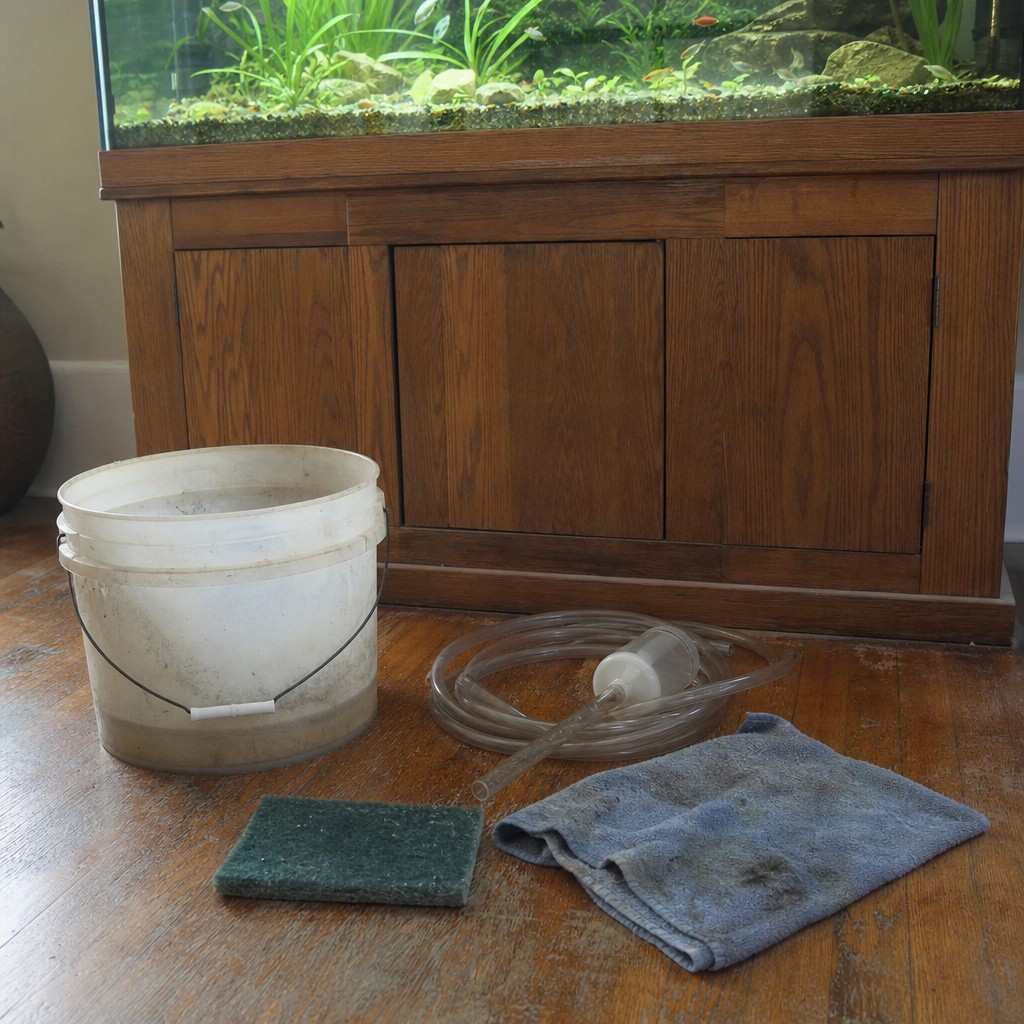
The bucket comes out once a week.
A partial water change of roughly 15 to 25 percent is the single most useful thing you do for your tank. Standard hobby guidance has settled on that range because it removes accumulated waste products without shocking the fish with a massive chemistry shift. Small and regular beats large and occasional.
The tool for this is a gravel vacuum, sometimes called a siphon. One end goes into the substrate, the other into a bucket on the floor. As you drag it slowly across the gravel, it pulls debris out of the gaps while draining water into the bucket. Ten minutes of that and you have cleaned the bottom and removed your water volume at the same time.
Fill back up with dechlorinated tap water close to the tank’s temperature. Cold water stresses fish. A capful of water conditioner in the bucket takes thirty seconds and neutralizes chlorine before it touches the filter.
While you have the bucket nearby, run an algae pad along the inside glass. The kind sold at any pet store for a dollar or two. Algae starts as a faint green film and scrubs off easily when it’s young; leave it a couple of weeks and it takes real effort. One pass takes two minutes. That is the whole job.
The last piece is evaporation. Tanks lose water between changes, faster in warm rooms. Top off with plain dechlorinated water when the level drops noticeably. Evaporation leaves the minerals behind, so it is fresh water only for the top-off, not a salt or conditioner mix.
Daily, In Passing
The fish don’t need much from you on a Tuesday.
Feed small. The general rule is food the fish finish within two minutes. Flakes that are still floating ten minutes later are tomorrow’s ammonia problem. Overfeeding is one of the most common ways a clean tank goes sour, and it happens gradually and quietly enough that it takes a while to spot.
While they’re eating, look at them. Actually look. Behavior is the earliest signal anything is off: a fish hanging near the surface, clamped fins, unusual hiding, skipping food it normally chases. None of those observations require a test kit. They just require a moment of attention during something you would have done anyway.
Check the thermometer while you’re there. Heaters fail occasionally, and a temperature that drifted overnight is the kind of thing you’d want to know before it becomes a livestock problem. Takes three seconds.
That is the full weekday interaction. Feed, glance, check the temperature. You are done before the coffee is cold.
The Monthly Job: Rinsing The Filter
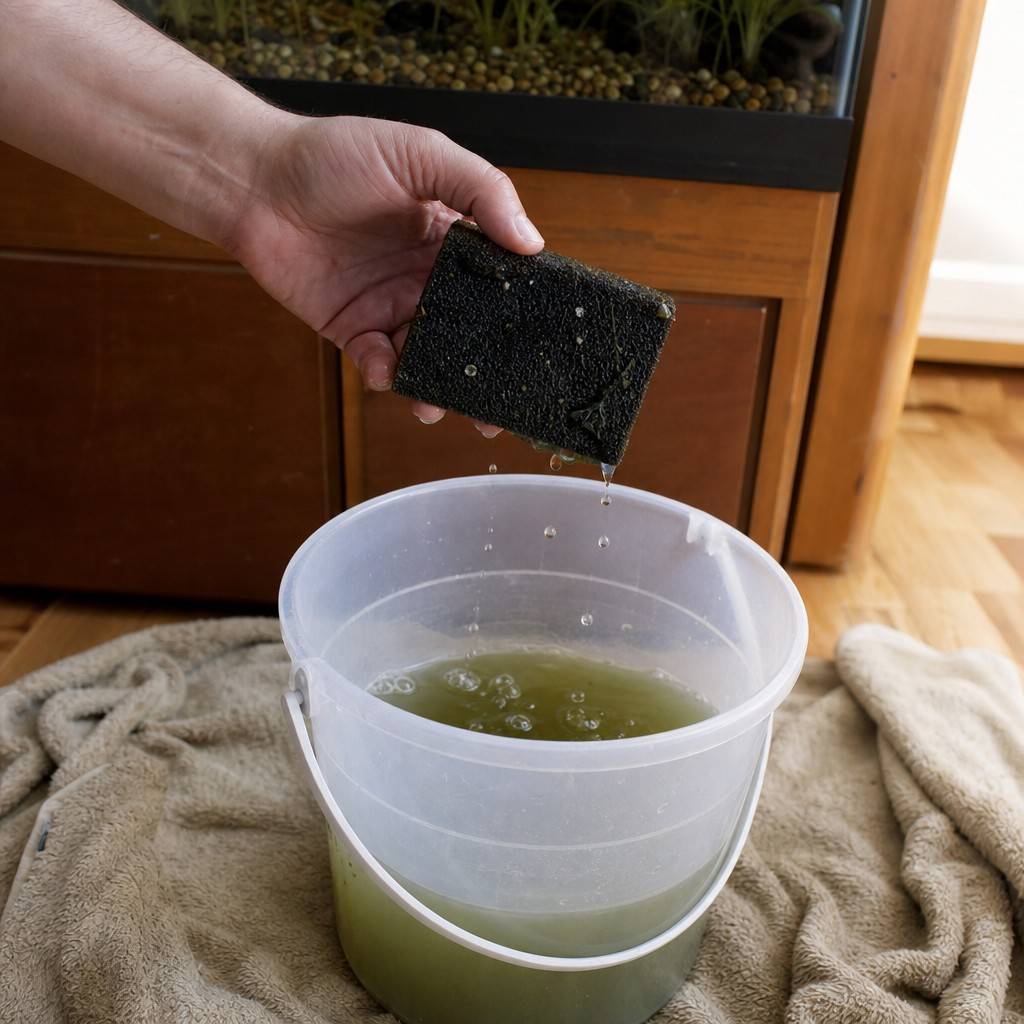
The filter runs constantly. Once a month or so, it needs a gentle rinse.
Do not clean filter media under the tap. The bacteria that make your filter work live in that media, in dense colonies on every surface of the sponge or ceramic. Chlorinated tap water kills them. Rinse the sponge in a bucket of the tank water you already removed during the weekly change, and the bacteria survive intact.
This is the same bacterial colony the whole hobby is built around. If you’re not yet sure what that colony does or how it gets established, fishless cycling is the right starting point. The filter doesn’t become useful until that bacteria population is there; rinsing correctly is how you keep it.
The goal is to remove the physical gunk that clogs the media, not to sterilize it. A gentle squeeze in old tank water does the job. You are not trying to make it look new.
The goal is to remove the physical gunk that clogs the media, not to sterilize it. A gentle squeeze in old tank water does the job.
How often depends on the tank. A heavily stocked tank builds up faster than a lightly stocked one. Monthly is a sensible baseline; inspect it when you do the water change and you’ll develop a feel for the timing.
Testing After The Tank Matures
Once the tank is established, the test kit lives in a drawer.
A healthy, stable tank does not need weekly testing. The routine above, done consistently, keeps the numbers where they should be. You are not managing chemistry in real time. You are removing waste and trusting the biology.
The test kit comes back out when something looks off. A fish behaving strangely, cloudy water that doesn’t clear, algae exploding faster than usual. Most fish problems are water problems, and a test at that moment is the fastest way to find out whether the water is the culprit. Ammonia and nitrite in a mature tank should both read zero. A non-zero result points at what to fix.
That’s the sensible cadence: occasional in normal times, immediate when something looks wrong. Not obsessive, not neglectful.
What Skipped Weeks Look Like
A tank is honest about neglect.
Skip one week and the glass gets a faint film. Skip two and the film is visible from across the room. Nitrates climb with each week without a water change, algae follows the nutrients up, and the water takes on a slightly greenish cast that tells you the balance shifted. None of this is catastrophic on week two. It does compound.
The routine is small precisely because it is easier to keep than to catch up on. A partial change and a glass wipe do not take much willpower when they’re already part of the weekend rhythm. They take significantly more when four weeks of buildup are waiting.
This is honest, not alarming. The tank is not fragile. But it does give you feedback, and a regular small habit is what keeps that feedback quiet.
Trips and Vacations
A healthy, well-fed tank handles a long weekend unfed without incident. Fish in the wild don’t eat every day. Three days with no feeding is not a crisis; the bigger risk is an anxious neighbor overfeeding while you’re gone.
For longer trips, a little preparation goes a long way. There are specific things worth doing before you leave and options worth knowing about for multi-week absences. The full picture is covered in what to do if you need to leave your aquarium for two weeks.
The short version: a healthy tank is more resilient than most new keepers expect.
The Tools Worth Having
A gravel vacuum, a dedicated bucket, and an algae pad. That is the kit for everything above.
The bucket matters more than it sounds. Using the same bucket for the tank every week avoids any chance of soap or cleaning product residue reaching the water. Label it. Keep it somewhere you’ll actually use it.
The gravel vacuum is the unglamorous workhorse of the whole routine. Basic versions cost under fifteen dollars. Fancier motorized versions exist. The basic one works fine and lasts for years.
The algae pad is a dollar. Get several. They are the sort of thing it is convenient to not run out of.
Nothing on that list is expensive. The whole setup, if you’re starting fresh, is a modest one-time spend. For a fuller picture of what a tank actually costs beyond the initial gear, the running-cost breakdown at are aquariums expensive to maintain covers it without sugarcoating.
The routine is small. The list of tools is short. A tank that gets both on a regular schedule tends to stay clear, stay healthy, and stay exactly what it should be: a calm thing to look at after a long week.