
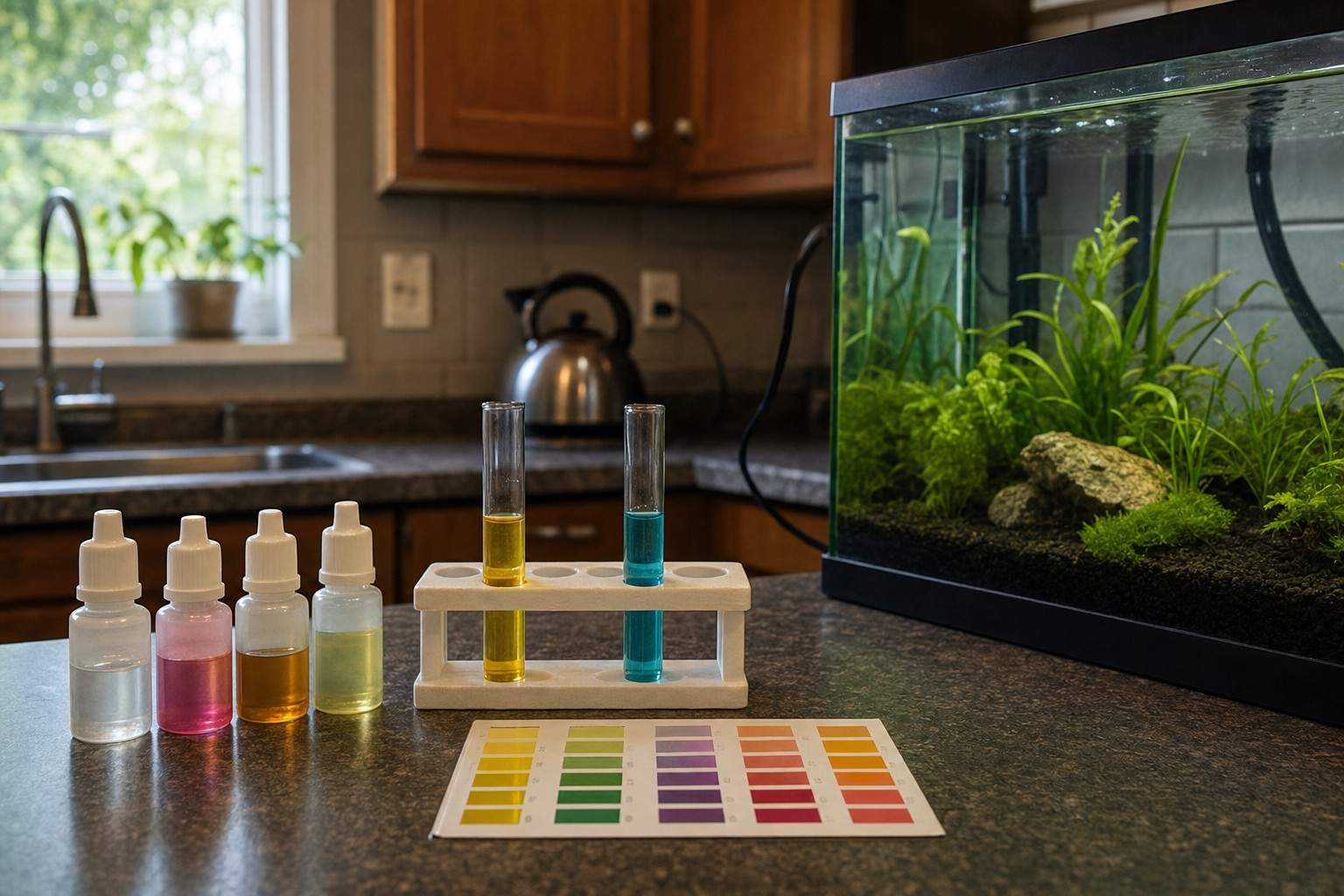
The short answer: a liquid drop test kit that reads ammonia, nitrite, nitrate and pH covers what a new tank needs.
Buy the test kit before you buy the fish. That single habit prevents more losses than any piece of equipment in the hobby.
If you buy through links on this page, Inside Aquatics may earn a small commission.
Why testing matters before anything else
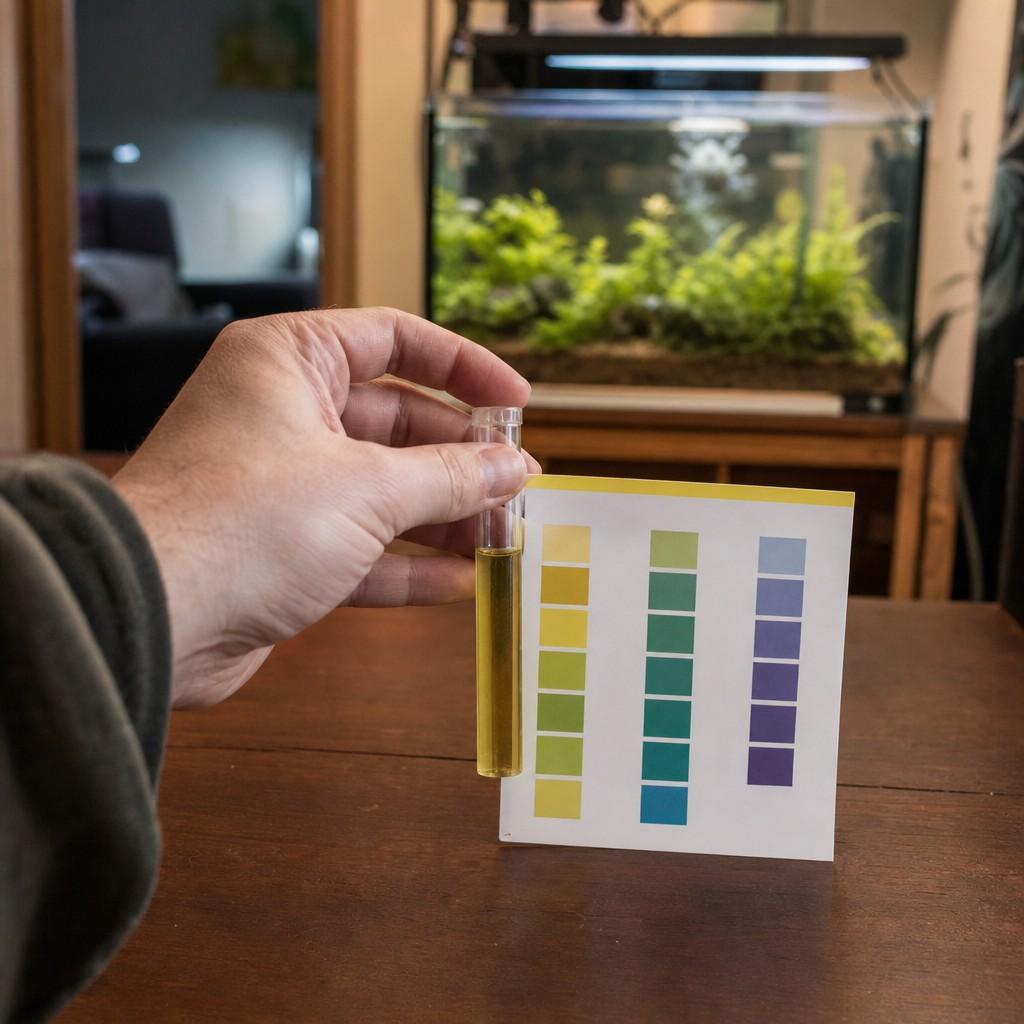
A new tank looks finished long before it actually is. The water is clear, and the filter is humming.
Nothing about the surface tells you what’s happening underneath.
What’s invisible is exactly what can kill fish. Ammonia and nitrite build up during the cycling process. Both are toxic well before the water looks or smells wrong.
Fish can be in real trouble while the tank still looks great to the eye.
A test kit is the only way to see that danger coming. Without one, you’re guessing.
The fish are the ones who find out if the guess was wrong.
Liquid drops or paper strips
This is the real decision. It comes down to two things: speed and accuracy.
Paper strips are fast. Dip one in the water, wait a few seconds, and match the colors to a chart. That convenience is real, especially for a quick weekly check once a tank is established.
The tradeoff is precision. Strip readings drift with humidity, age, and how long the strip sat in the water. Hobbyists commonly report strip results that shift depending on lighting or which chart they compare against.
The per-test cost also runs higher over time than a bottle of liquid reagent.
Liquid drop kits take about three minutes and read finer detail, particularly at the low levels that matter most during cycling. A strip might show ammonia as “somewhere between 0 and 0.5.” That range is too wide. It’s the difference between a stable tank and a stressed one.
A drop kit gives you an actual number to work with.
For the first months of a tank’s life, that resolution matters more than the time saved. The API Freshwater Master Test Kit is the long-standing liquid kit hobbyists default to. It covers all four readings a new tank needs in one box.
If speed matters more once the tank is established, aquarium test strips are the convenience option worth keeping on hand for a quick between-test check.
Buy the test kit before you buy the fish.
What a new tank actually needs to measure
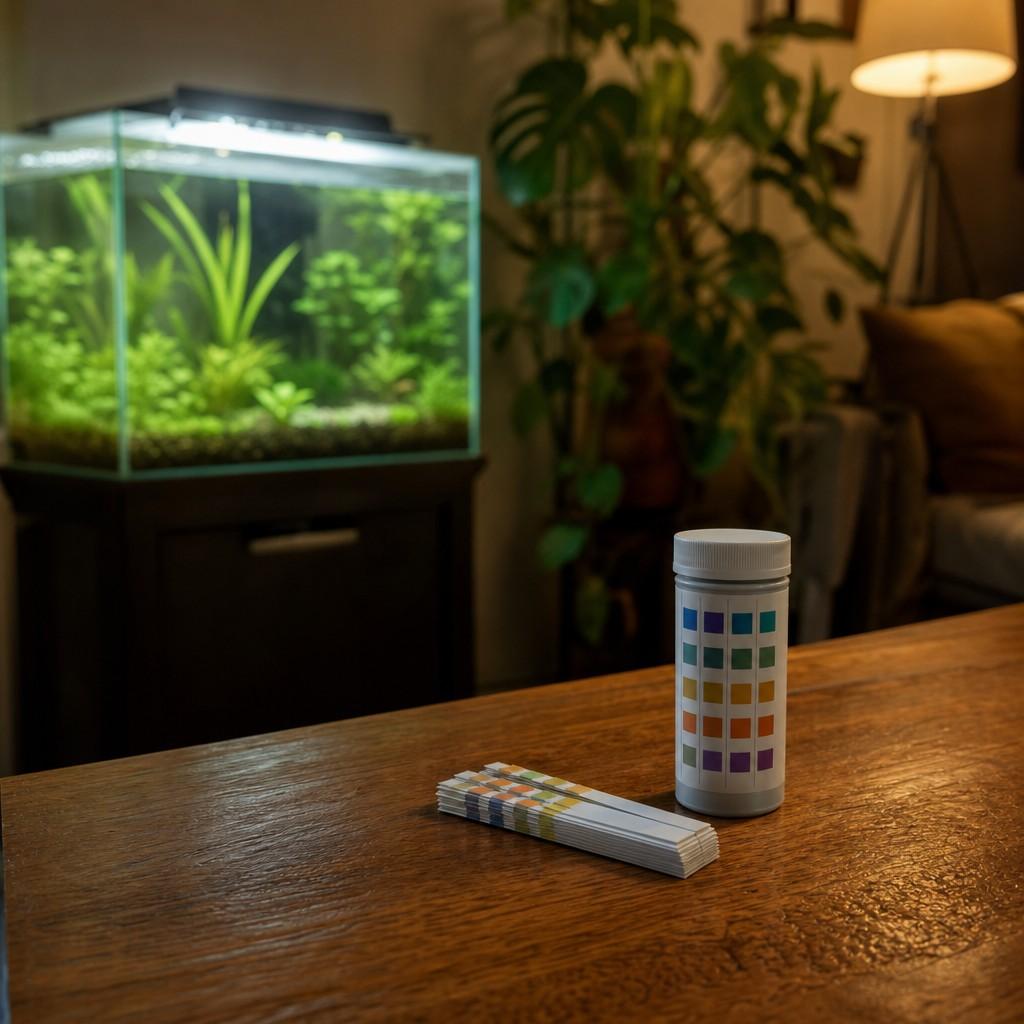
Four readings cover a new aquarium. Nothing exotic, nothing that needs a chemistry background.
- Ammonia. The first toxic compound to appear and the one that does the most damage early. This is the number to watch hardest during cycling.
- Nitrite. The second toxic stage, and the one that lingers longest while the bacteria colony catches up.
- Nitrate. The end product, far less harmful, and the number that tells you when a water change is due.
- pH. Useful mainly as a baseline. Most common community fish tolerate a range, so this reading matters more for catching a sudden swing than for chasing a perfect number.
Those four readings answer nearly every early-tank question a beginner has. Fish gasping at the surface, cloudy water, a sudden death: the test kit usually explains it faster than a forum thread does.
Cloudy water in particular tends to alarm new keepers more than it should. It’s worth knowing that cloudy water often tests completely fine, while water that looks perfectly clear can carry a dangerous ammonia spike.
Looks and safety aren’t the same thing. That gap is the whole reason the test kit exists.
What you can skip for now
Pet store shelves carry tests for general hardness, carbonate hardness, phosphate, copper, and half a dozen other specialty readings. Almost none of that belongs in a beginner’s cart.
GH and KH tests can wait until a specific problem shows up, like plants failing to thrive or pH swinging for no clear reason. They’re troubleshooting tools, not baseline necessities.
Electronic meters are the other thing to skip early on. They cost more and need calibration, and they drift out of accuracy if that calibration is skipped.
A liquid kit is cheaper, more forgiving, and plenty accurate for a home aquarium.
Most fish problems are water problems, and the four core readings solve the overwhelming majority of them. Add a specialty test only when a specific symptom points to it.
How often to test
Testing frequency isn’t the same throughout a tank’s life. It shifts as the tank matures.
During cycling, test every two to three days. This is when ammonia and nitrite move fastest, and catching a spike early is the whole point of the exercise.
Once the tank is fully cycled, weekly testing is enough. A stable, established aquarium doesn’t swing much between water changes, so a single weekly check confirms things are holding steady.
After that, test whenever something looks off. Fish acting strangely, cloudy water that doesn’t clear, or a new fish added to the tank are all good reasons. Run an extra test outside the normal schedule.
A single liquid kit typically covers a new tank’s entire first year of testing, with room to spare.
It won’t run short at the moment it matters most.
A test kit costs less than one dead fish and a return trip to the store. It’s the cheapest insurance the hobby offers.
It’s the first thing worth buying, well before the tank looks ready for anything to live in it.