
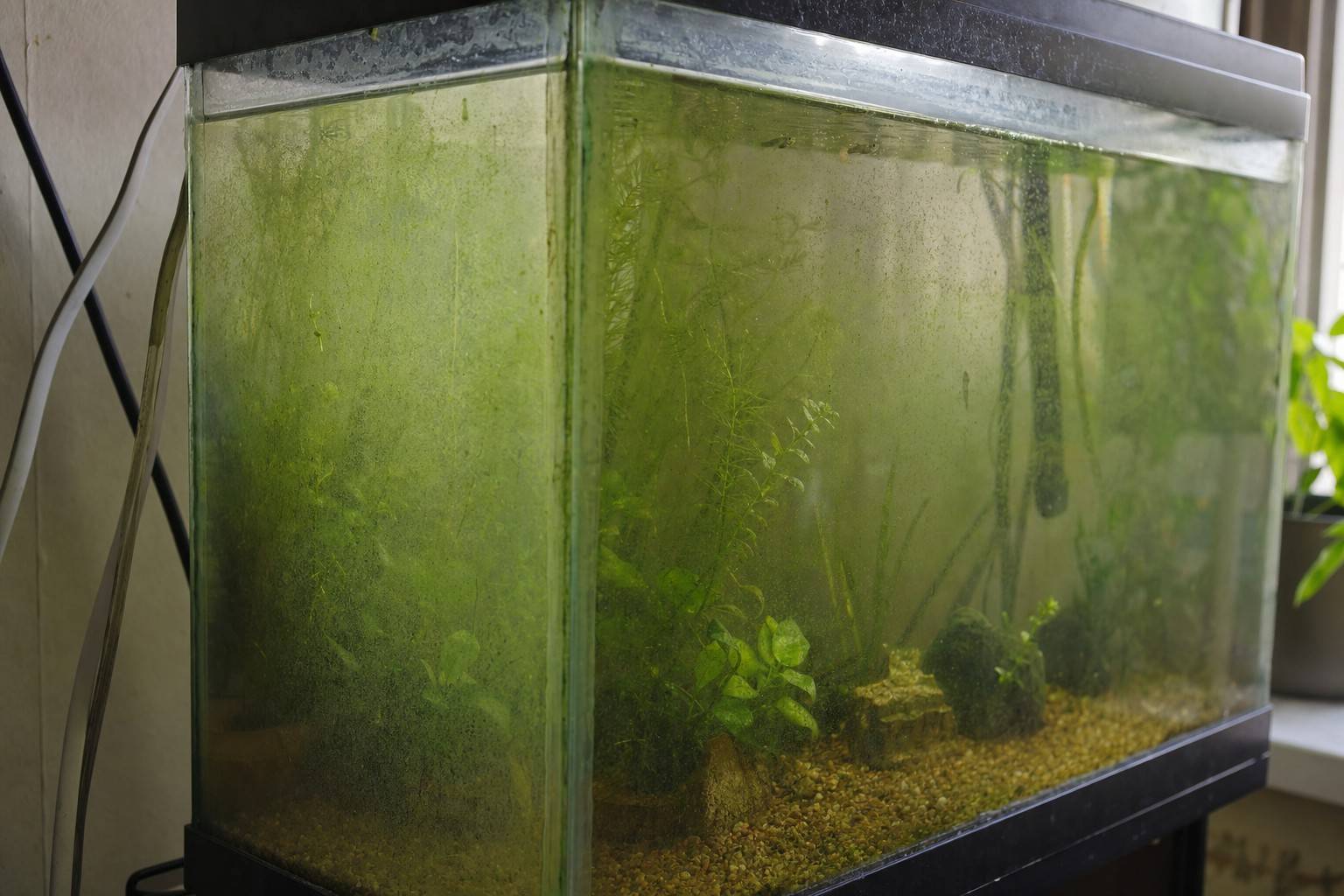
Algae is not a sign that you did something wrong.
It shows up in clean tanks, well-maintained tanks, tanks that win photos on fishkeeping forums. Every aquarium with light and water will grow some algae. That’s not a failure of upkeep. It’s just biology.
The goal isn’t a sterile tank with zero algae. The goal is a tank where algae stays at a level that doesn’t bother you or harm anything. Those are different targets, and the second one is actually achievable.
What Algae Needs to Grow
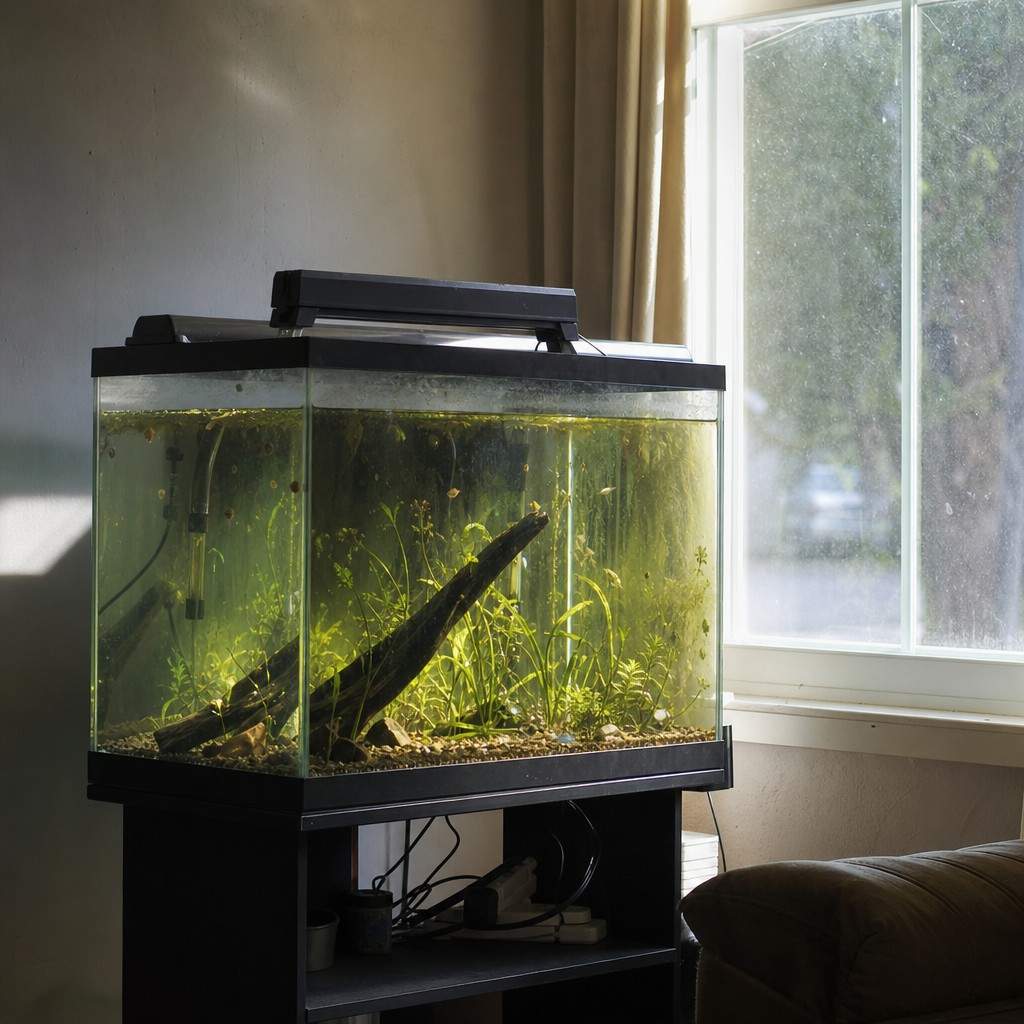
Two things drive algae: light and nutrients.
Get either one in excess and algae will take advantage. Get both in excess and it gets ahead of you fast. Almost every algae complaint in a new tank traces back to one or both.
Light is the most common culprit, and the most overlooked one. A tank placed near a window gets far more light than the hours your timer measures, because sunlight is intense in a way that a typical aquarium fixture isn’t. Even indirect natural light adds up across a day. Moving a tank away from windows is one of the most effective algae interventions there is, and it costs nothing. The placement guide for where not to put a fish tank covers this in detail, but direct sun is the short answer.
Duration matters too. Lights on for ten or twelve hours a day give algae a long runway. Six to eight hours is the range hobbyists commonly work with, adjusted up or down based on whether live plants are in the tank.
Nutrients come from inside the tank itself. Fish waste breaks down and releases them. Uneaten food does the same, and it does it faster. A tank that gets fed more than the fish can eat in two or three minutes is quietly loading the water with the exact fuel algae needs.
Most fish problems are water problems, and algae is no exception. The nutrients that feed algae are the same ones that build up when water changes get skipped. Regular aquarium maintenance keeps both in check.
The Common Types Worth Knowing
Not all algae behaves the same way, and knowing roughly what you’re looking at helps you respond correctly.
Brown, dusty growth on glass and decorations in a new tank is diatom algae. It looks unpleasant, but it’s one of the most harmless things that can happen in an aquarium. Diatoms are common in newer setups and typically recede on their own as the tank matures and the water chemistry stabilizes. Standard hobby experience holds that it often fades within the first few months without any intervention beyond normal upkeep.
Green film on the glass, the kind you wipe off every week or two, is usually light-driven. It’s easy to control and entirely normal. Most hobbyists just clean the glass and move on.
Green spot algae, the hard circular patches that don’t wipe off easily, tends to appear when light is high relative to nutrients. It grows slowly and isn’t a crisis, but it’s the tank’s way of saying the light is on the generous side.
Black beard algae and hair algae are different. They’re tougher to shift and usually signal a real imbalance rather than normal background growth. Black beard algae in particular shows up when CO2 or flow is inconsistent. Hair algae, that stringy green mat that tangles around plants, often signals a spike in nutrients. When either of these appears heavily, the tank is asking for a closer look at the conditions, not just more scrubbing.
Algae is not something to eradicate. A thin film on the back glass, a little on a rock, a faint green tint to a decoration after a few weeks is simply a living system doing what living systems do.
The Levers That Actually Work
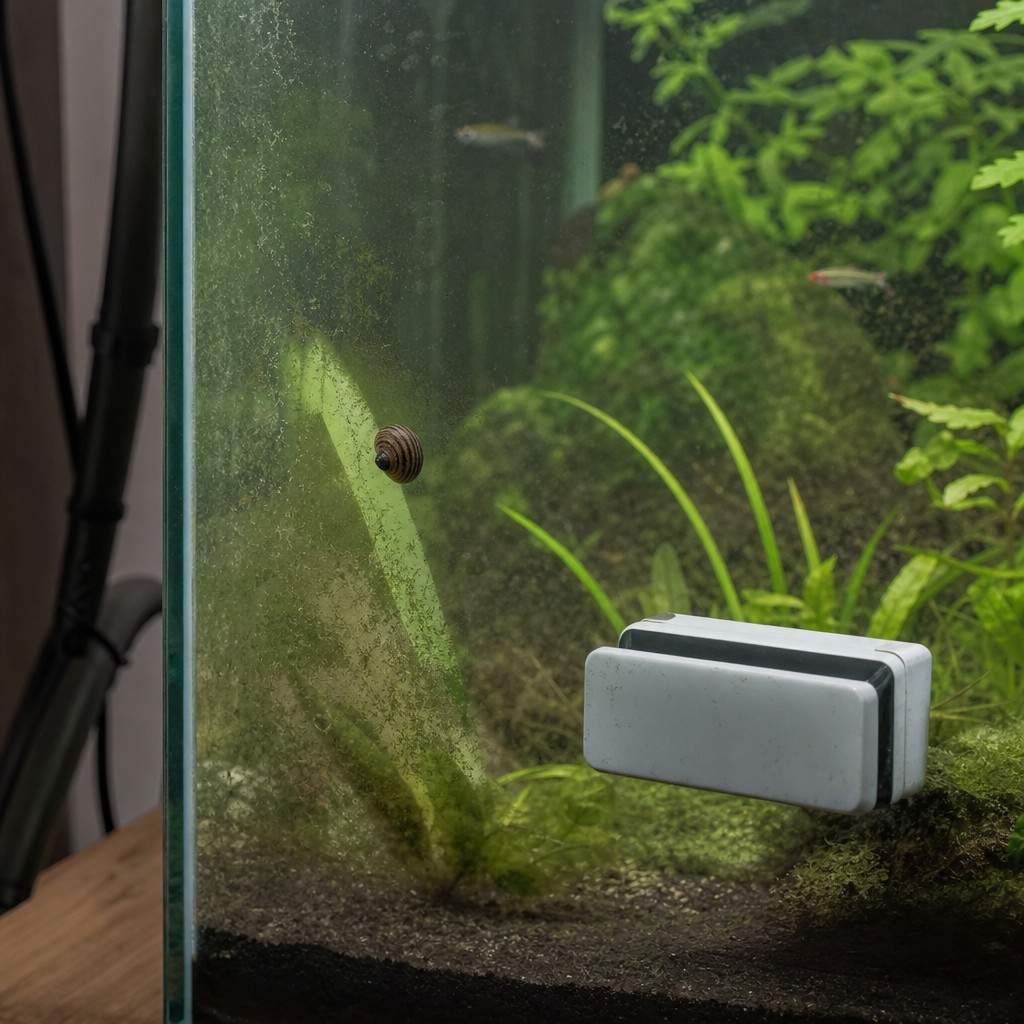
Here’s what changes the outcome, in order of impact.
Reduce light hours first. If the tank runs for ten or more hours, try seven. Most fish don’t need that much light, and plants do fine with less than people assume. A timer helps remove the inconsistency of turning the lights on and off by hand.
Keep the tank out of direct sun. This is the single change that makes the biggest difference for tanks near a window. It also helps with temperature stability, which is its own argument.
Feed less. It sounds almost too simple. But a common beginner habit is to watch fish eagerly surface and interpret that as hunger. Fish surface for food at any opportunity. The water is the clearer signal: if uneaten flakes are drifting to the bottom within five minutes of feeding, less food is the right call. Less uneaten food means fewer nutrients loading the water.
Do regular water changes. A simple maintenance routine with weekly or biweekly partial water changes removes the dissolved nutrients that accumulate between cleanings. No additive does what a bucket and a siphon do consistently.
Add live plants if the setup allows. Plants compete with algae for the same light and the same dissolved nutrients, and they compete well. A planted tank doesn’t make algae impossible, but it shifts the balance. Fast-growing stem plants are especially effective because they pull nutrients out of the water quickly.
A cleanup crew helps with the day-to-day, though it’s worth understanding what it can and can’t do. Nerite snails are efficient glass cleaners. Amano shrimp pick through plant leaves. Otocinclus catfish graze on soft algae on surfaces. These animals reduce visible algae, but they don’t fix the conditions that create it. If the light is too high and the nutrients are too high, no number of snails will stay ahead of it.
What Doesn’t Help (And What Backfires)
Chemical algae treatments exist, and a few have specific uses. But treating algae with chemicals while the underlying conditions stay the same is a temporary fix. The algae grows back, you add more product, and the cycle continues.
Some treatments can also harm live plants or stress sensitive fish and shrimp when used heavily. The chemistry that kills algae cells is not always precise about what else it affects.
Algae in a healthy tank is a sign of a living system, not failure. Chasing zero algae with products tends to create more problems than it solves.
Pulling It Together
The pattern is consistent once you see it. Light is the energy source. Nutrients are the food supply. Cut one or both and algae loses the conditions it needs to dominate. The tank doesn’t have to be pristine, and it won’t be. But it can stay comfortable.
An aquarium should be a calm corner of your home, not a second job. Algae management fits into that idea when it’s done through simple habits rather than constant intervention.
Wipe the glass when it looks cloudy. Feed a little less than you think you need to. Keep the lights on a timer. Do the water changes. That rhythm handles most algae problems without making a project of it.