
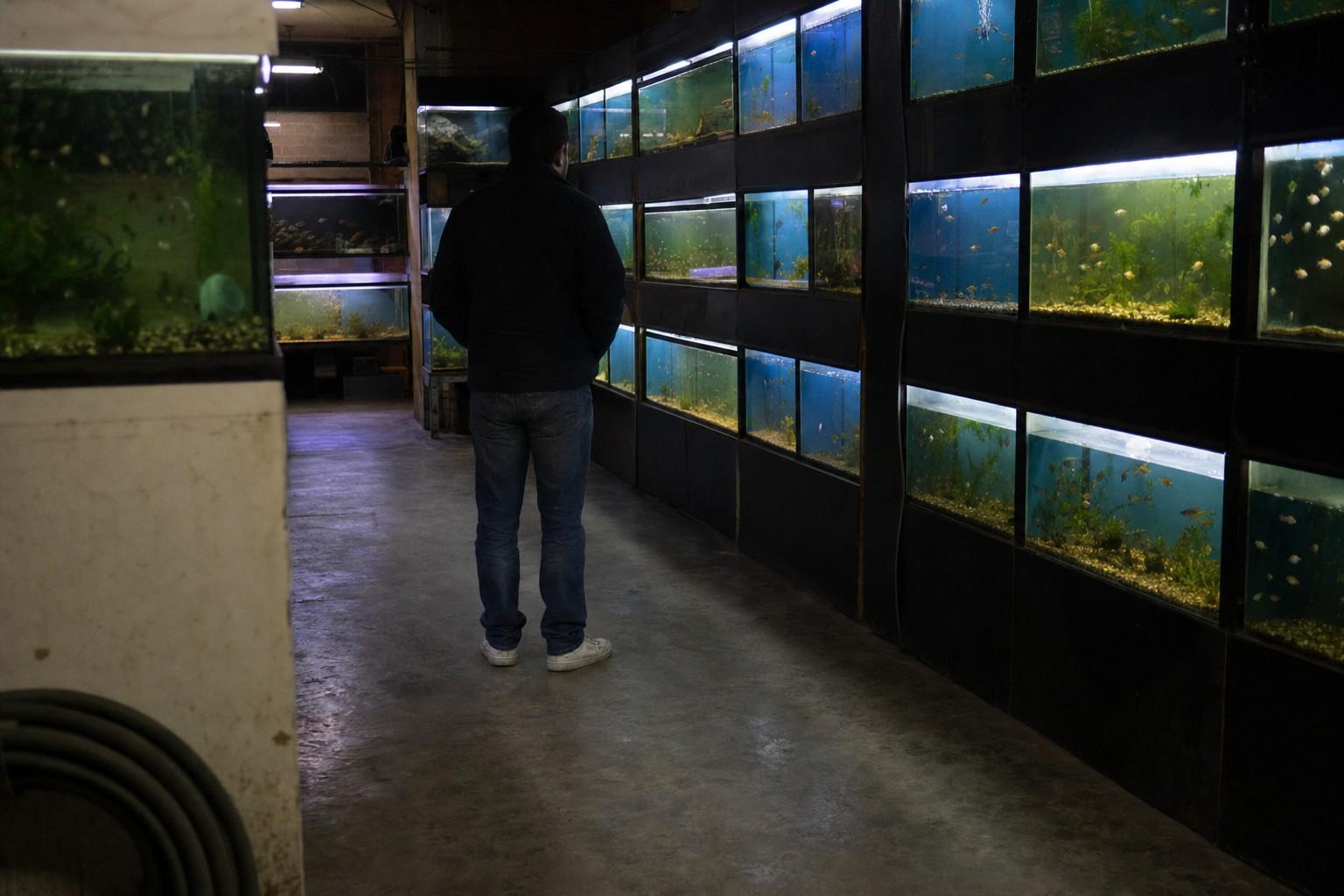
The old advice to pick “hardy starter fish” was never really about what you wanted to keep. It was a workaround for a flawed process.
The idea was that beginners needed fish tough enough to survive a new, uncycled tank. The fish suffered so the bacteria could grow. That is the era that advice came from, and it has passed. With fishless cycling now the standard approach, you establish the bacteria before any fish arrive. The tank is ready when the fish get there.
That changes the question entirely. It is no longer which fish can survive your tank. It is which fish fit your water and your patience.
Start With The Tank, Not The Store
There is a practical order to this, and the sequence matters.
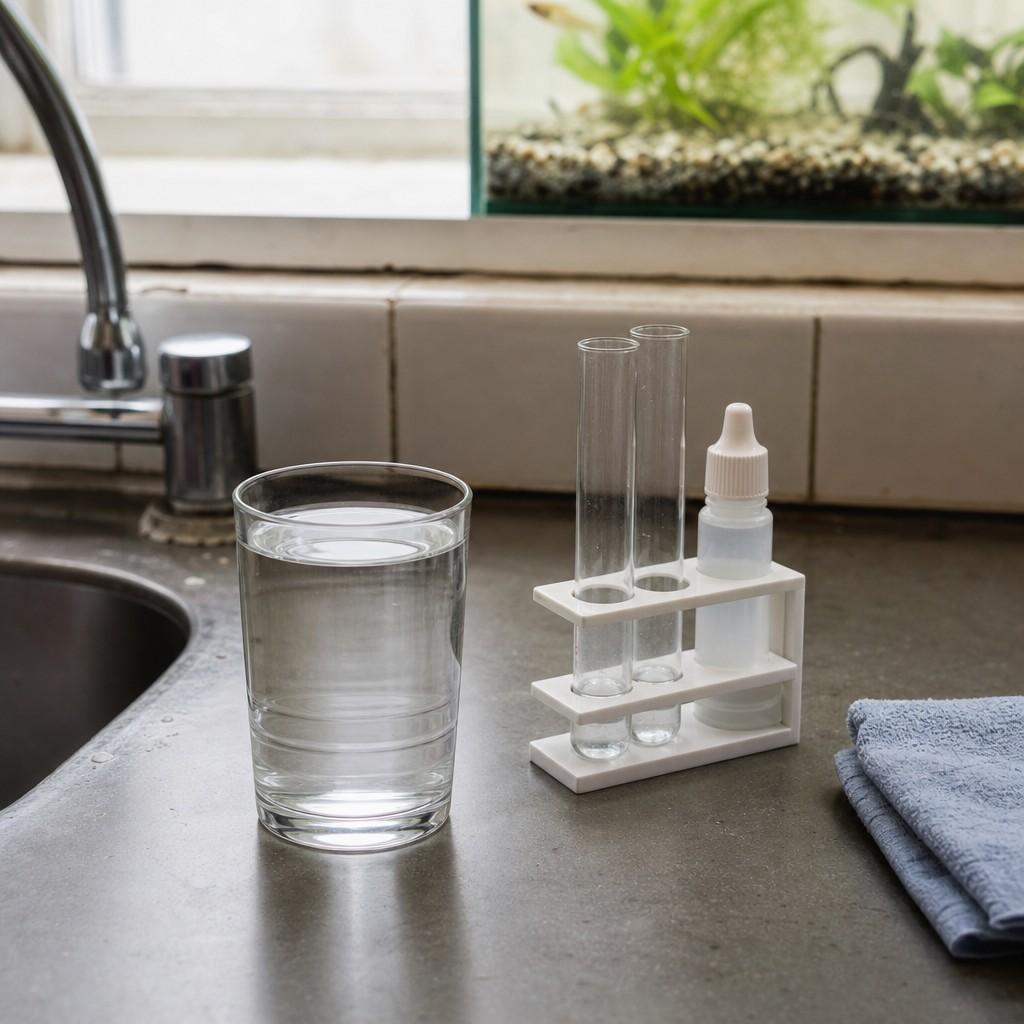
The fish go in last. The bacteria colony has to finish its work first, and the only way to know it has finished is a liquid test kit reading zero ammonia, zero nitrite, and a modest nitrate. If you’re still in the middle of that process, the full guide to fishless cycling covers every step and what to expect.
Cycle the tank before you buy the fish. Stock only when the cycle is complete, not when the tank looks ready. A clear, clean-looking tank and a cycled tank are not the same thing. One is cosmetic. The other is the condition the fish actually live in.
Once the cycle is done, the instinct is to go straight to the store. The better move is to spend one more hour at home with a water test and a species list. Both will save you money and grief.
Test Your Tap Water Before You Buy Anything
This is the step most beginners skip, and it’s the one that simplifies everything else.
Your tap water already has a hardness level and a pH. Those numbers are not something to fix. They’re the environment your fish will live in, and the smart approach is to find species that already like what comes out of your tap.
Keep fish that match your tap water, not fish that need you to fight it. Fighting your water with additives to suit the wrong fish is an ongoing maintenance task. The chemistry drifts back, you adjust again, and the fish are never truly settled. Choose fish that thrive in your tap’s natural range and that whole problem disappears.
Hardness matters more than most beginner guides let on. Water in the eastern US tends to run harder than water in the Pacific Northwest, and there is genuine variation even within the same city. A one-time test from your local supplier or a basic kit tells you what you’re working with. That number drives a better stocking decision than any generic species list.
Fish That Tend To Work Well For First Tanks
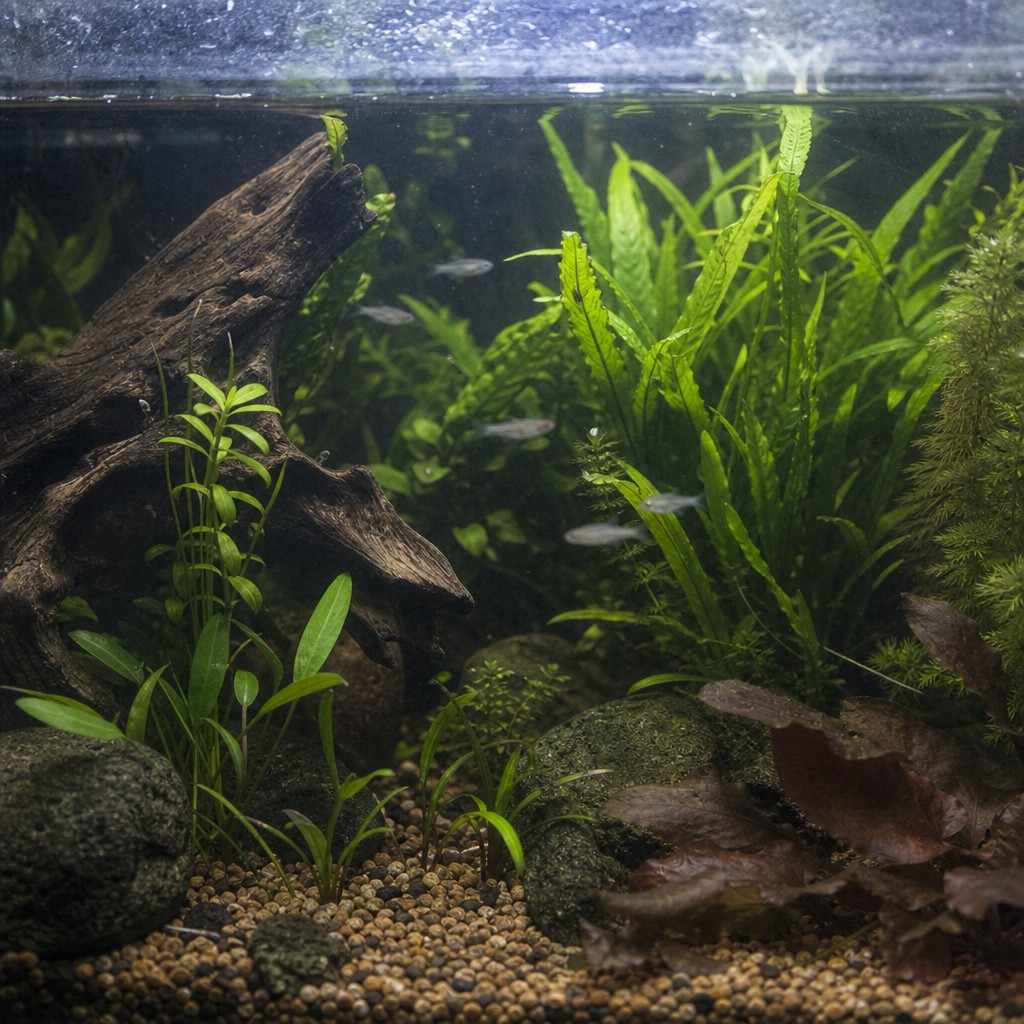
The hobby has a well-established shortlist of peaceful community fish that suit most first tanks, and they are worth researching in roughly this order.
Guppies and platies are among the most widely kept freshwater fish in the hobby, and there is good reason for it. Both tolerate a broad range of conditions, come in many color forms, and are active without being aggressive. They prefer company of their own kind, so a small group reads better than a singleton.
Zebra danios and white cloud minnows are fast, lively schooling fish that handle cooler water better than most tropical species. They are active throughout the tank and add movement without adding aggression. Schooling species like these are often listed in groups of six or more in hobby guidance, and that number reflects real behavior rather than a rule. A lone schooling fish paces the glass. A group of six behaves like a group.
Neon tetras and ember tetras are the small, jewel-colored fish that appear in nearly every beginner guide. They are peaceful, they school, and they look good in a planted tank. Ember tetras are slightly hardier and a little more forgiving of water that isn’t dialed in precisely. Both prefer softer, slightly acidic water, so they’re worth checking against your tap reading before committing.
Corydoras catfish earn a spot on almost every community tank list. They stay near the bottom, sift through substrate, and are almost completely peaceful. A small group of the same species is more active and visibly more comfortable than a lone fish.
None of these species belong in a tank without a finished nitrogen cycle. And none of them should be researched and purchased in the same trip to the store.
The Store-Size Trap
The fish in the store tank are not finished growing, and the gap is bigger than it looks.
Adult size is the only size that matters for your stocking plan. A fish that fits in a net today might need a 75-gallon tank to live well as an adult. The two species that catch beginners most often here are the common plecostomus and the iridescent shark. Both are frequently sold as small, inexpensive fish. Both routinely grow to a foot or longer, and both will eventually outgrow almost any home aquarium.
The fix is simple but requires discipline. Research the adult size before you’re standing in the store. Doing it at home, without a pretty fish in front of you, is the only version that reliably works.
Research the adult size before you’re standing in the store. Doing it at home, without a pretty fish in front of you, is the only version that reliably works.
This is why the impulse-buy problem is its own category. A fish store is a well-lit, well-maintained environment where everything looks achievable. Your tank at home is a different system, with a bacteria colony sized for what it currently holds, not for whatever caught your eye on the way out.
Stock Slowly, And Stay Understocked
The bacteria colony in your filter is sized for the fish you currently have. When you add more fish, the waste load increases, and the colony catches up over the following weeks.
Add too many fish at once and the ammonia rises faster than the bacteria can handle. The result looks like a water quality crisis, because it is one.
Add a few fish, wait a few weeks, then add a few more. That pace gives the bacteria time to grow with the load. It also gives you time to watch the fish you have, spot any problems early, and make a better decision about what comes next.
A tank that runs understocked is not a failure of ambition. It is a tank with stable water, low stress on the fish, and room for the biofilter to keep up. Overstocking is a much easier trap than most beginners expect, because the tank looks fine right up until it doesn’t.
Fish Are A Multi-Year Commitment
This part doesn’t always make it into beginner advice, but it belongs here.
A well-kept common goldfish can live well over ten years. A well-kept corydoras can live five to ten. Even small tetras often live three to five years with good water quality. The species you’re considering for your first tank are not short-term guests. They are residents.
Lifespan means the fish you choose now are the fish you’ll be caring for years from now. That’s not a reason to avoid the hobby. It’s a reason to choose thoughtfully. A complete picture of how long common aquarium fish live is worth looking at before your first purchase, because it changes the weight of the decision.
The stocking choice is the one that follows you longest. The equipment you can swap out. The fish stay.
One Practical Frame Before You Walk In
There is a version of this process that works and a version that doesn’t.
The version that doesn’t: go to a pet store with no plan, fall in love with something colorful, bring it home, and research it afterward.
The version that works: test your tap water, read about two or three species that match it, pick one to start with, and go to the store knowing what you’re looking for and how many you need.
Write down the species name and the minimum group size before you leave home. That piece of paper is worth more than an hour of browsing.
The right first fish is usually less dramatic than the fish that catches your eye in a store. It is calm, compatible with your water, and correctly sized for a tank that is still finding its balance. That combination almost always builds a tank worth keeping.