
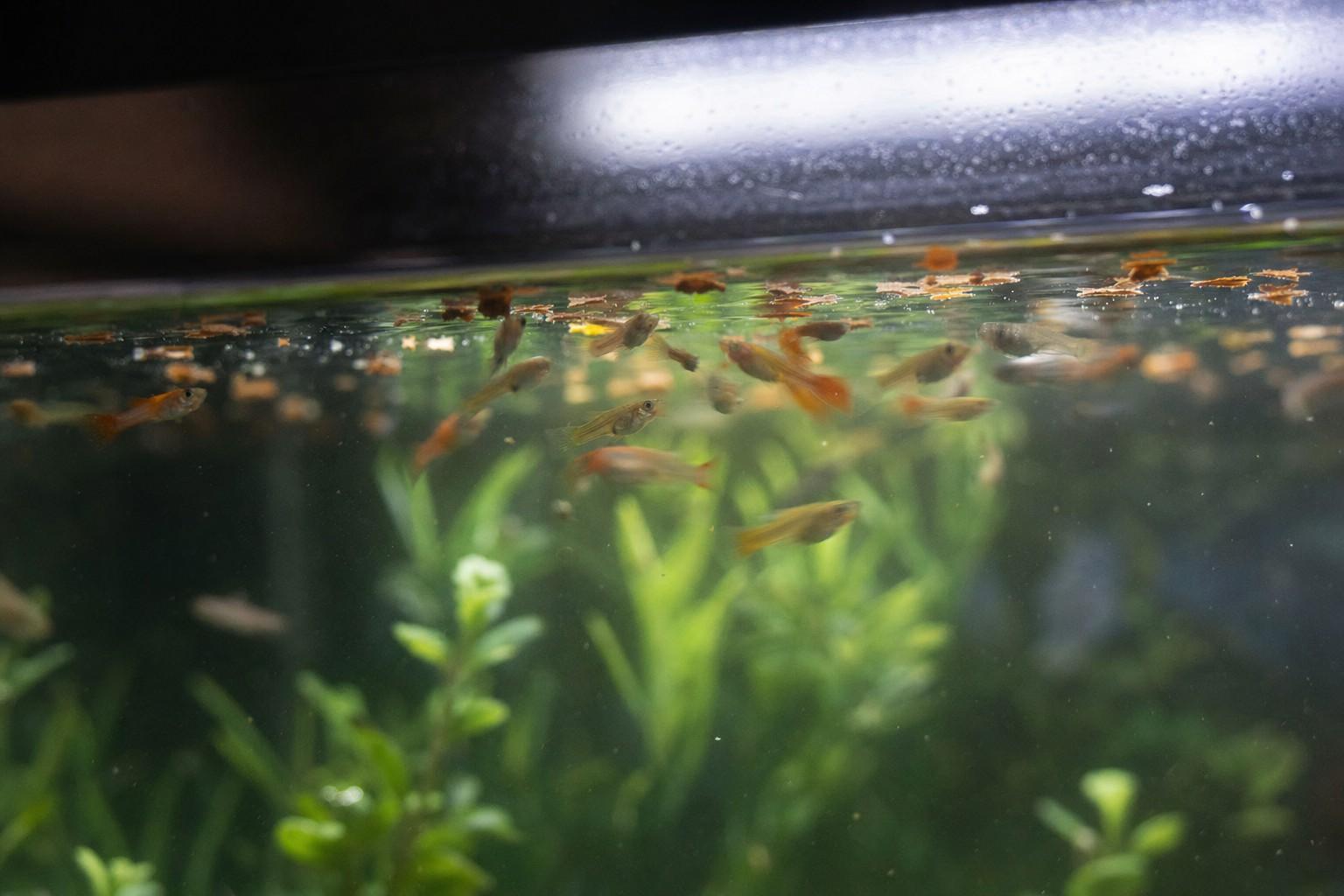
The most reliable way to harm a healthy tank is to feed it too much, and most people who do it are being kind.
Fish are persuasive beggars. They gather at the glass the moment you walk past, and they look genuinely hungry regardless of when they last ate. That behavior is hard-wired, not meaningful. A fish will display the same frantic pace at the surface two hours after a meal as it will after two actual days without food. The stomach does not send the cues. The instinct does.
Overfeeding is the single most common beginner mistake, and it causes damage that is invisible at first. Understanding why helps make the rule stick.
What Uneaten Food Actually Does to Your Water
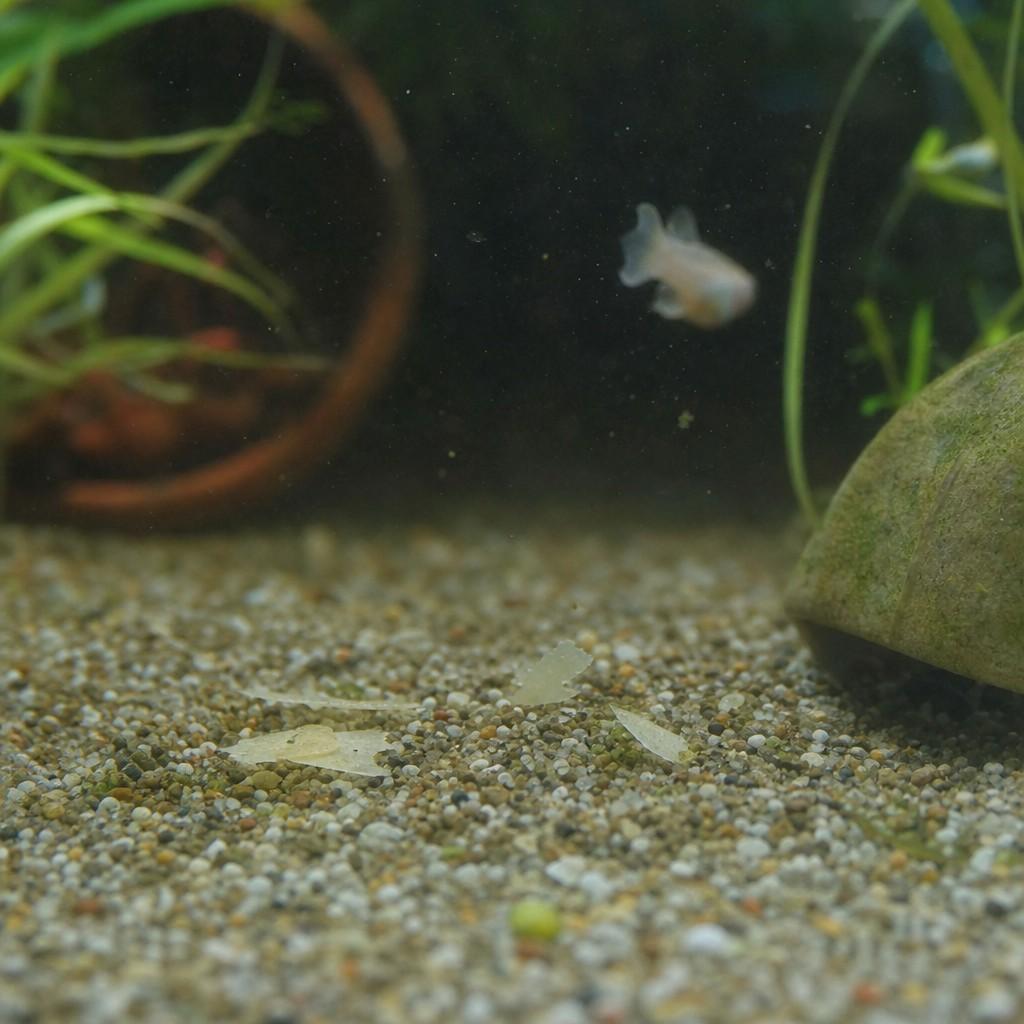
Picture a small flake of food sinking past the substrate because the fish missed it. Within hours, bacteria begin breaking it down. That breakdown releases ammonia directly into the water.
Ammonia is the same compound fish waste produces. A bacterial colony in a cycled filter is designed to process the waste from living fish. It is not designed to handle a sudden surplus of organic matter on top of that. Ammonia spikes faster than the filter can clear it.
What follows is predictable. Cloudy water is usually the first sign, caused by a bacterial bloom feeding on excess nutrients. Then algae takes hold, because algae thrives on exactly the nutrient load that overfeeding delivers. Water that smells off, glass that greens up within days, fish that appear lethargic: these are almost always diet problems before they are anything else.
Most fish problems are water problems. And a water problem that started at feeding time is the easiest kind to prevent.
The fish themselves may not show obvious distress right away. But gills that are working in ammonia-stressed water are being damaged continuously, even when the fish looks fine at the surface.
The Practical Rule: Two Minutes, Once a Day
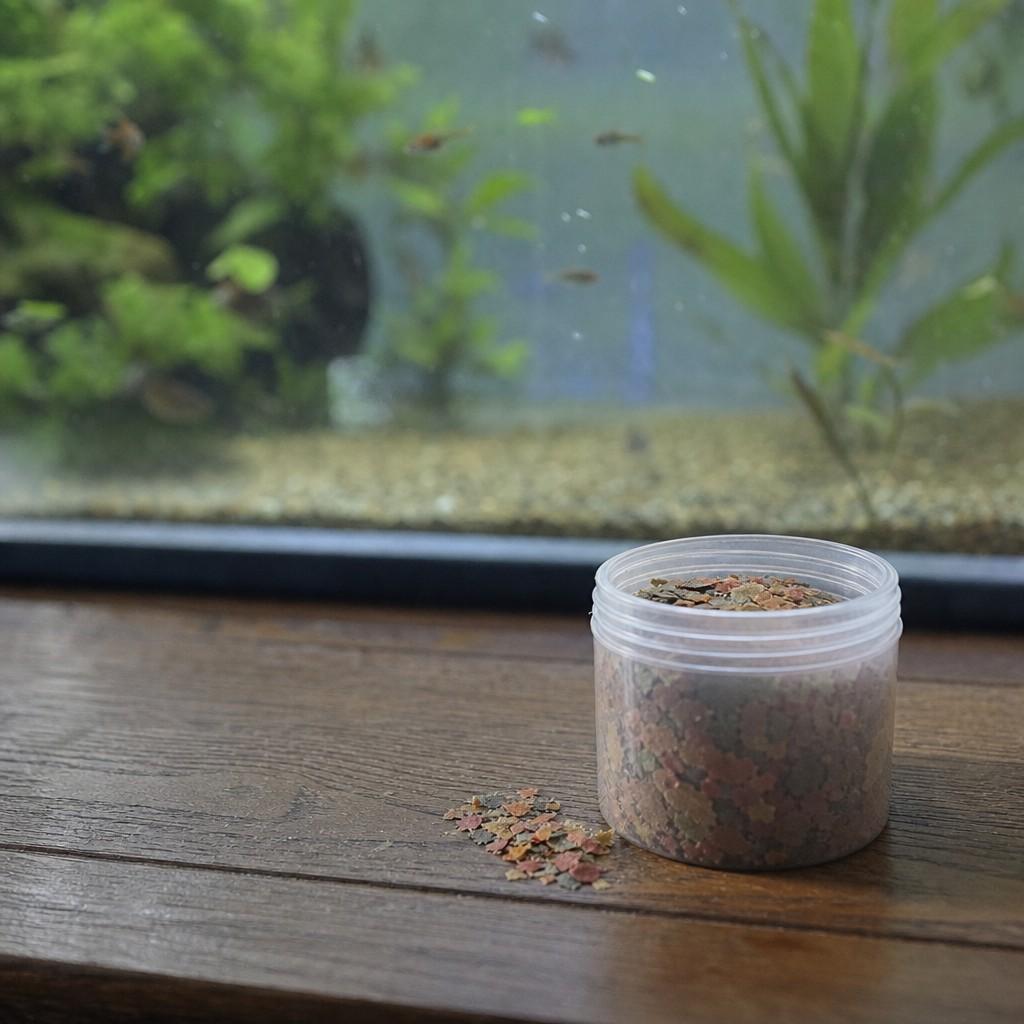
The hobby’s standard feeding guideline is simple. Feed once a day, only what the fish can finish in roughly two minutes, and remove or cut back on anything left floating.
Two minutes is a reliable ceiling, not a target. Most tanks reach it well before the timer does. A pinch of flake, a few small pellets, occasionally a pea-sized cube of frozen food: the amount that looks too small is usually just right.
What the fish finish completely disappears into their bodies, not your filter. What they leave behind becomes the water problem.
Some keepers split the daily amount across two smaller feedings, morning and evening. That approach works well for community tanks where shyer fish at the bottom struggle to compete at the surface rush. The total food entering the tank stays the same; it just arrives in two calmer waves.
Watch what happens in the first thirty seconds. If fish are actively competing and food is disappearing fast, you have their attention. If flakes are drifting past unanswered and settling on the substrate, that is your signal to pull back tomorrow.
The type of food matters less than the amount and the consistency. A good-quality staple flake or sinking pellet appropriate to the species is enough. Variety in the form of occasional frozen or freeze-dried food is a reasonable supplement, not a requirement. The goal is feeding at the right scale, not assembling a complex diet.
If flakes are drifting past unanswered and settling on the substrate, that is your signal to pull back tomorrow. The type of food matters less than the amount and the consistency.
Fasting One Day a Week Is Fine, And Most Keepers Do It
A healthy adult fish handles a missed feeding without any trouble at all. Standard hobby guidance and fish biology sources agree: skipping one day per week is a normal practice, not a deprivation.
The fasting day gives the filter a lighter workload. It gives the substrate a chance to catch up on anything that slipped through. And it gives you a clear look at the tank without the distraction of feeding behavior.
Healthy fish that haven’t eaten in a day look exactly the same as healthy fish that just did. The begging doesn’t stop, but the fish are not suffering. If a fish genuinely stops showing interest in food for several days running, that is worth noticing as a health signal, not a scheduling issue.
This is also why leaving a tank alone for a few days on a vacation is less alarming than it sounds. A tank that is otherwise stable, with a properly cycled filter and normal water chemistry, holds up well over a long weekend unfed. The full picture of what to do before leaving a tank unattended covers the preparation side, but the fish themselves are more resilient than new keepers expect.
Feeding Time Is Your Daily Observation Window
The two minutes you spend at the tank each morning are not just about food.
Feeding is the moment when every fish in the tank comes forward, moves actively, and responds to what you do. It is the best daily diagnostic you have. A fish that isn’t eating is often the earliest signal that something is wrong in the water before a test kit would catch it, and sometimes before any other visible symptom appears.
Get to know the usual lineup. If one fish normally jostles for position at the surface and today it is hanging near the back, note it. If the normally shy cory at the bottom is not emerging at all, note it. These are not certainties, but they are the kind of observation that catches problems early.
That daily glance integrates naturally into the kind of simple maintenance routine that keeps a tank healthy without turning into its own project. You are already at the tank. The water looks a certain color. The glass has or hasn’t changed overnight. Two minutes of attention covers a lot of ground.
The rhythm of it is also why overfeeding is such an easy habit to form. More food means more activity, and more activity looks like a healthier, more engaged tank. It isn’t. “An aquarium should be a calm corner of your home, not a second job” and a tank where fish are thriving on less is doing exactly what it should be doing.
Less Food, Cleaner Water, Calmer Tank
The honest summary is short.
Feed once a day. Stop before the fish do. Skip a day each week and notice what the tank looks like when it’s working without you.
The fish will still crowd the glass the moment you approach. They will still look urgent. That is simply what fish do, and learning to read it accurately is part of knowing your tank. A fish that acts hungry every hour of the day is probably healthy. A fish that stops acting hungry at all is the one worth watching.
Overfeeding is the beginner mistake with the gentlest-looking cause and the most consistent downstream damage. Pulling back to a smaller, deliberate amount at each feeding is one of the cheapest improvements you can make to a tank’s long-term water quality and stability.
The pinch that looks insufficient usually isn’t.