
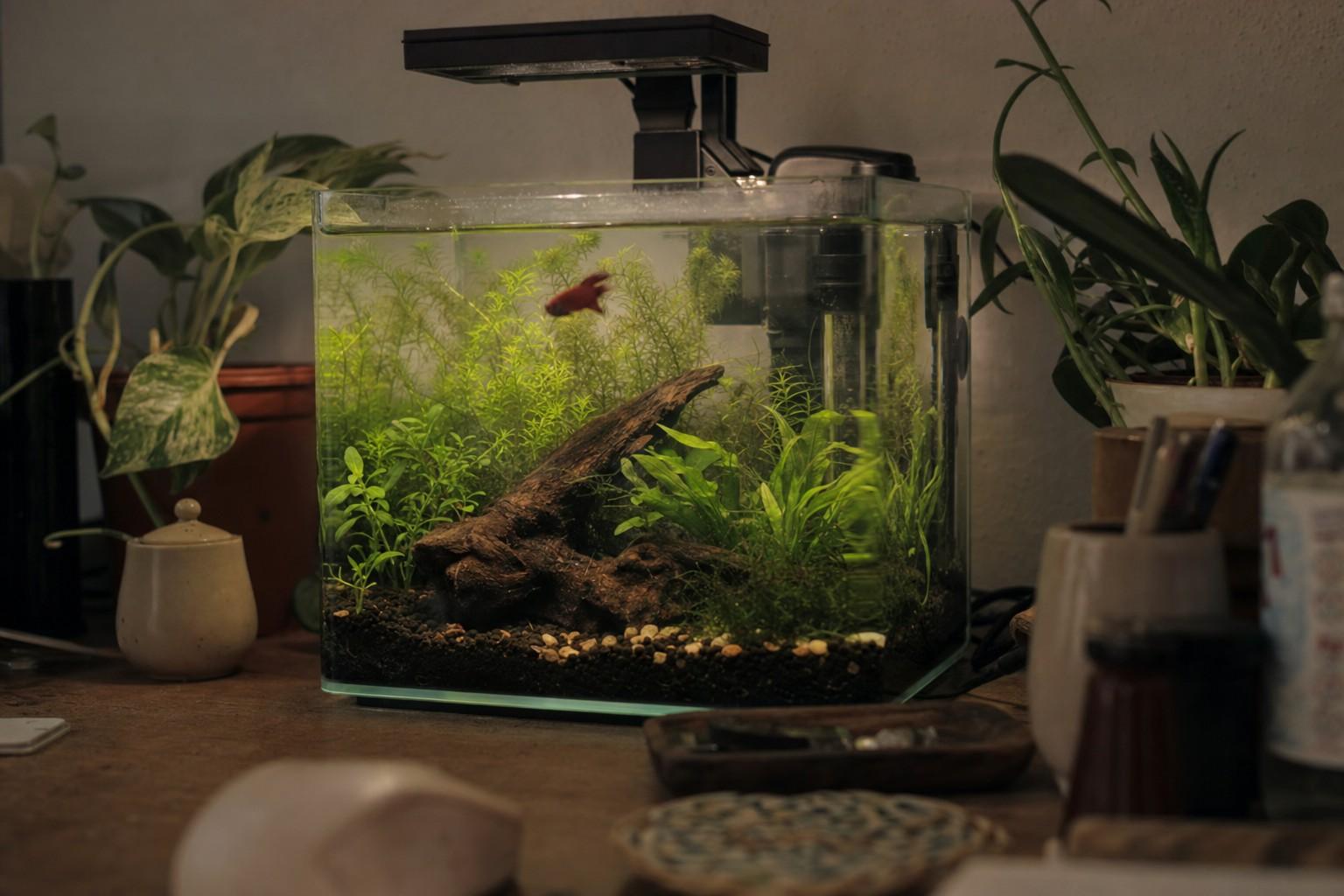
The betta in the pet store cup is not showing you how bettas live. It is showing you how long bettas can survive.
That is a meaningful difference. Bettas are tropical fish that need warm, filtered, biologically stable water, the same as almost any other fish you would keep. The cup is a holding method, not a care model. Starting with that fact makes everything else about betta ownership make sense.
Why the Bowl Myth Took Hold
The misunderstanding has a real biological root.
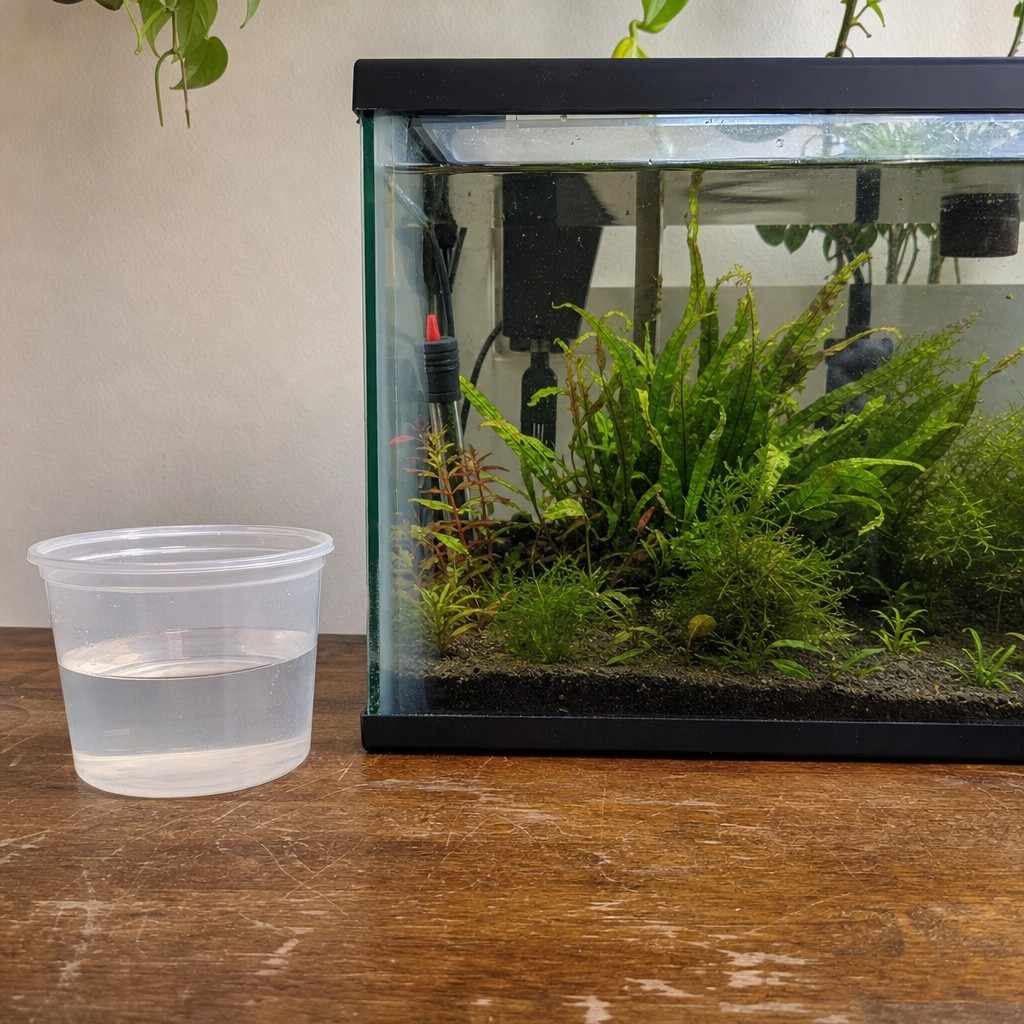
Bettas breathe air. They have an organ called a labyrinth, a folded structure above the gills that lets them pull oxygen directly from the air at the surface. This is why a betta in a small, stagnant container can stay alive long past the point where most fish would suffocate. The labyrinth organ explains survival in a bowl. It doesn’t explain anything about doing well in one.
In the wild, bettas live in shallow rice paddies and slow streams across Southeast Asia. Those waters are warm, not cold. They hold dissolved waste poorly but replenish constantly through flow and size. A desktop vase at room temperature in a northern home is a different situation entirely: cold, still, and finite.
The bowl myth persisted for the same reason most pet myths do. Bettas were cheap, replaceable, and visually forgiving of poor conditions right up until they weren’t. A fish that hides its decline well looks healthy for a while. That lag time felt like evidence the bowl was fine.
Bettas were cheap, replaceable, and visually forgiving of poor conditions right up until they weren’t. A fish that hides its decline well looks healthy for a while.
It wasn’t fine. Hobbyists who moved bettas from bowls into proper tanks consistently reported more color, more activity, and longer lives. That pattern is the real evidence.
What a Betta Actually Needs
None of this is complicated equipment. The list is short.
A real tank, not a bowl. Standard hobby guidance puts the minimum for a single betta at five gallons. That may sound large next to a cup, but five gallons is a small footprint on a desk or shelf. The reason the number matters is dilution. In a few gallons, a single overfeed or a skipped water change concentrates fast, and the temperature drifts with the room. More water absorbs those swings and buys time to catch a mistake before it harms the fish. As a general principle, a bigger tank is easier to keep than a small one, and bettas are not an exception to that rule.
A heater. Bettas are tropical fish that want consistently warm water, comfortably into the high 70s Fahrenheit for most setups. A room that feels comfortable to a person in a T-shirt is usually around 68 to 72 degrees, which is cold for a betta. An unheated tank in most homes runs too cold, and cold water slows a betta’s metabolism, suppresses its immune system, and makes it more vulnerable to disease. A small adjustable heater for a five-gallon tank costs very little and runs quietly.
Gentle filtration. Bettas don’t like strong current. Their long fins were bred for calm water. A sponge filter or a hang-on-back filter set to a low flow rate works well. The filter is not optional, though. Without it, waste builds and ammonia climbs, and ammonia damages gill tissue whether or not the fish can gulp air at the surface.
A cycled tank. This is the step most beginners skip because it is invisible. Before any fish go in, the tank needs a colony of bacteria living in the filter media that can process fish waste into less harmful compounds. Cycling a tank properly takes several weeks, and skipping it is the single most common reason bettas die in their first month. The fish wasn’t weak. The water was wrong.
Temperament: What You Are Actually Getting
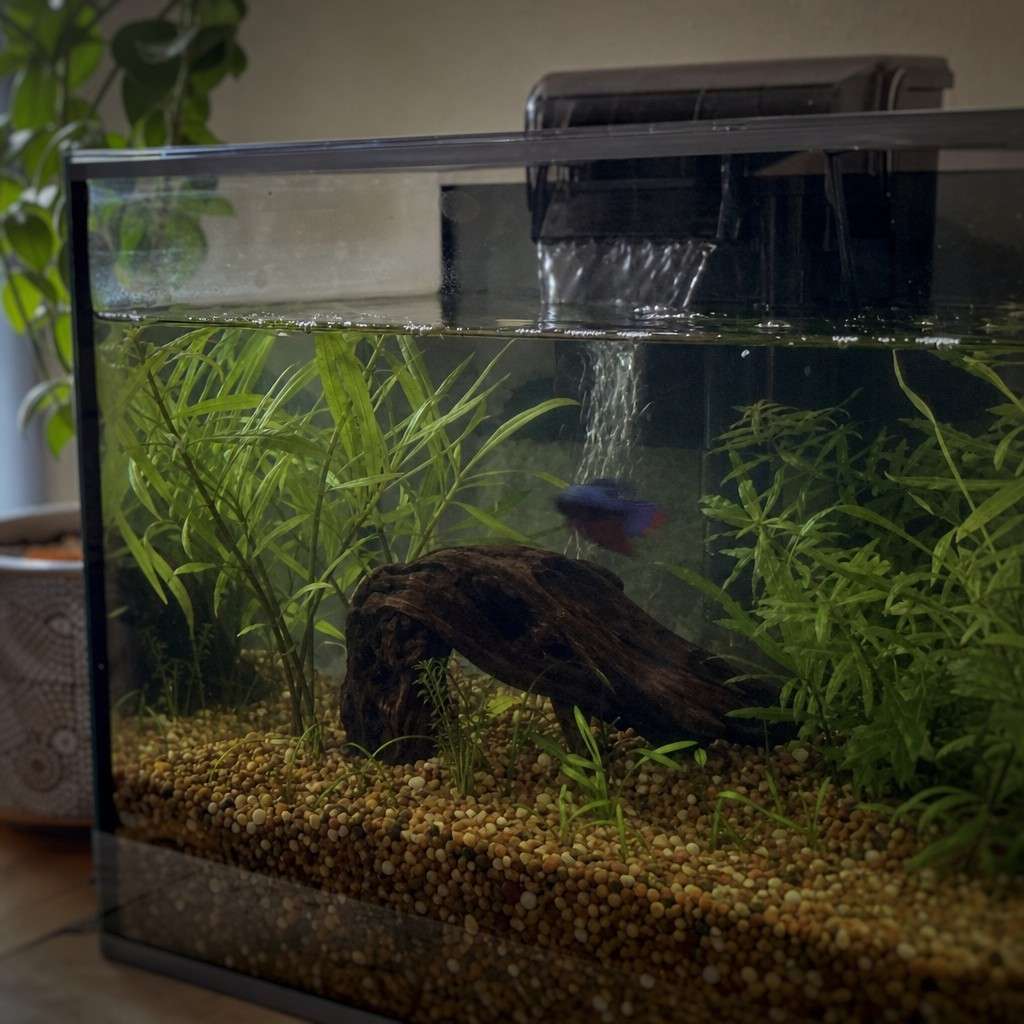
A well-kept betta is one of the more interesting fish to observe at home.
They notice things. A betta will track a finger moved along the glass. It recognizes the person who feeds it and responds differently to them than to a stranger. Hobbyists routinely describe them as the most interactive fish in a freshwater collection, and that reputation holds up.
Males are territorial with each other, full stop. Two male bettas in the same tank will fight until one is dead or seriously injured. That is not an exaggeration or an occasional occurrence. It is consistent behavior across the species, and it is why the pet store keeps them in individual cups. One male betta per tank.
Females are more variable. Some can be kept together in a group called a sorority, but it requires careful monitoring and a tank with enough space and cover that weaker fish can escape aggression. For a beginner’s first setup, one betta in one tank is the uncomplicated answer.
The harder question for beginners is tankmates. Some fish work and some don’t. Fin-nippers are the main hazard. Species like tiger barbs and certain tetras will shred a betta’s fins, which invites infection and stress. On the other side, a betta will attack small, colorful fish it reads as competition, including male guppies with long fancy tails. If you’re choosing what to share a tank with, thinking through stocking carefully before you buy saves a lot of trouble.
Common Mistakes, Named Directly
The same problems show up repeatedly in new betta setups.
An unheated bowl is the most common one. A betta in a cold bowl will slow down, lose color, and start clamping its fins. Those are early signs of distress, not personality. Moving the fish into heated, filtered, cycled water often reverses them.
Overfeeding is next. Bettas have small stomachs and are prone to bloating. The standard guidance is to feed small amounts once or twice a day, with a fasting day once a week. Uneaten food left in a small tank is also an ammonia source, which compounds the water problem fast. If you’re uncertain how much is the right amount, the general guidance on feeding frequency applies to bettas as well.
Skipping the cycle is the third. A new tank filled with water and decorated and then immediately stocked with a betta is an uncycled tank. The fish is in it while ammonia builds with nothing to process it. This looks like disease or bad luck. It’s water chemistry.
Finally, treating a betta’s stillness as contentment. A healthy betta moves around, explores, and surfaces regularly for air. A betta that sits at the bottom or hides behind a decoration for long stretches is usually telling you the water is wrong, the temperature is wrong, or the tank is too small to feel safe in.
An Honest Assessment
The betta’s reputation as a low-effort fish is not entirely wrong. In the right setup it genuinely is one of the easier fish to keep. It doesn’t need a school, doesn’t need specific water chemistry adjustments for most tap water, and doesn’t grow large. Keep fish that match your tap water, not fish that need you to fight it, and a betta usually qualifies.
The cruelty is the bowl, not the fish. A betta in a five-gallon heated filtered cycled tank is a genuinely beginner-friendly animal. A betta in a bowl is a fish under slow, visible stress, and the people who set that up usually did it because the store sold them the cup and nobody explained the difference.
The difference is not expensive or complicated. It is a small tank, a small heater, a simple filter, and a few patient weeks before the fish goes in. That is the setup that produces the fish people describe as interactive, colorful, and long-lived. The bowl produces the other kind.