
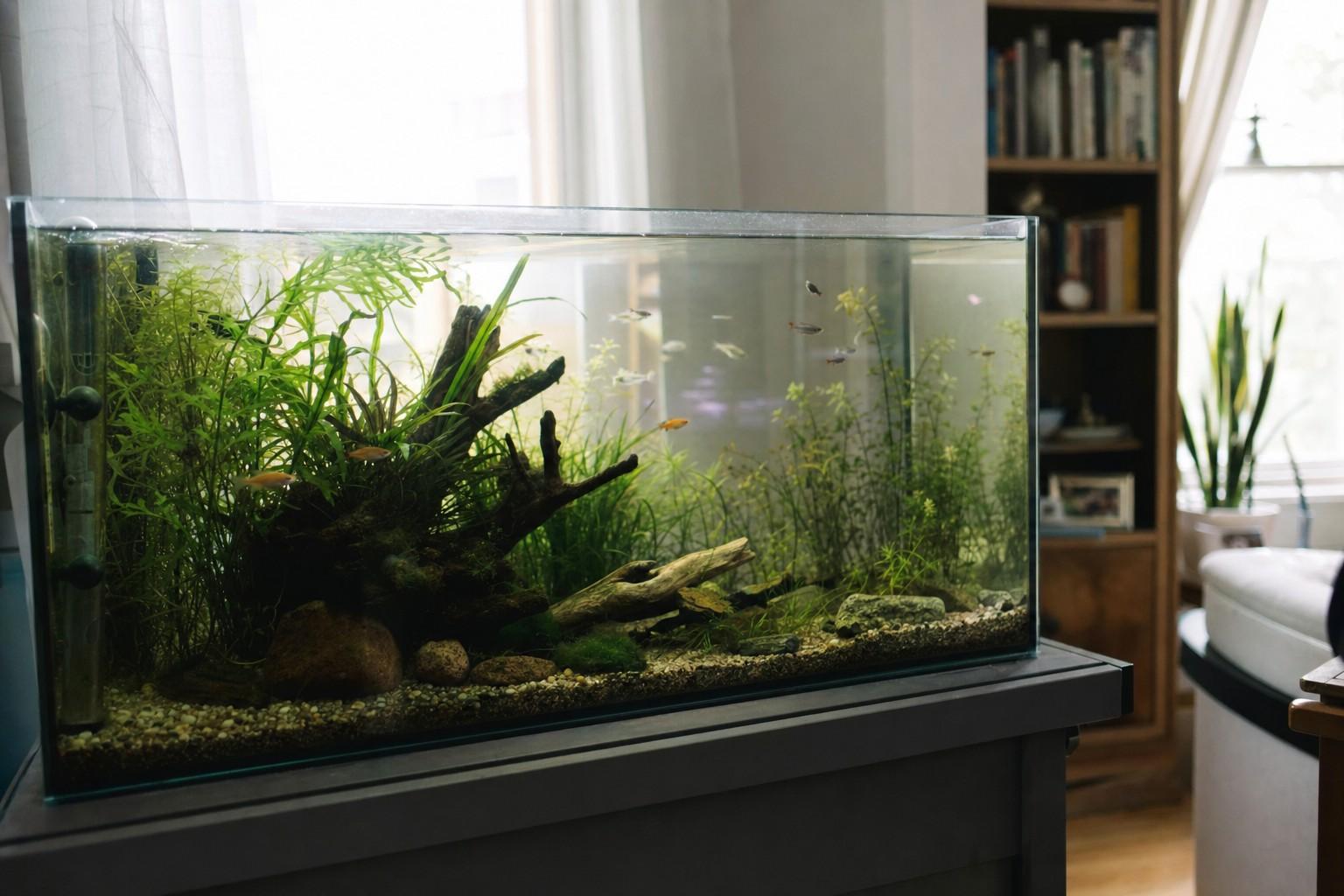
Compatibility has nothing to do with a fish being “nice.” It has everything to do with whether two species share the same water conditions, occupy different parts of the tank, won’t fit in each other’s mouths, and can coexist without one shredding the other’s fins.
That reframe matters, because a lot of first community tanks go wrong at the planning stage. People pick fish they like the look of and assume peaceful species will sort themselves out. Sometimes they do. More often, they don’t.
If you’ve already worked through how to choose your first aquarium fish, you know the basics: match your tap water, respect school sizes, account for adult size, and add fish slowly. This article picks up where that one leaves off. Now you’re asking a different question: which specific combinations actually hold together long-term?
What Compatibility Actually Means
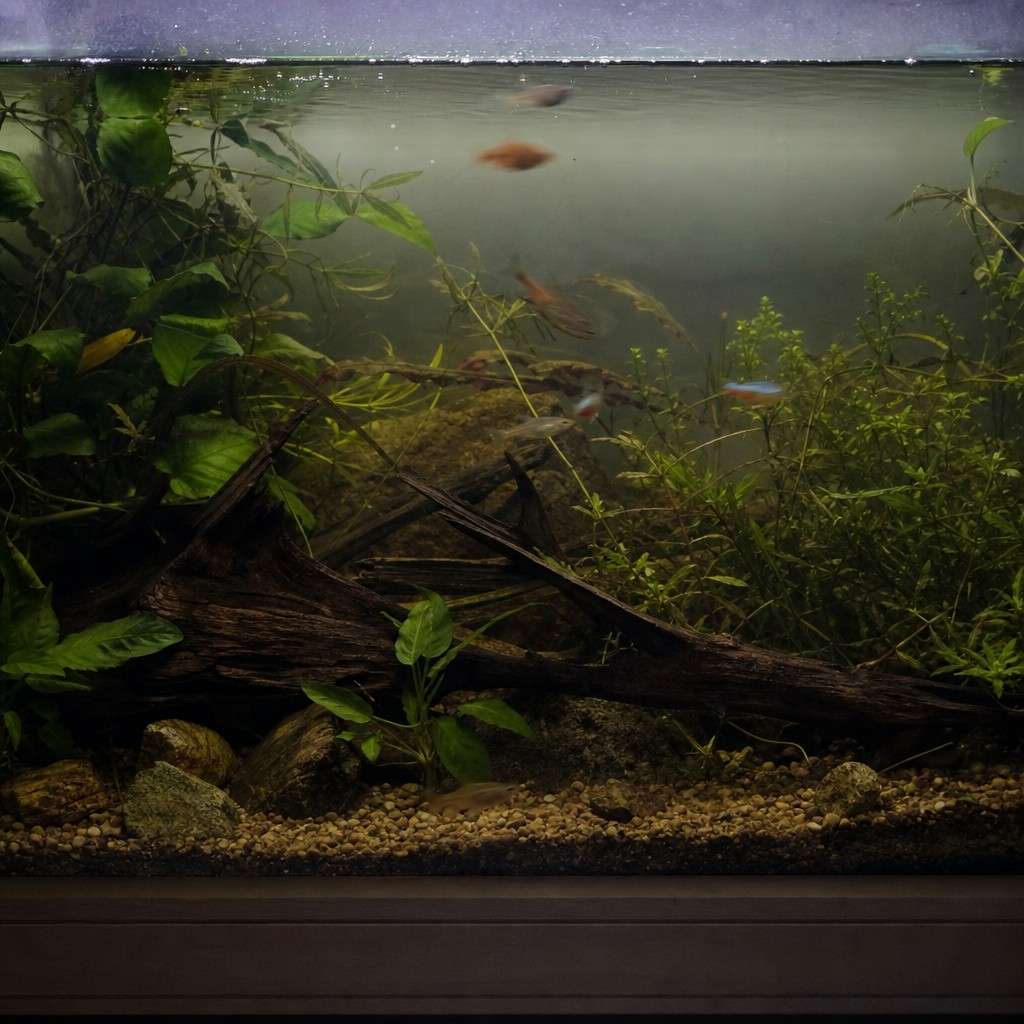
Temperament is the obvious starting point, but it’s only one piece.
A fish labeled “peaceful” can still terrorize a tank. The label describes how a species behaves toward others under reasonable conditions. It doesn’t mean every combination works. A full-grown rainbow fish is technically peaceful and still large enough to swallow a neon tetra.
Adult size is the most underestimated factor in community planning. A fish that starts at half an inch at the pet store and grows to six inches will eat anything that fits in its mouth. That’s not aggression. It’s just the way fish work. Checking the adult size, not the store size, is the only reliable check.
Water parameters are the other quiet constraint. A species that wants soft, acidic water and a species that wants hard, alkaline water are technically both “peaceful freshwater fish.” They just don’t belong in the same tank. Before building a community, confirm that the species you’re considering have genuinely overlapping preferences, and that those preferences match what your tap water actually delivers. A stable tank beats an impressive one, and a tank stuffed with fish fighting their water chemistry isn’t stable.
Swimming Zones: The Practical Framework
One of the most useful ways to think about a community tank is vertical space.
Fish don’t distribute themselves randomly. Most species gravitate to a layer: some stay near the surface, most activity happens in the middle column, and certain fish almost never leave the bottom. A tank with a top dweller, a mid-water school, and a bottom group uses the whole space without crowding any one level.
A classic beginner combination is a mid-water schooling fish, a small centerpiece fish, and a group of corydoras catfish on the bottom. Corydoras are one of the most reliably compatible bottom dwellers in the hobby. They’re small, social, spend their time sifting the substrate, and don’t compete with mid-water fish for territory or food. They do need to be kept in groups; hobbyists consistently report that corydoras kept alone or in pairs become skittish and inactive, while a group of six or more settles down and behaves normally.
The centerpiece fish is the fish the tank is built around. A single male betta in a community setup works in this role, with the right tankmates. A dwarf gourami does the same. A pair of German blue rams can work in a soft-water tank. The key is picking one centerpiece and building outward, not collecting several fish that all want to dominate the same space.
Fin-Nippers and Long-Finned Fish Don’t Mix
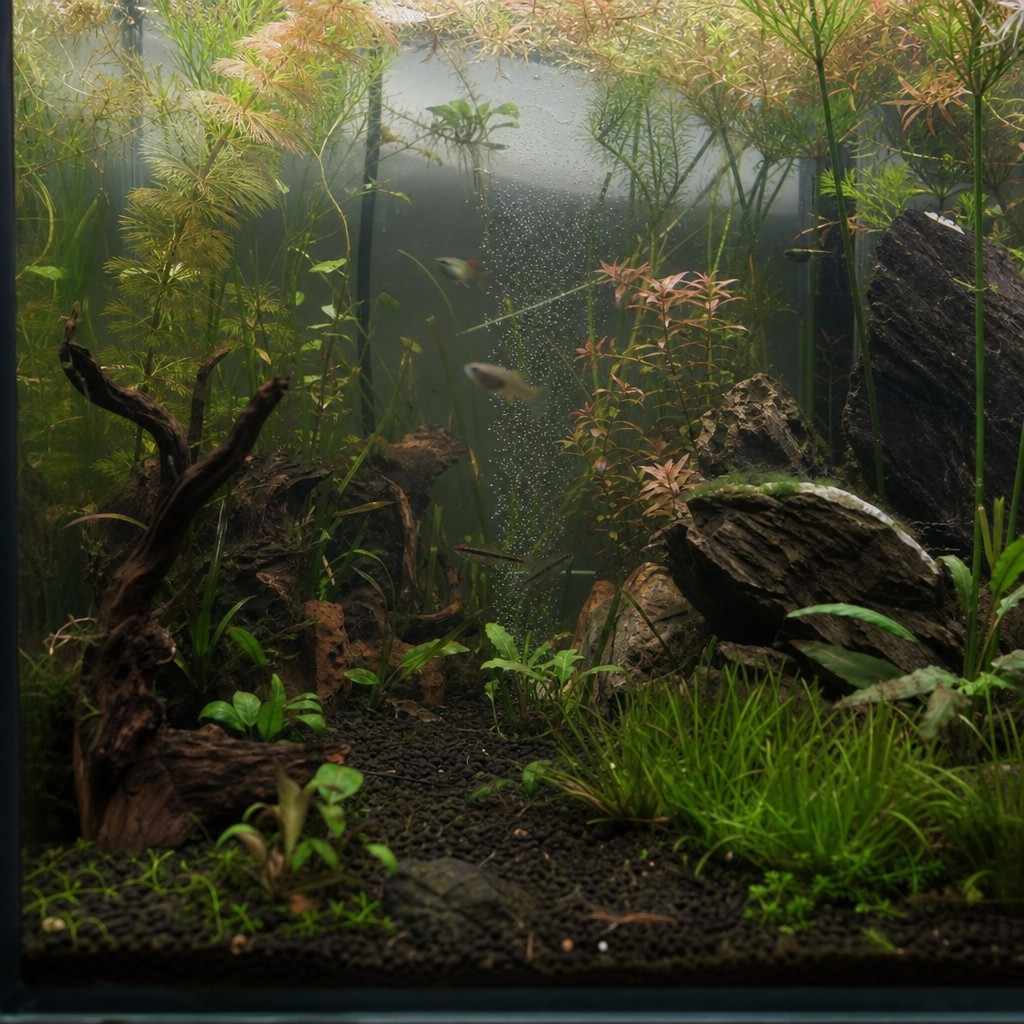
This is a lesson that the hobby has passed on reliably for decades, and it still catches beginners.
Tiger barbs are a popular, active, attractive fish. They’re also notorious fin-nippers, particularly when kept in groups small enough that they redirect their energy toward other species. Tiger barbs and fish with long, flowing fins, like bettas, angelfish, or male guppies, are a combination that routinely ends with shredded tails. It doesn’t matter how calm the tank looks in the store display.
The mechanism is worth understanding. Tiger barbs nip at moving fins as a species behavior, not a sign of individual bad temperament. Keeping them in a larger group (eight or more is the standard recommendation) redirects that behavior inward, but the safest move for a beginner is to keep them with short-finned, similarly sized fish or to skip them if bettas or angelfish are the plan.
Angelfish are another example of a species that reads as peaceful on a care sheet and creates real problems in practice. They’re cichlids. They get large. A pair will defend territory, especially during breeding, and smaller fish, particularly slow or long-finned ones, may simply disappear. Angelfish can anchor a beautiful community, but that community needs to be sized and selected around them.
A calm community comes from planning combinations, not collecting individuals. Picking the fish first and hoping they sort themselves out is how the planning stage goes wrong.
The Overstocking Trap
There’s a version of a community tank that beginners describe as “one of everything.” One tetra, one barb, one platy, one molly, one corydoras. It seems like variety.
It is, in practice, one of the harder ways to keep fish.
Many schooling fish are uncomfortable without their own kind around them. A single neon tetra in a community tank often hides constantly, eats poorly, and lives a stressed, shortened life. Schooling fish need a school, and the general guidance from hobby sources puts the minimum group size at six, with more being better. A tank with one group of eight neon tetras is more stable, and the fish are visibly calmer, than a tank with one neon and seven other different singles.
The same logic applies to corydoras. They’re social and do best in groups of their own species. A lone corydoras on a tank bottom will spend a lot of time pressed into a corner.
The overstocking concern is real too. Every additional fish adds to the biological load on the tank. The size of the aquarium sets the ceiling for how many fish it can support, and that ceiling is lower than most beginner guides suggest. A 20-gallon tank stocked with one 8-fish school of small tetras, a dwarf gourami, and a group of six corydoras is a complete, balanced community. Adding another species to check it off a list often tips the balance.
Matching the Community to Your Water and Tank
None of this planning works if the species you choose don’t suit the water coming out of your tap.
Hard, alkaline tap water is common in much of the US. Livebearers, including platies, mollies, swordtails, and guppies, thrive in it. So do many of the rainbowfish species. Trying to keep cardinal tetras or discus in the same water is a setup for slow, chronic stress.
Soft, slightly acidic water is where many of the popular South American fish do their best. Corydoras, neon tetras, cardinal tetras, and dwarf cichlids like German blue rams all come from river systems with water on the softer side. If your tap runs soft, this group of fish rewards you. Keep fish that match your tap water, not fish that need you to fight it. That principle runs through every community plan worth building.
Check the prerequisite on choosing fish if you haven’t sorted out your water type yet. That step comes first. Once you know what parameters you’re working with, you can filter the whole compatibility question down to a much shorter list of real options.
Putting a Combination Together
A practical starting point for a 20-gallon tank with neutral-to-hard tap water: a group of platies (six, mixed colors if you prefer variety), a group of bronze corydoras on the bottom (six), and a single male betta as the centerpiece if you choose tankmates that are short-finned and similarly sized. Or swap the betta for a honey gourami, which is gentler and adapts to a wider range of water.
For a soft-water setup: eight neon or ember tetras as the main school, six sterbai corydoras on the bottom, and a pair of German blue rams as the centerpiece. That combination uses the whole tank, the water requirements overlap closely, and none of the species are known to cause problems for the others.
Both examples follow the same logic: a mid-water school, a bottom group, a centerpiece. Different species, same structure. The structure is what gives the community its stability, and stability is what makes the tank worth watching.
The planning takes longer than picking fish on impulse. It also means fewer trips back to the store with a problem.